How We Built An AI Publishing Platform To $500/Month
Who are you and what business did you start?
Hi, I'm Yash Wanvari, co-founder and CTO of Hypercritica. I'm a software engineer from Bangalore. Before this I spent five years at CommerceIQ, from Series A to unicorn, building the tools brands use to advertise on Amazon, and then a year as a software architect at Expedite Commerce. My co-founder Euwyn Goh runs the company from Singapore.
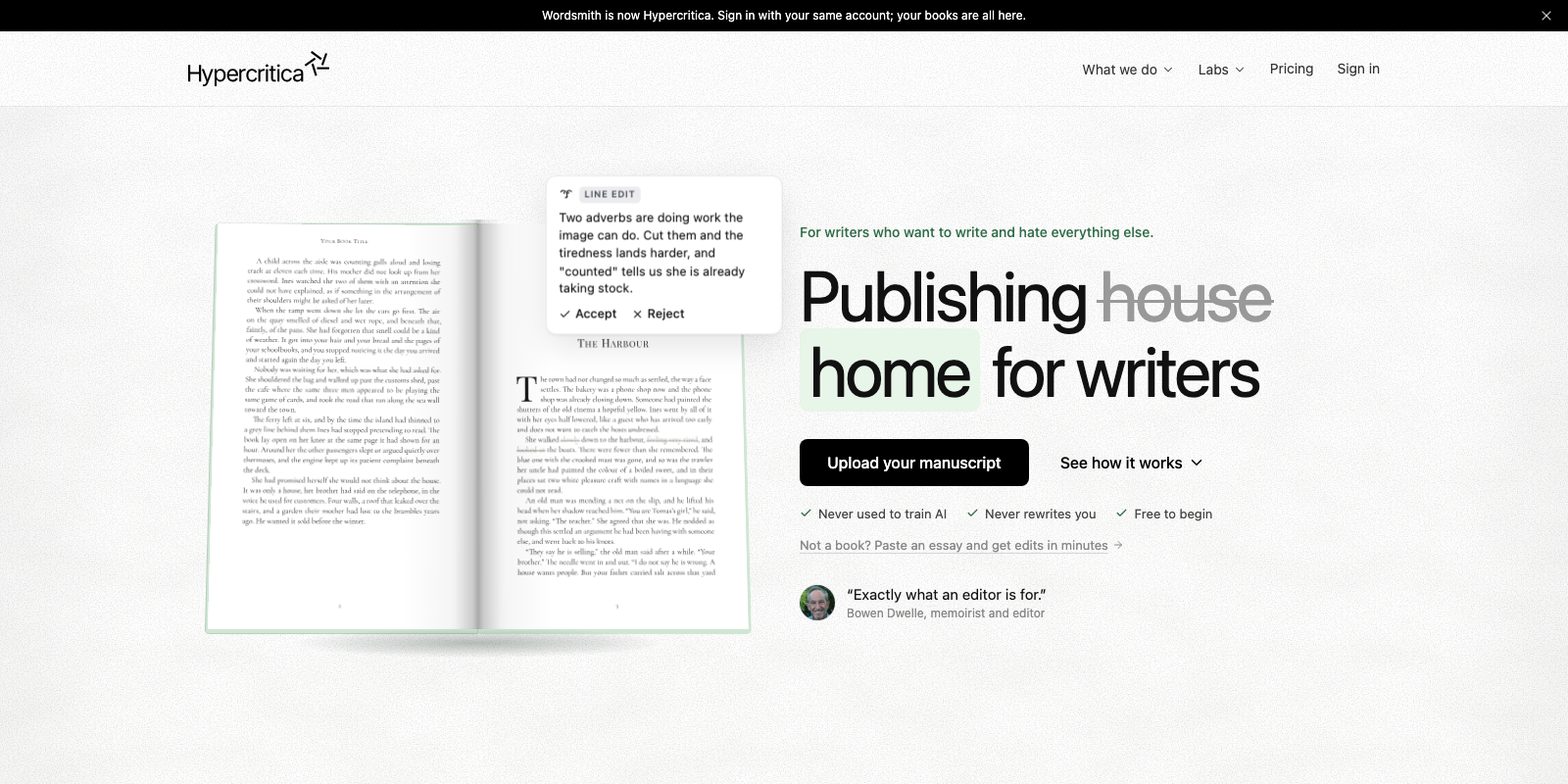
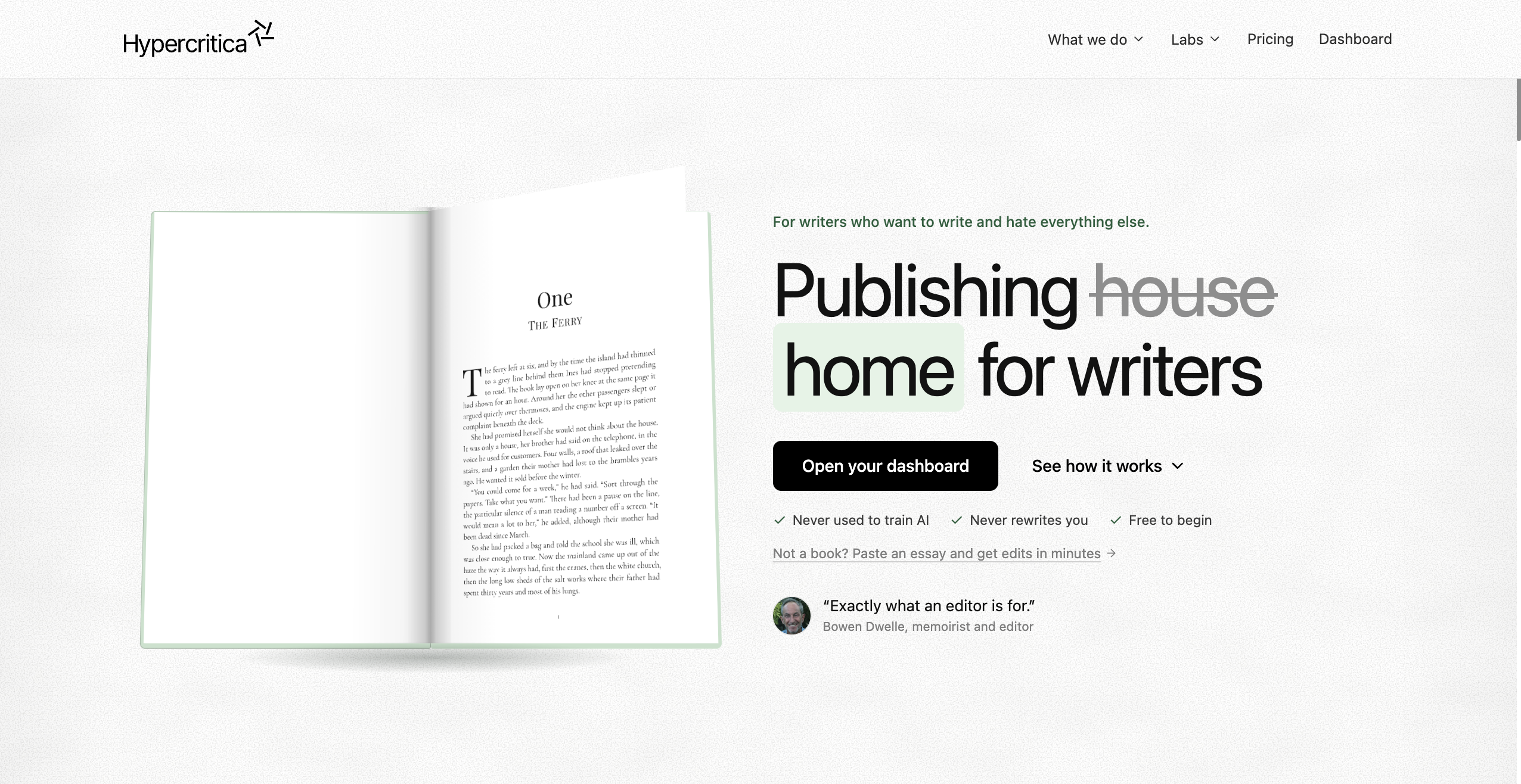
Hypercritica is an AI publishing house. A writer uploads a finished manuscript and Fred, our AI editor, reads the whole book and edits it page by page. The writer accepts or rejects every change. The same system typesets the book, designs the cover and writes the Amazon listing, and for a one-time fee a publishing manager takes the book live on Amazon and IngramSpark with ISBNs in the writer's name. Our customers are novelists, memoirists and nonfiction authors, most of them in the US.
Writers have made about 5,000 accept-or-reject decisions on Fred's edits and kept 80% of them. In October 2026 we brought in $737 in revenue, from writer subscriptions, our managed publishing service and one company account.
My image
How do you come up with the idea for Hypercritica?
Euwyn and I met at Network School in Malaysia in late 2025. We played sport together before we ever talked about product. When I asked what he was stuck on, the answer was his book: a philosophy manuscript he had worked on for four years and no sane way to publish it.
He had two options. Publishers would take it only as a different, safer book. Self-publishing meant building a publishing house by hand: a developmental edit with a median price around $2,880, a typesetter, a cover designer, months of back and forth, and AI tools that either rewrote everything or praised it.
A writer having to build a publishing house to publish a book is like a scientist having to build a lab to do science. I shipped the first version of the editor in January 2026, while we both still had jobs, and Euwyn published his book, After Nihilism, in June 2026.
We split the work along our backgrounds. Euwyn is the customer: a self-published author who ran go-to-market at HQ.xyz through its acquisition by Gnosis, and accelerator cohorts at Startmate. I had spent five years building software for the place books sell, Amazon.
Validation came from writers. By April real writers were using it, I went full-time that month and Euwyn in May. The number we watch is how many of Fred's edits writers keep. If they reject most of an editor's notes, the editor is wrong, however clever the notes sound.
How did you launch Hypercritica and get initial traction?
We launched as Wordsmith at wordsmith.page in January 2026 and put the editor in front of writers before the rest of the publishing house existed. Our first writers came from Euwyn's network and from writing communities, and 182 writers signed up with no paid marketing until October.
The first dollar came in June 2026, five months after launch, when a writer subscribed for $50 a month. Revenue stayed small through the summer ($50 to $60 a month) until we built the rest of the path to a published book in September: typesetting, covers, the Amazon listing and managed publishing. Paying writers went from 3 on 1 September to 11 by mid-November.
Early feedback set the direction. A debut novelist told us another tool's AI beta reader "felt entirely like a yes-man" and that Fred "actually gave critiques". Writers also told us the edit was the easy part and getting to a published book was the hard part.
In November 2026 we renamed to Hypercritica and moved to hypercritica.com. Old links redirect and accounts carried over.
What I'd repeat: ship the core before the product is complete. What I'd change: we waited too long to charge. Writers were happy to pay once the whole path to a book existed.
What was the growth strategy for Hypercritica and how did you scale?
Most of our growth so far has been unpaid, and the clearest lessons came from the one paid channel we tried.
Word of mouth and writing communities. The first 182 writers signed up without any ad spend. The pain is easy to find: in one week we counted 307 new posts and about 3,900 comments across four publishing-help subreddits, nearly all about querying, editing costs, formatting or scams. Writers who got a useful edit from Fred told other writers.
Ads inside ChatGPT. In October we ran ChatGPT ads in the US, India and Singapore. They brought sign-ups cheaply, and that number misled us. When we watched session replays, most visitors left the landing page within seconds, and many people who signed up never uploaded a manuscript. Some uploads weren't books at all. We stopped counting sign-ups and started counting uploads, and whether the writer kept Fred's edits.
Fixing our own front door. The same replays showed friction we had built ourselves. Clicking "Upload your manuscript" opened a sign-in box, so new writers hit errors before they found "Create account". We switched to asking for an email first. Fixes like that did more for us than extra ad spend.
Free tools. Write Club is a free room for writing groups: members share a piece, comment on each other's lines, and Fred gives each piece a short critique. Nobody needs an account to join, so it reaches writers who would never click an ad.
Publishing what we learn. We run an open benchmark that scores frontier AI models on how well they edit unpublished fiction (hypercritica.com/benchmark/models), and we write up engineering lessons on dev.to and Hashnode. Both bring in writers and developers who care how the editing works.
Directories. We list Hypercritica on Crunchbase, Wellfound, SourceForge and AI tool directories, so writers who ask an AI assistant for a manuscript editor can find us.
Advice: pick the step that shows a customer got value, for us an upload and a kept edit, and judge every channel by that.
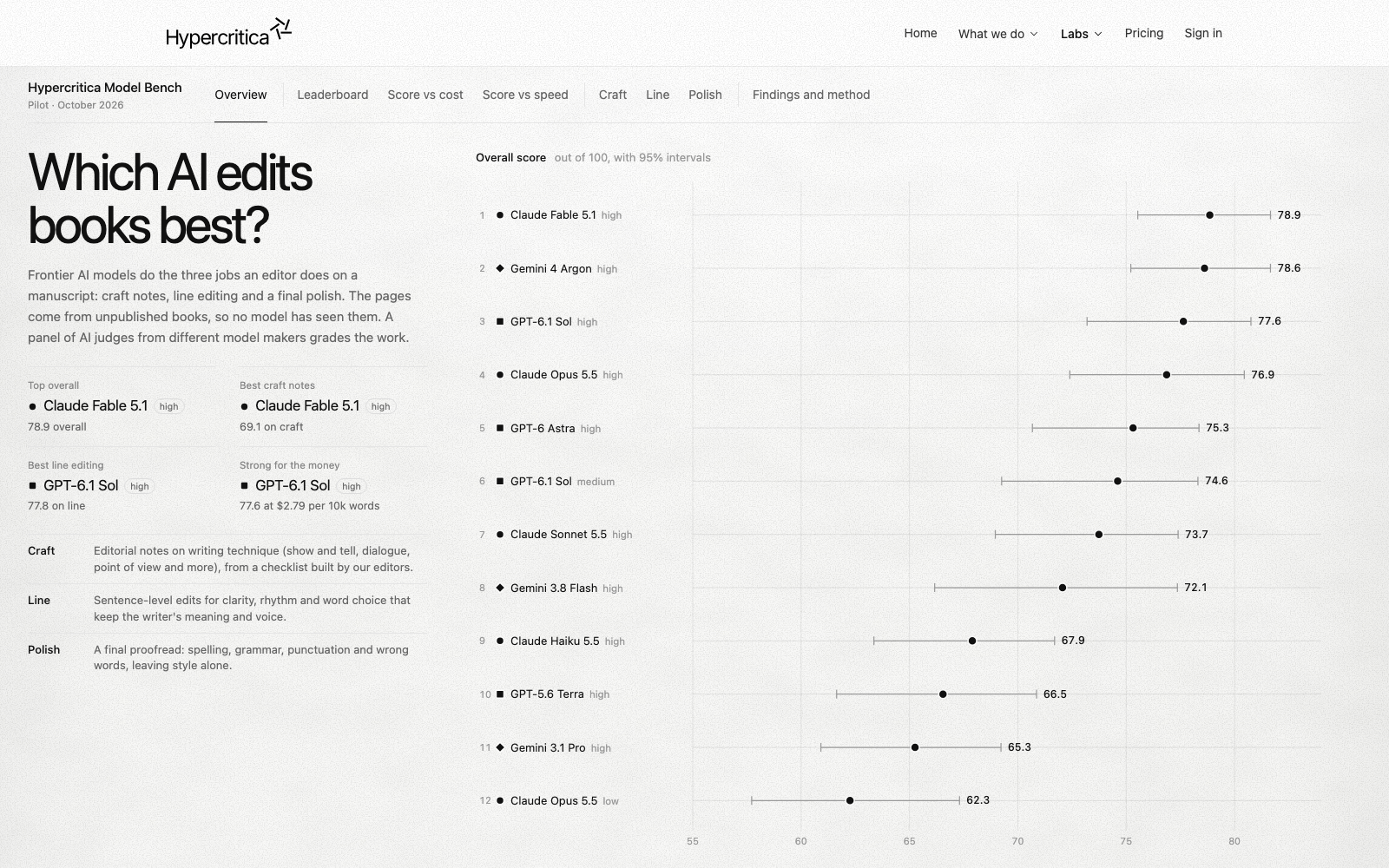
Our open benchmark of how well AI models edit fiction
What were the biggest lessons learned from building Hypercritica?
Read the sessions, not the dashboard. Our sign-up numbers looked healthy while very few people uploaded a book. Watching what people actually did showed us where they got stuck within a day.
Charge once the job is done end to end. For months we sold an editor, and few people paid. Once the whole road to a published book existed, writers paid without much persuading.
The model matters less than the order of the prompt. Our chat with Fred was resending most of a book's context on every message. Keeping the book part identical across turns raised the share served from the provider's cache from 26% to 86% per turn and cut the cost of a three-turn chat by about a third.
Measure what the customer kept. Acceptance rate is the honest metric for an editor. It stops us from shipping notes that sound smart and help nobody.
Use AI to build, then hold it to a human standard. I'm the only person writing code, with Claude Code and Codex doing most of the typing, and a working editor reviews the editorial prompts Fred runs on. The tools are fast; the judgement still has to come from people who read books for a living.
Printing a book costs about $4 now. Judging one still takes a person reading the whole thing. That gap is the business.
Discover Similar Business Ideas Like Hypercritica
|
|
Idea
|
Revenue
|
|---|---|---|

Ai-powered resume builder
rezi.ai
AI-powered resume builder for job seekers.
|
AI-powered resume builder for job seekers. |
$215K /mo |

No-code Airtable API importer
datafetcher.com
API integration tool for Airtable users.
|
API integration tool for Airtable users. |
$23K /mo |

Trend discovery platform
treendly.com
Trend-spotting platform for untapped market insights.
|
Trend-spotting platform for untapped market insights. |
$1K /mo |

AI daily planning app
structured.app
Visual daily planner for focused productivity
|
Visual daily planner for focused productivity |
$1K /mo |

Podcast guest booking platform
guestio.com
Marketplace connecting podcast hosts with paid guest bookings
|
Marketplace connecting podcast hosts with paid guest bookings |
$150K /mo |

Open-source live support tool
livehelperchat.com
Open-source live chat platform for companies.
|
Open-source live chat platform for companies. |
$7.5K /mo |

Document leak deterrent tool
g-71.com
Data leak deterrence software with invisible document marking.
|
Data leak deterrence software with invisible document marking. |
$10K /mo |
More about Hypercritica:
Who is the owner of Hypercritica?
Yash Wanvari is the founder of Hypercritica.
When did Yash Wanvari start Hypercritica?
2026
How much money has Yash Wanvari made from Hypercritica?
Yash Wanvari started the business in 2026, and currently makes an average of $6K/year.
More Case Studies Like This





Starter Story × HubSpot
Free tools for every part of your business.
Find customers, win deals, and automate the busywork with HubSpot's free tools.