How Razvan Grew Notocat to 12K ARR in One Year Without Funding

Who is Razvan Ilin?
Razvan Ilin, the founder of Notocat, is an entrepreneur from Bangkok, Thailand with a passion for creating user-friendly digital tools, and he has a background in developing software solutions that enhance productivity and streamline online communication.
What problem does Notocat solve?
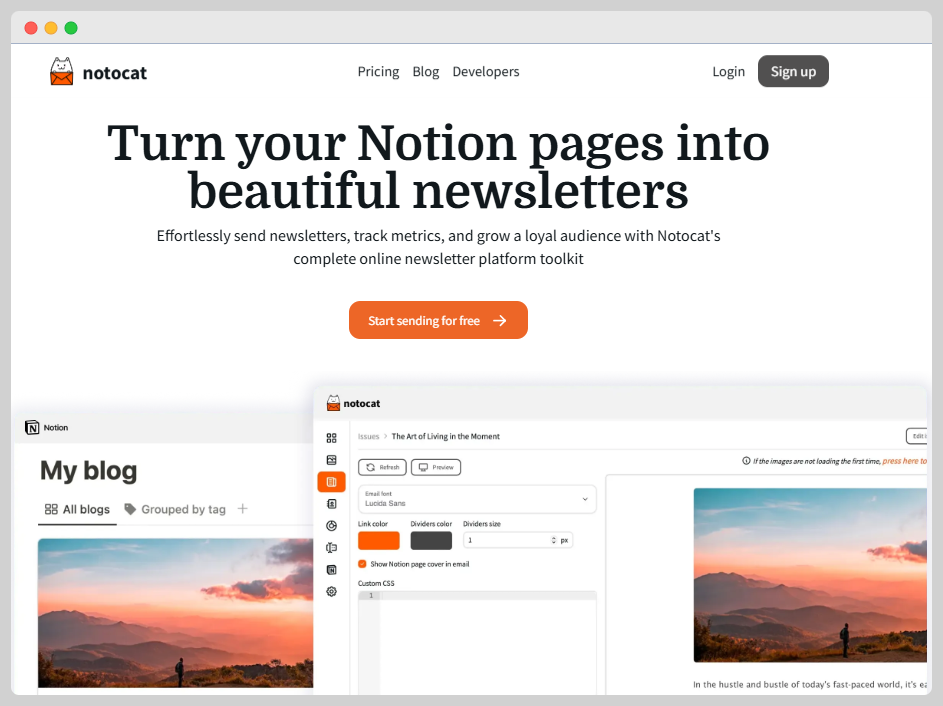
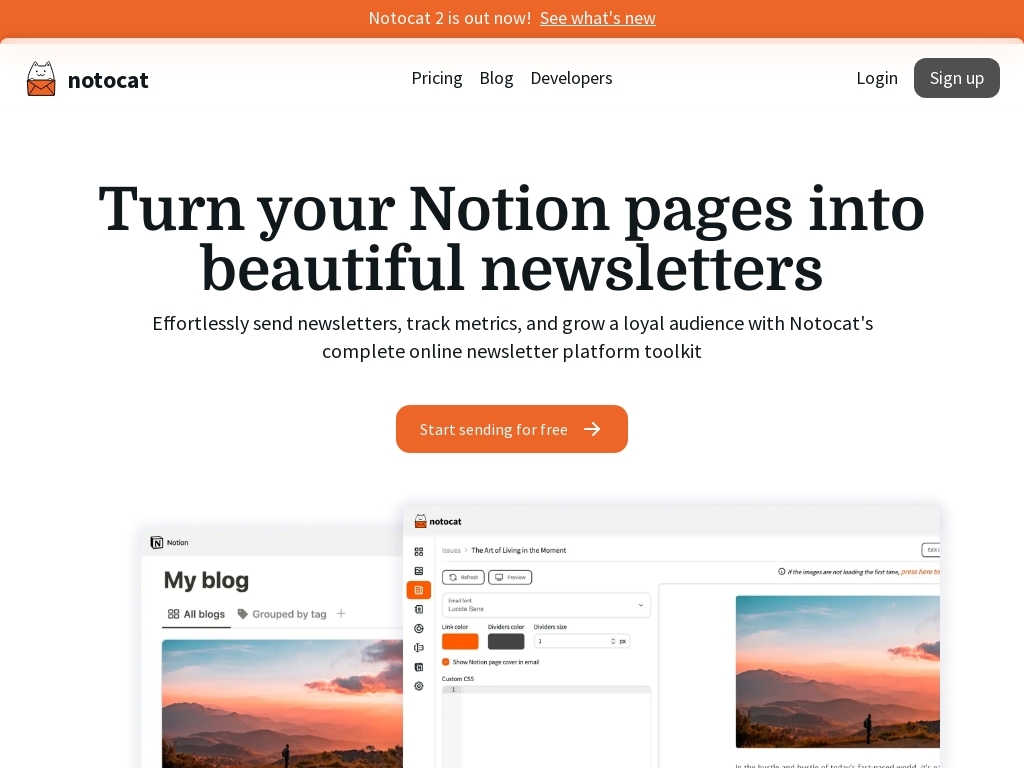
Notocat solves the hassle of turning Notion pages into newsletters, making it seamless to design, send, and track without dealing with complex tools.
Founder-Market Fit
Skills
What skills did Razvan Ilin have that led to their success?
How did Razvan come up with the idea for Notocat?
Razvan Ilin came up with the idea for Notocat when he was struggling to find an effective way to send newsletters directly from Notion, where he enjoyed writing his content. He identified a gap in the tools available, as there was no seamless solution to convert Notion pages into newsletters without moving to a different platform. This personal challenge was the driving force that led him to develop a tool that would streamline this process.
In the early stages, Razvan focused on solving his own problem but soon noticed that others shared the same pain point and began using Notocat themselves. This organic interest from users validated his idea and encouraged him to explore further enhancements. By actively engaging with user feedback, Razvan gained insights into the essential features needed, which helped him refine and expand Notocat's capabilities.
One of the challenges Razvan faced was balancing simplicity with functionality—ensuring Notocat was intuitive while still addressing users' diverse needs. He maintained a strong focus on keeping the platform reliable and user-friendly, learning the importance of iterating based on real user experiences and avoiding unnecessary complexity. This approach highlighted a key lesson: staying attentive to true user needs and adapting based on feedback is crucial in building a product that resonates with its audience.
How did Razvan Ilin build the initial version of Notocat?
Razvan Ilin built Notocat by leveraging Notion's user-friendly interface to create an intuitive newsletter platform that automates the transformation of Notion pages into polished emails. The development involved creating a custom Notion-to-email HTML parser, providing a seamless integration that required no external complex editors.
The initial version took several months to develop, overcoming challenges such as optimizing the queuing system to handle large volumes of emails efficiently and ensuring a smooth synchronization of contacts. Razvan focused on user feedback to continuously enhance the platform, implementing features like segments and custom fields that were highly requested, leading to a streamlined and reliable solution tailored to meet the identified user needs.
What were the initial startup costs for Notocat?
- Funding: Notocat was fully bootstrapped with no external funding reported.
How did Razvan launch Notocat and get initial traction?
Product Hunt Launch
Notocat was first introduced to the public on Product Hunt in May 2023. The founder, Razvan Ilin, used the platform to gain visibility and attract initial users. The Product Hunt launch enabled Notocat to gain exposure quickly by reaching an audience interested in new tech products.
Why it worked: Product Hunt is widely used by early adopters and tech enthusiasts, which made it an effective platform to showcase Notocat and get immediate feedback from its target audience. This exposure brought attention to the product and helped secure its first set of users.
Waitlist Strategy
Before the official launch, Notocat created anticipation by setting up a waitlist in April 2023. This allowed interested users to sign up and express their desire to try the product. The waitlist helped gauge interest and prioritize early invites to those who were most eager to use Notocat.
Why it worked: A waitlist builds exclusivity and anticipation, encouraging early sign-ups. It also provides the founder with a ready pool of interested users to test and refine the product with initial feedback.
Direct Outreach
Razvan employed direct outreach methods to engage with potential users and gather feedback. This involved reaching out to individuals who are part of communities that use Notion extensively for content creation, such as personal bloggers and community managers.
Why it worked: Direct outreach allows for personalized communication, which helps in understanding the needs and concerns of early users. This technique was particularly useful for tailoring Notocat's features to the needs of its initial customer base while fostering an engaged community.
Metrics:
- By December 2019, just a few months after the launch, they had 5,000 paying customers.
- Achieved around $190,000 in monthly revenue (considering typical discounts).
What was the growth strategy for Notocat and how did they scale?
Product Hunt
Notocat utilized Product Hunt to raise awareness and drive signups. The platform was launched on Product Hunt on May 15, 2023, which allowed Notocat to present itself to a broader audience interested in new tech products and innovations. This strategic launch helped gain initial traction by tapping into a community that is eager to discover and support new tools.
Why it worked: Product Hunt is a hotspot for tech enthusiasts, early adopters, and potential users who are keen to try out new products. By launching on Product Hunt, Notocat effectively reached an audience that was likely interested in a tool aimed at creating newsletters. This exposure resulted in increased signups and visibility.
Community Engagement
Notocat leveraged its own community for growth by encouraging users to provide feedback and participate in discussions. They invited feedback via emails and a feedback button on their site, and even hosted a Discord community for more interactive engagement. This inclusive approach builds a loyal user base and encourages users to remain engaged and invested in the product’s development.
Why it worked: Building a strong community around the product encourages user loyalty and advocacy. Engaged users are likely to spread the word about the product, increasing organic growth. Moreover, involving users in product development through feedback channels ensures that Notocat continues to meet their needs, fostering long-term satisfaction and retention.
Enhanced Product Features
A key driver for user acquisition and retention was the continuous improvement and addition of features in Notocat 2.0. New functionalities like targeting specific user segments, custom fields, and better contact management dramatically enhanced the user experience. By addressing the specific needs of newsletter creators, Notocat increased its appeal and improved its competitive edge.
Why it worked: Offering a product that continuously evolves to meet the needs of its users ensures that they remain engaged and satisfied. The new features provided more value to users, making it more likely for them to continue using Notocat and recommend it to others. This not only attracted new users but also helped retain existing ones by addressing their needs effectively.
Waitlist Strategy
Before the official launch, Notocat created a waitlist to generate curiosity and gather early interest. This strategy helped build an initial user base that was eager to try the product as soon as it became available.
Why it worked: A waitlist creates a sense of exclusivity and anticipation, which can drive interest and perceived value. People typically want to be among the first to try a new service, and having a waitlist ensures an initial batch of users who can provide immediate feedback, helping to refine the product further before a full-scale launch.
What's the pricing strategy for Notocat?
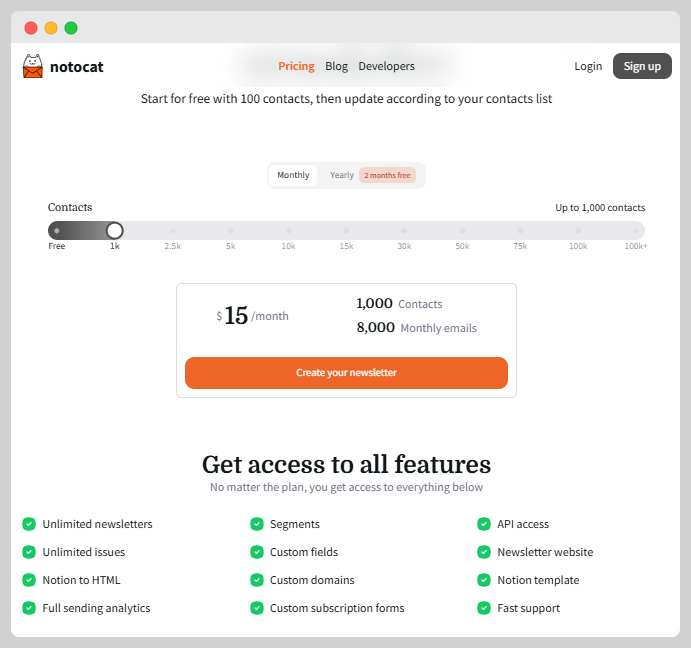
Notocat offers a free plan for up to 100 subscribers; additional features and capacity require a subscription, typically starting at around $15/month.
What were the biggest lessons learned from building Notocat?
- Listen to User Feedback: Notocat built new features based directly on user requests, like segments and custom fields, proving the importance of listening to and acting on customer feedback.
- Embrace Simplicity: The focus on simplicity, such as using existing tools like Notion, made the service more accessible and user-friendly, showing that simpler solutions can attract a wider audience.
- Bootstrap for Focus: Being fully bootstrapped allowed Notocat to prioritize real user needs over unnecessary features, emphasizing that staying lean helps in maintaining focus and clarity on what’s essential for users.
- Consistency Pays Off: Despite not actively marketing, continued usage and development led to organic growth, illustrating that consistent quality can naturally attract and retain users.
- Adapt with Persistence: Iterating and releasing updates, such as Notocat 2, even after quiet periods, highlights the importance of perseverance and adapting to user needs to sustain and grow a business.
What platform/tools does Notocat use?
Discover Similar Business Ideas Like Notocat
|
|
Idea
|
Revenue
|
|---|---|---|
|
AI quiz generator for educators.
|
$4K
monthly
|
|
|
"AI tool for effortless video content creation."
|
$600K
monthly
|
|
|
AI tool that helps content creators, founders, ...
AI tool that helps content creators, founders, and marketers make VIRAL content & ads with AI while saving 100's of hours per month |
$400K
monthly
|
|
|
"Email signature marketing hub for solopreneurs."
|
$55K
monthly
|
|
|
AI-powered social media carousel creator.
|
$10K
monthly
|
|
|
AI coding assistant for non-developers building...
AI coding assistant for non-developers building web apps. |
$4.17M
monthly
|
|
|
QR code management for dynamic tracking and edi...
QR code management for dynamic tracking and editing. |
$300K
monthly
|



More about Notocat:
Who is the owner of Notocat?
Razvan Ilin is the founder of Notocat.
When did Razvan Ilin start Notocat?
2023
What is Razvan Ilin's net worth?
Razvan Ilin's business makes an average of $12.3K/month.
How much money has Razvan Ilin made from Notocat?
Razvan Ilin started the business in 2023, and currently makes an average of $148K/year.