How This Founder Bootstrapped a Visual Note-Taking Tool to $200K/Month

Who is Alan Chan?
Yu-An (Alan) Chan, co-founder of Heptabase, is a former student of National Taiwan University and Minerva University, where he studied physics, mathematics, and computational science before dropping out to focus on his entrepreneurial journey and vision of using technology to enhance deep learning and research.
What problem does Heptabase solve?
Heptabase helps you simplify complex topics by allowing you to visually organize, connect, and develop a deep understanding of information, making tasks like research and project planning less overwhelming and more intuitive for its users. Through its user-friendly interface and integrated features, customers can break down vast information into manageable, visual pieces, avoiding the chaos of unorganized data and enhancing their learning or creative processes.
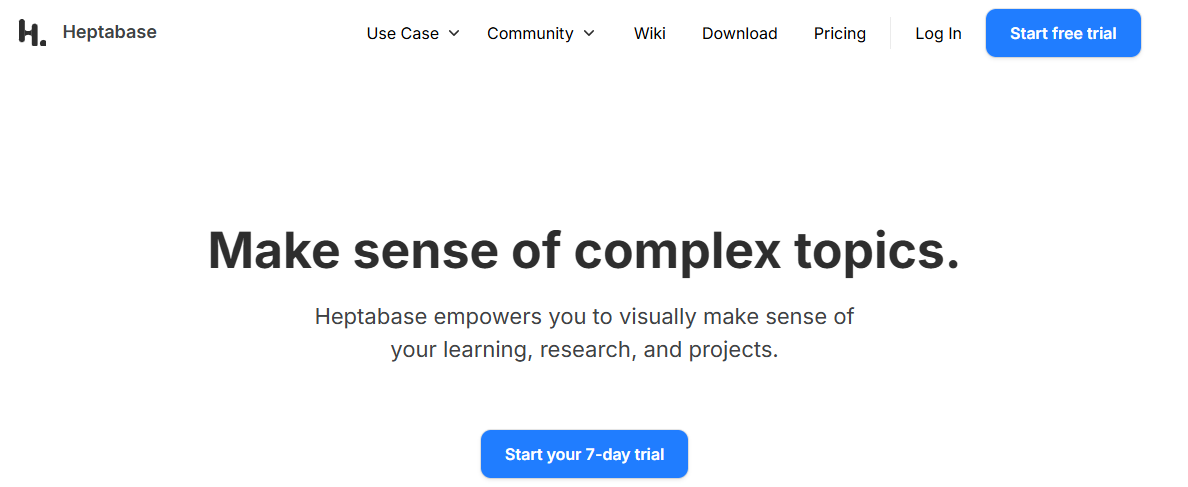
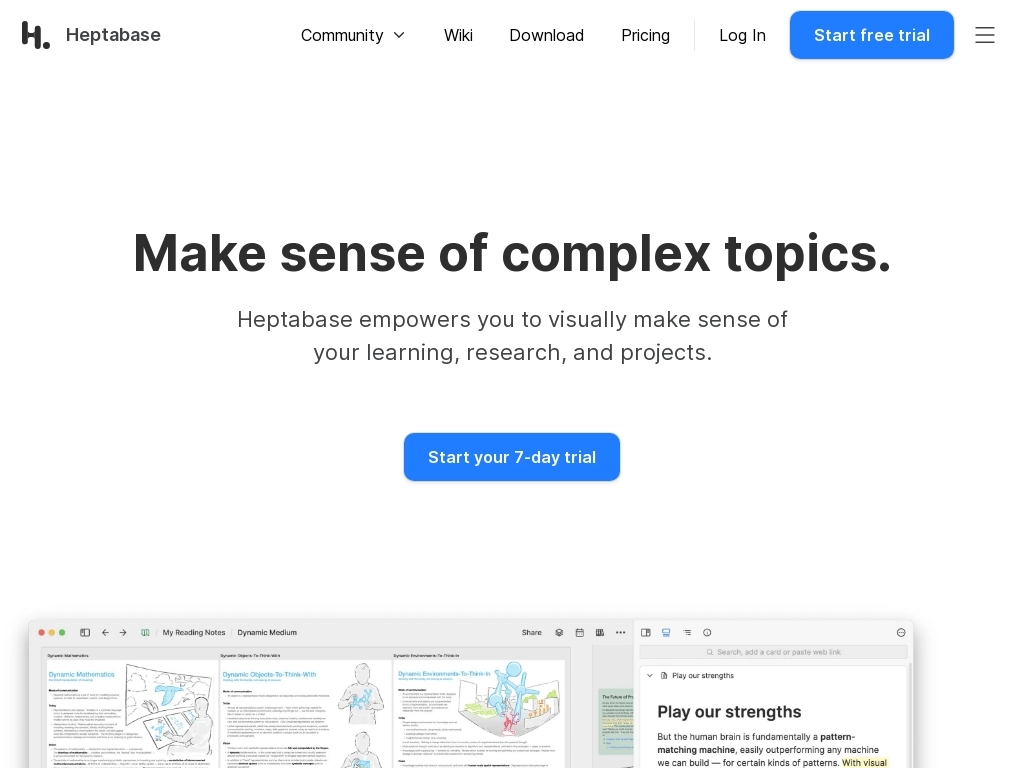
Heptabase Homepage
How did Alan come up with the idea for Heptabase?
Alan Chan, the founder of Heptabase, first got the idea for the business from his love for learning and the complex connections between different subjects like physics, mathematics, and computer science. Alan noticed how information is often presented in a disconnected way, which doesn't reflect the interconnected nature of knowledge. After dropping out of college to explore various disciplines, he realized the need for a tool that could help people build a deep understanding by visually connecting different ideas and concepts.
He began by experimenting with several ideas, initially wanting to develop a combined browser, note-taking app, and publishing platform for complex topics. Early versions of the product were not successful, as he tried to build something too perfect from the start. By shifting focus to creating a simple MVP that allowed users to link their notes visually, he was able to identify and solve the right problem: helping users learn and research effectively.
Throughout the development process, Alan actively listened to feedback from early users and participated in communities, which helped refine Heptabase's core functionalities. This iterative approach allowed him to stay focused on building a tool that encourages deep understanding without overwhelming users with unnecessary complexity.
How did Alan Chan build the initial version of Heptabase?
Heptabase was meticulously developed over a span of 26 months, starting with an eight-month closed alpha phase, followed by 18 months of public beta testing, during which the product went through over 300 iterations. Alan Chan, the founder, utilized a tech stack comprising TypeScript for the language, React and Redux for the frontend, MySQL for the database, and Node.js running on AWS for the backend. The core components, including the whiteboard, card editor, and sync mechanism, were all built in-house to ensure seamless integration and performance.
The initial product build faced the typical challenges of overcomplicating early stages, learning from which Alan Chan started with a minimum viable product (MVP) focused on reusing atomic knowledge across visual contexts. This approach facilitated quick iteration and refinement, leading to the Heptabase we see today. Despite the hurdles, the iterative process, combined with continuous feedback from a dedicated user community, led to a substantially polished product, known for its ability to support deep learning processes effectively.
What were the initial startup costs for Heptabase?
- Funding: Heptabase raised nearly $1.7 million in seed funding from investors like Y Combinator, HOF Capital, Kleiner Perkins, and Moving Capital in early 2022.
What was the growth strategy for Heptabase and how did they scale?
Organic Growth
Heptabase grew significantly by relying on organic growth channels. The founder, Yu-An Chan, began by engaging deeply with niche communities like Discord and Telegram groups for note-taking apps. He actively reached out to individuals discussing related topics such as "visual," "whiteboard," and "mindmap," and encouraged them to try the prototype. This strategy was instrumental in acquiring the initial users.
Why it worked: By targeting specific communities with a clear interest in visual note-taking tools, Heptabase effectively reached potential users who were already looking for solutions. The engagement and direct feedback loop with these users helped refine the product, leading to satisfied users who spread the word, contributing to growth through word-of-mouth.
Word of Mouth
As the product improved, Heptabase's user base grew primarily through word-of-mouth. Early users who found value in the tool began to share it with others organically.
Why it worked: Heptabase's approach of continuously iterating on its features based on user feedback ensured that the product remained relevant and useful. The satisfaction of users fostered a natural inclination to recommend the tool to peers, thus driving growth without the need for significant marketing investment.
Affiliate Program
Towards the end of 2023, Heptabase initiated an affiliate program. This was largely driven by content creators among its user base who requested affiliate links. This program now contributes approximately 10% of the company's revenue.
Why it worked: Leveraging existing users who are content creators allowed Heptabase to reach new audiences through trusted recommendations. The affiliate program incentivized the creators, thus expanding the platform's reach and generating additional revenue.
Community Building
Heptabase also created its own community on Discord, allowing direct interaction with its users, facilitating feedback collection and iterative development of the tool.
Why it worked: Direct communication with users enabled ongoing dialogue and understanding of user needs. This constant feedback cycle helped Heptabase stay agile and responsive to user demands, fostering a loyal community who felt invested in the platform's success.
What's the pricing strategy for Heptabase?
Heptabase offers a one-week free trial and primarily operates on a subscription model with pricing plans that cater to different user needs, though specific plan details and costs aren't explicitly outlined in the available sources.
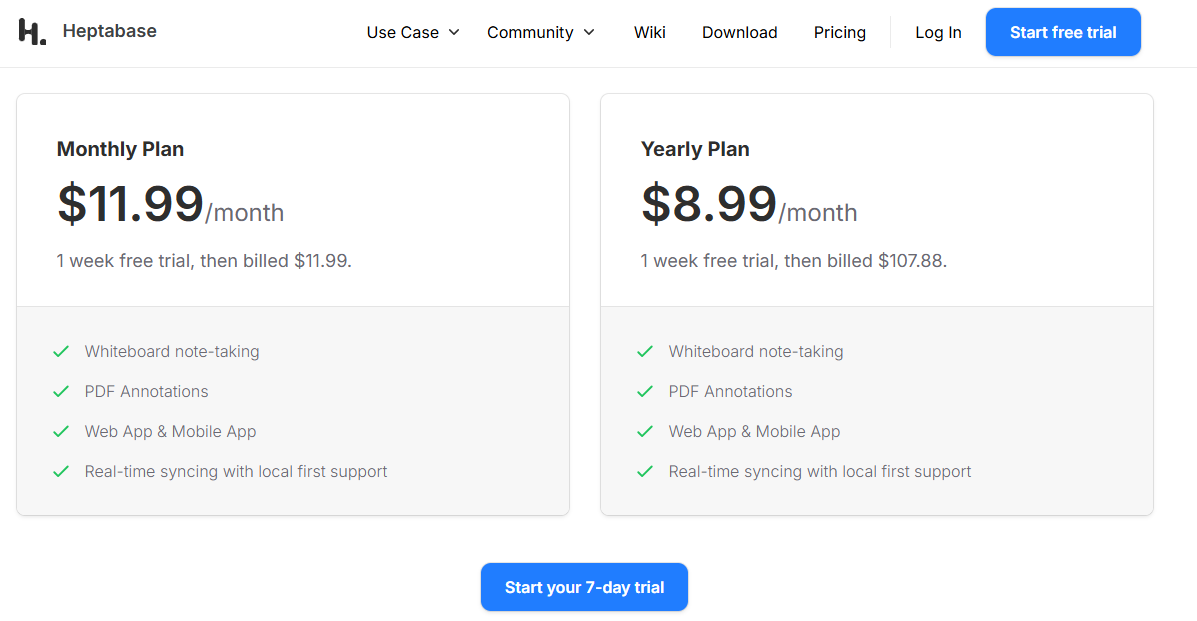
Heptabase Pricing
What were the biggest lessons learned from building Heptabase?
- Iterate and Listen: Heptabase evolved by releasing early versions and iterating based on user feedback. The team focused on having continuous interactions with users through Discord and in-app communications. This allowed them to understand real user needs and refine their product, leading to better user retention and satisfaction.
- Simplicity Over Complexity: The product design focuses on an intuitive user experience rather than overloading it with features. By ensuring each feature blends seamlessly with the others, users are kept focused on their primary goal—enhancing their understanding of complex topics—rather than getting distracted by the interface itself.
- Sustainable Growth Strategy: Heptabase achieved profitability by focusing on a specific audience willing to pay upfront, and controlled their growth by relying on revenue rather than continuously seeking funds. This allowed them to maintain financial health and build confidently without external pressures.
- Community Engagement: A strong community presence through platforms like Discord has been instrumental for Heptabase. This engagement not only helps in getting feedback but also creates word-of-mouth growth, as satisfied users often recommend the product to peers.
- Adapt and Expand Carefully: While new features such as collaboration tools and enhancements to their PDF reader were planned, Heptabase emphasized the importance of understanding user problems and needs before expanding their feature set. This careful planning ensures they maintain their core offering’s integrity while gradually addressing additional user demands.
Discover Similar Business Ideas Like Heptabase
|
|
Idea
|
Revenue
|
|---|---|---|
|
"AI tool for effortless video content creation."
|
$600K
monthly
|
|
|
AI-powered social media carousel creator.
|
$10K
monthly
|
|
|
AI marketing tools for Solopreneurs.
|
$10K
monthly
|
|
|
AI coding assistant for non-developers building...
AI coding assistant for non-developers building web apps. |
$333K
monthly
|
|
|
QR code management for dynamic tracking and edi...
QR code management for dynamic tracking and editing. |
$300K
monthly
|
|
|
'Website builder for non-coders'
|
$990K
monthly
|
|
|
'Digital giving platform for churches.'
|
$1.3M
monthly
|






More about Heptabase:
Who is the owner of Heptabase?
Alan Chan is the founder of Heptabase.
When did Alan Chan start Heptabase?
2021
What is Alan Chan's net worth?
Alan Chan's business makes an average of $200K/month.
How much money has Alan Chan made from Heptabase?
Alan Chan started the business in 2021, and currently makes an average of $2.4M/year.