How Kate Sanner Built Beni into a Resale Tech Innovator

Who is Kate Sanner?
Kate Sanner co-founded Beni during her time at Northwestern University's Kellogg School of Management, leveraging her extensive experience as a brand development expert with a career at Anheuser-Busch. Originally hailing from Indianapolis, Indiana, she has a strong background in marketing and brand innovation, having contributed to notable campaigns like Bud Light's "Dilly Dilly" while continuously exploring sustainable consumer behavior.
What problem does Beni solve?
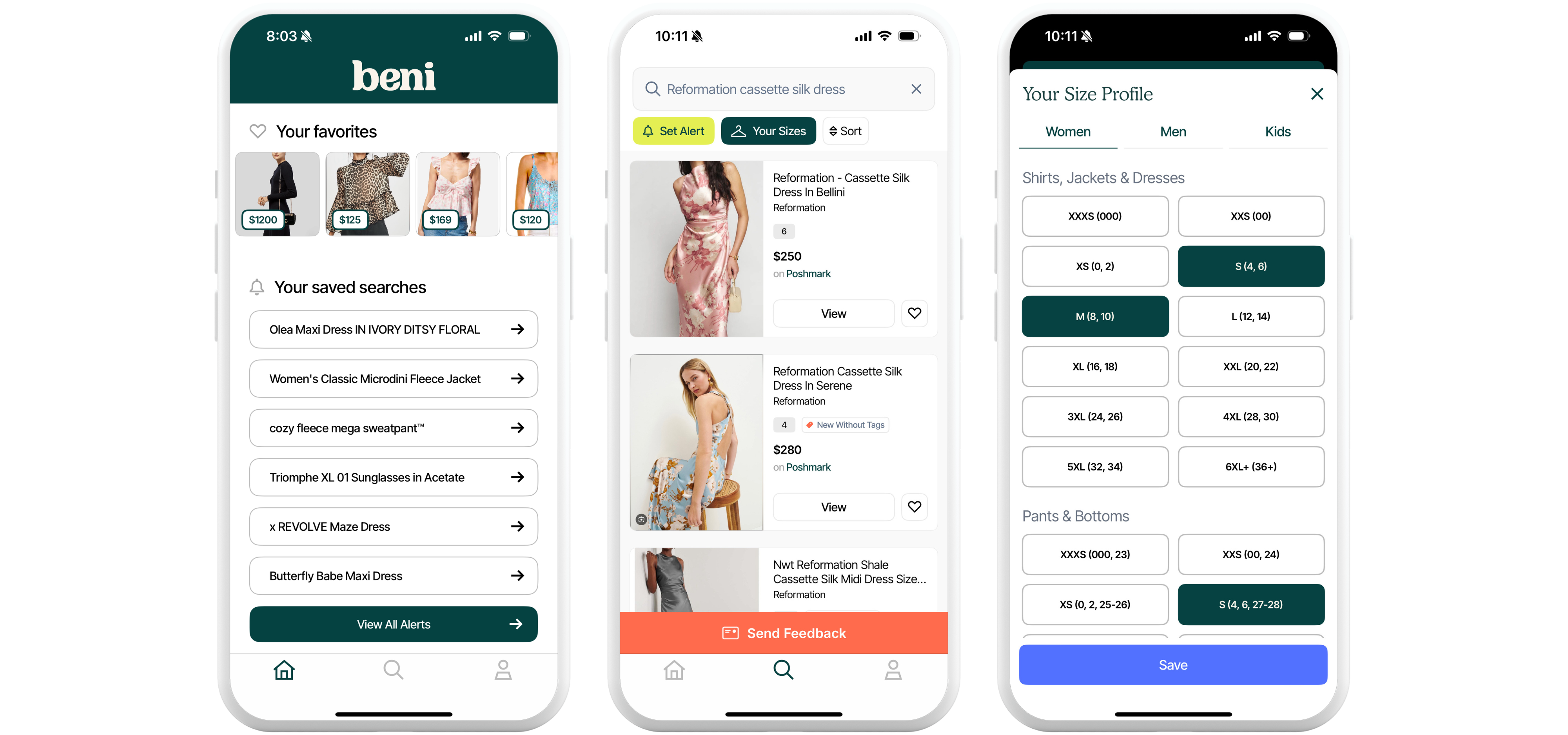
Beni tackles the hassle of secondhand shopping by simplifying the search process, addressing the frustration of sifting through endless options or paying high prices for new items.
My image
How did Kate come up with the idea for Beni?
Kate Sanner and her co-founders stumbled upon the idea for Beni during their time at Kellogg School of Management, driven by a shared frustration in the realm of secondhand shopping. It all began when Kate's co-founder, Sarah, noticed that while many people appreciated the benefits of shopping secondhand—like saving money and being sustainable—few actually did it due to the overwhelming and time-consuming nature of the search process. This sparked a critical question: How can they remove the friction that prevents people from enjoying the benefits of purchasing secondhand?
The team delved into understanding consumer behavior, examining why people buy new fashion items even when they're aware of the benefits of buying secondhand. They realized it's often not a matter of unwillingness, but rather that people find it too tedious and inconvenient to search through multiple sites. Kate and her team, therefore, decided to meet shoppers where they already were—shopping for new clothes online—and integrate secondhand options seamlessly into that experience.
Armed with insights from discussions with potential users and mentors, the team refined their concept through programs at Kellogg, combining technology and partnerships with leading resale marketplaces. The launch of Beni as a browser extension was a direct answer to the identified gap in the market, designed to be as simple and user-friendly as buying new items, thereby addressing both environmental and economic concerns without complicating the consumer's shopping process.
How did Kate Sanner build the initial version of Beni?
Beni's team utilized a robust tech stack to develop their browser extension, which intercepts online shopping searches and directs users to secondhand alternatives. The product's development required advanced AI-powered search technology. This was essential to effectively process messy, decentralized data from various resale marketplaces such as eBay, The RealReal, Poshmark, and ThredUp, where SKU numbers and standardized categorizations are often absent.
The development phase involved creating a multimodal vector search to cluster and interpret these listings in real-time, overcoming significant technical challenges associated with indexing and presenting accurate, relevant results quickly. The initial version of Beni was built within the supportive ecosystem of Kellogg School of Management, leveraging its resources and network. It was challenging to navigate the technical complexity and partnerships required for seamless functionality, but the team's persistence and focus on the problem-solving aspect paid off significantly.
What were the initial startup costs for Beni?
- Funding: The team raised $1 million in a pre-seed funding round during their time in business school and an additional $4 million in a seed funding round.
How did Kate launch Beni and get initial traction?
Beni launched initially as a beta Chrome extension that quickly gained users who appreciated its seamless integration into their shopping experience. The product was shared and grew organically, becoming the 'MVP of users’ browsers' due to its minimal and useful functionality, with early users spreading the word about the extension’s benefits and user-friendliness.
What was the growth strategy for Beni and how did they scale?
Social Media Community Engagement
Beni has effectively utilized social media, particularly Instagram and TikTok, to build a vibrant community around secondhand shopping. They promote user-generated content, allowing users to showcase their favorite finds, which naturally expands their brand awareness. The focus is on creating an inclusive and engaging environment that encourages people to share their secondhand shopping experiences.
Why it worked: By harnessing the power of user-generated content, Beni has been able to create authentic connections with their audience. This strategy not only boosts brand awareness but also builds a community of advocates who feel a sense of belonging and loyalty to the brand. The continuous engagement on social media platforms also helps in driving organic traffic to their site.
Partnerships with Resale Marketplaces
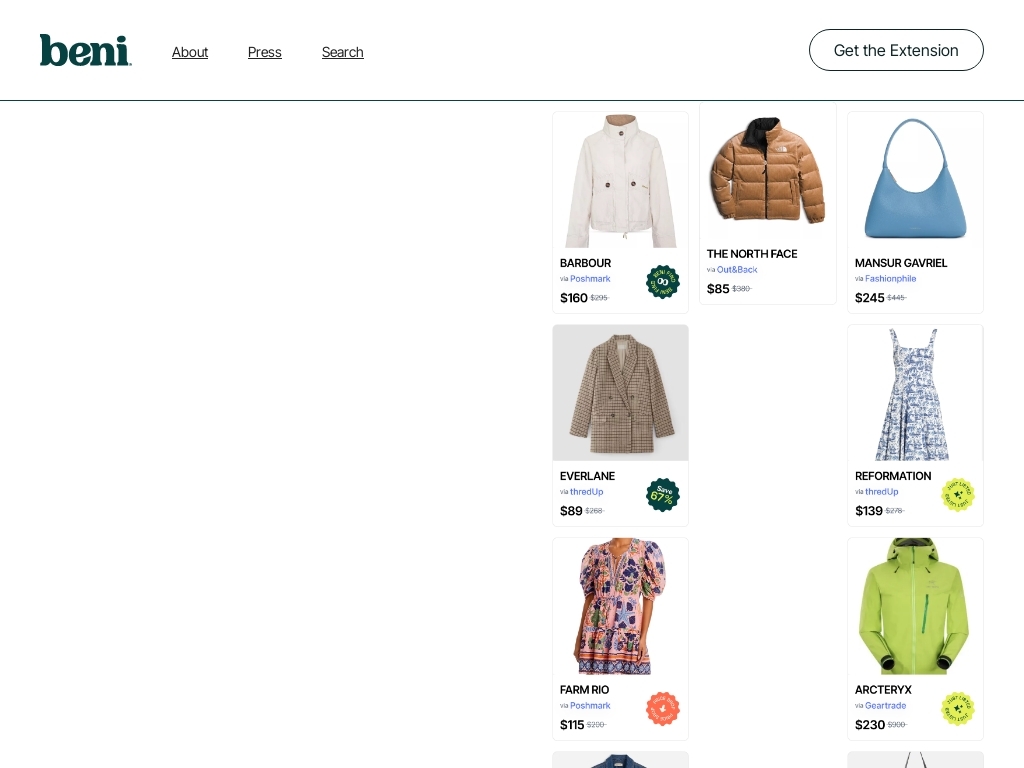
Beni has formed strategic partnerships with prominent resale platforms like The RealReal, Poshmark, and eBay, integrating their listings into the Beni browser extension. This partnership allows Beni users to access a vast array of secondhand options directly while shopping online for new items.
Why it worked: These partnerships are beneficial because they significantly enhance the value that Beni offers its users—access to an extensive and diverse inventory of secondhand items at a click. This integration not only simplifies the shopping process for users but also introduces resale platforms to new customers, expanding their reach and potentially driving more sales for them as well.
Product as the Marketing Tool
The core of Beni’s marketing strategy lies in the quality and utility of their product. By providing a seamless user experience with their browser extension, Beni effectively turns the product itself into a powerful marketing tool. The ease of discovering affordable secondhand alternatives encourages users to share their experiences, acting as an organic form of word-of-mouth marketing.
Why it worked: A strong, user-friendly product enhances customer satisfaction, leading to higher retention rates and positive word-of-mouth. When users find value in the product, they naturally become brand ambassadors who promote the extension to others, driving growth without traditional advertising costs.
Campus Ambassador Program
To tap into the student demographic, Beni launched a campus ambassador program. By engaging college students to promote and use the extension, they are able to reach a younger audience who are often trendsetters in sustainability movements.
Why it worked: College students are a crucial market for resale shopping, and the ambassador program creates authentic promotional opportunities through peer recommendations. These ambassadors not only spread the word about Beni but also provide valuable feedback that can be used to further refine and enhance the user experience. This grassroots approach effectively increases awareness and adoption rates across college campuses.
What's the pricing strategy for Beni?
Beni offers a free browser extension that revolutionizes secondhand shopping by seamlessly directing users to resale alternatives, eliminating the hassle of scouring multiple platforms.
What were the biggest lessons learned from building Beni?
- Meet Users Where They Are: Instead of trying to change consumer habits completely, Beni integrates into existing shopping behaviors by intercepting e-commerce paths and offering secondhand alternatives. This strategy minimizes friction for users transitioning to sustainable shopping.
- Focus on Community and Collaboration: Beni leverages community programs like campus ambassador initiatives and partnerships with leading resale platforms to build a community around secondhand shopping. This helps widen their reach and engage a target audience that's already interested in sustainability.
- Embrace Technology to Solve Complex Problems: Understanding the messy data set of resale, Beni uses AI to simplify the search process across multiple platforms. This technological approach addresses a key barrier in the resale market by streamlining a fragmented experience for users.
- Leverage Educational Context for Growth: Beni's origin in a business school incubator provided invaluable opportunities for funding, testing, and iteration. Aspiring founders should utilize educational resources and networks to validate and grow their business ideas.
- Prioritize Authentic Product Experience: Beni's marketing highlights the practical benefits of their service, like saving money and time. By delivering a product that genuinely enhances the shopping experience, they ensure organic growth through satisfied customers.
What platform/tools does Beni use?
Discover Similar Business Ideas Like Beni






More about Beni:
Who is the owner of Beni?
Kate Sanner is the founder of Beni.
When did Kate Sanner start Beni?
2022
What is Kate Sanner's net worth?
Kate Sanner's business makes an average of $/month.
How much money has Kate Sanner made from Beni?
Kate Sanner started the business in 2022, and currently makes an average of .