How This No-Code SaaS Grew to $10K MRR with Ease [UserLoop]

Who is James Devonport?
James Devonport, the founder of UserLoop, hails from Brighton and has a background in eCommerce tech and AI. Having long been active in creating apps using no-code platforms like Bubble since 2017, James has applied his expertise to focus on developing tools for eCommerce merchants.
What problem does UserLoop solve?
UserLoop simplifies gathering customer feedback for Shopify merchants, turning potentially overwhelming data into clear, actionable insights to boost sales and improve customer satisfaction.
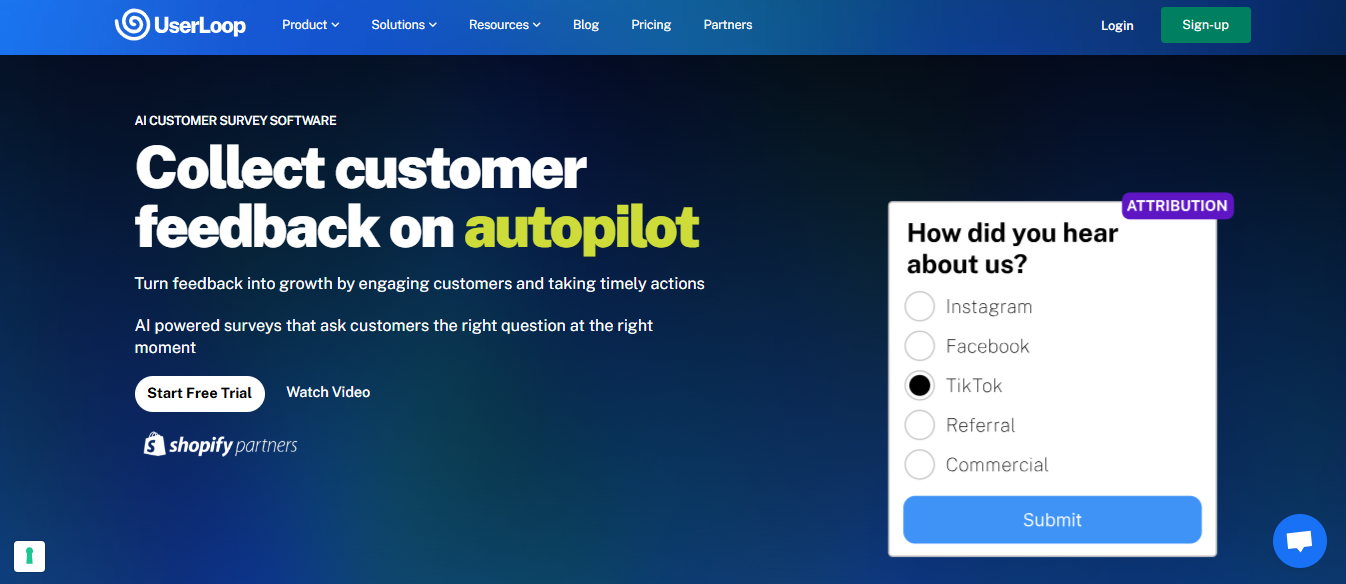
Homepage
Founder-Market Fit
Skills
What skills did James Devonport have that led to their success?
How did James come up with the idea for UserLoop?
James Devonport came up with UserLoop by spotting a recurring issue for Shopify merchants: they struggled to understand their customers' needs and preferences. Drawing from his experience in eCommerce and AI, James recognized that direct customer feedback could be a game-changer for these businesses. He initially began by creating simple feedback tools over the holidays, gradually evolving the solution based on real-world feedback.
He started with a basic version that allowed merchants to collect feedback via emoji reactions in emails. As he interacted with early users, primarily Shopify-based businesses, James received valuable feedback that led him to eliminate complex setup processes. He continued this iterative process and added features like surveys during the checkout process, each time refining UserLoop to better meet customer needs.
James embraced a user-driven development approach, continuously incorporating customer feedback to shape UserLoop. He learned the importance of building a simple, functioning prototype first and gradually adding complexity as needed. This method not only minimized initial development costs but also ensured the product was continually aligned with users' evolving demands. His key takeaway was to start with solving the most critical problem, then iteratively expand the product as necessary.
How did James Devonport build the initial version of UserLoop?
James Devonport built the UserLoop platform primarily using Bubble, a no-code solution that allowed for rapid prototyping and iteration based on customer feedback. The initial version of UserLoop, developed in just a few days over a holiday period, started as a simple tool that sent emoji reaction emails for feedback collection. As the user base, mostly Shopify merchants, provided feedback, James efficiently incorporated new features like Shopify integration and checkout surveys, leveraging the flexibility of Bubble to make swift adjustments. The development process involved integrating numerous tools such as HookDeck for webhooks, OpenAI for survey generation, and Mux for video processing. Challenges arose with data handling in Bubble for larger datasets, which James overcame by integrating Tinybird for efficient analytical processing, making UserLoop both scalable and cost-effective. Using no-code tools, James iterated through multiple product versions, resolving customer pain points while keeping the tech stack budget around $500 monthly, alongside periodic support from Bubble freelancers.
What was the growth strategy for UserLoop and how did they scale?
Here is a breakdown of UserLoop's growth channels:
Email Marketing
UserLoop initially focused on email to distribute its surveys, allowing eCommerce merchants to send automated feedback requests post-purchase. This automated process ensured consistency and minimized manual intervention for merchants, thereby enhancing user satisfaction and retention. By embedding surveys within email sequences, UserLoop maintained a continuous touchpoint with customers, significantly amplifying user engagement and providing merchants critical insights into customer satisfaction.
Why it worked: Email newsletters are a traditional but highly effective channel for customer engagement. Automated emails enabled UserLoop to stay top-of-mind with customers, encouraging feedback and resulting in actionable insights that merchants could immediately leverage to improve customer satisfaction and retention rates.
SEO
UserLoop invested substantial effort into writing content and optimizing its website for SEO. By focusing on quality and relevance, the company aimed to position itself higher in search engine rankings, driving organic traffic to its website. It also aligned its marketing content with high-traffic keywords related to eCommerce and customer feedback.
Why it worked: SEO allowed UserLoop to attract a steady stream of new users organically, without the need for continuous advertising spend. By targeting strategic keywords and producing targeted content, they reached merchants actively searching for customer feedback solutions, thus increasing brand visibility and credibility.
Integration with Shopify
Recognizing Shopify as a leading eCommerce platform, UserLoop focused on integrating seamlessly with it, facilitating easy installation and use for merchants. This strategic alignment allowed UserLoop to tap directly into Shopify’s extensive user base. Offering native integration meant Shopify users could effortlessly incorporate UserLoop into their stores without additional setup.
Why it worked: Integrating with Shopify gave UserLoop access to a large customer base already engaged in online selling. Making the tool easy to install removed barriers to entry and positioned UserLoop as an accessible solution, leading to increased adoption and growth within the Shopify merchant community.
Customer Feedback and Iterative Development
UserLoop leaned heavily on continuous feedback from its users, allowing it to iteratively refine and expand upon its services. This customer-centric approach helped build stronger relationships with existing users, incorporating customer suggestions directly into product roadmap decisions.
Why it worked: The direct feedback loop fostered trust and kept UserLoop aligned with customer needs. This engagement model not only improved customer satisfaction but also encouraged word-of-mouth referrals, contributing to sustainable growth without significant marketing outlay.
What's the pricing strategy for UserLoop?
UserLoop offers a tiered subscription model with pricing starting at approximately $50 per month for basic Shopify integration, including post-purchase surveys and analytics.
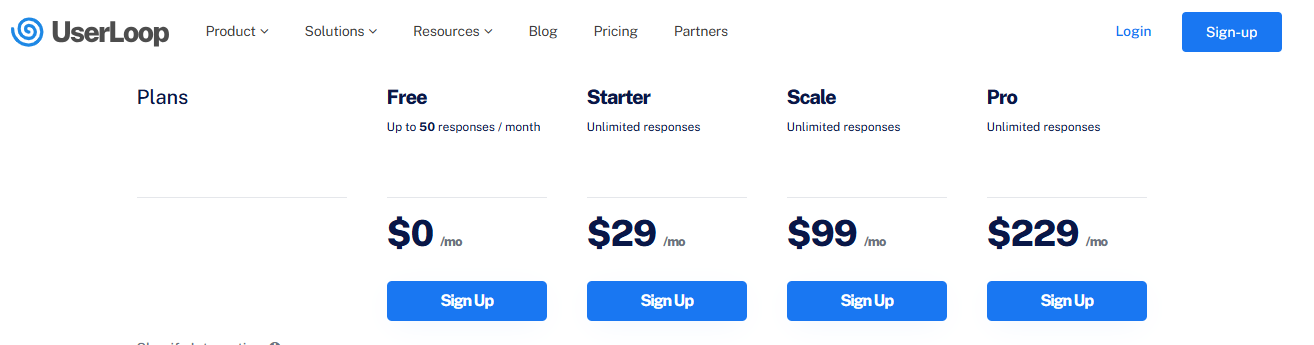
Pricing
What were the biggest lessons learned from building UserLoop?
- Iterate Based on Feedback: UserLoop thrived by actively iterating its products based on customer feedback. James Devonport quickly adapted features to suit Shopify users' needs, proving the value of customer-driven development. Prioritize getting feedback early and often to refine your offering.
- Leverage No-Code Tools: Building UserLoop on Bubble allowed for rapid development and iteration without a development team. No-code platforms can drastically cut costs and development time, enabling founders to focus more on product-market fit rather than technical complexities.
- Overcome Technical Challenges with Smart Choices: UserLoop faced issues with latency and data handling on Bubble. By integrating Tinybird for analytics, they improved performance and reduced costs. Be open to integrating complementary technologies to overcome platform limitations.
- Embrace Resilience and Adaptability: James Devonport's journey with UserLoop showcases resilience in the face of challenges. Continuous adaptation, like shifting analytics to Tinybird, exemplifies the importance of flexibility in maintaining service quality and scaling effectively.
- Focus on Scalability and Efficiency: UserLoop's integration with Tinybird improved scalability and efficiency, allowing the business to handle more data effortlessly. As you grow, ensure your infrastructure scales efficiently to maintain performance and manage costs effectively.
What platform/tools does UserLoop use?
Discover Similar Business Ideas Like UserLoop







More about UserLoop:
Who is the owner of UserLoop?
James Devonport is the founder of UserLoop.
When did James Devonport start UserLoop?
2021
What is James Devonport's net worth?
James Devonport's business makes an average of $10K/month.
How much money has James Devonport made from UserLoop?
James Devonport started the business in 2021, and currently makes an average of $120K/year.