Our Simple Side Project Makes $700 Per Month (Just Launched!)
Who are you and what business did you start?
Hello! My name is Jamal and I am a Full Stack Developer from Calgary, Canada who built Waypoint Budget alongside my fiancée, who's the key decision maker in anything design and marketing related.
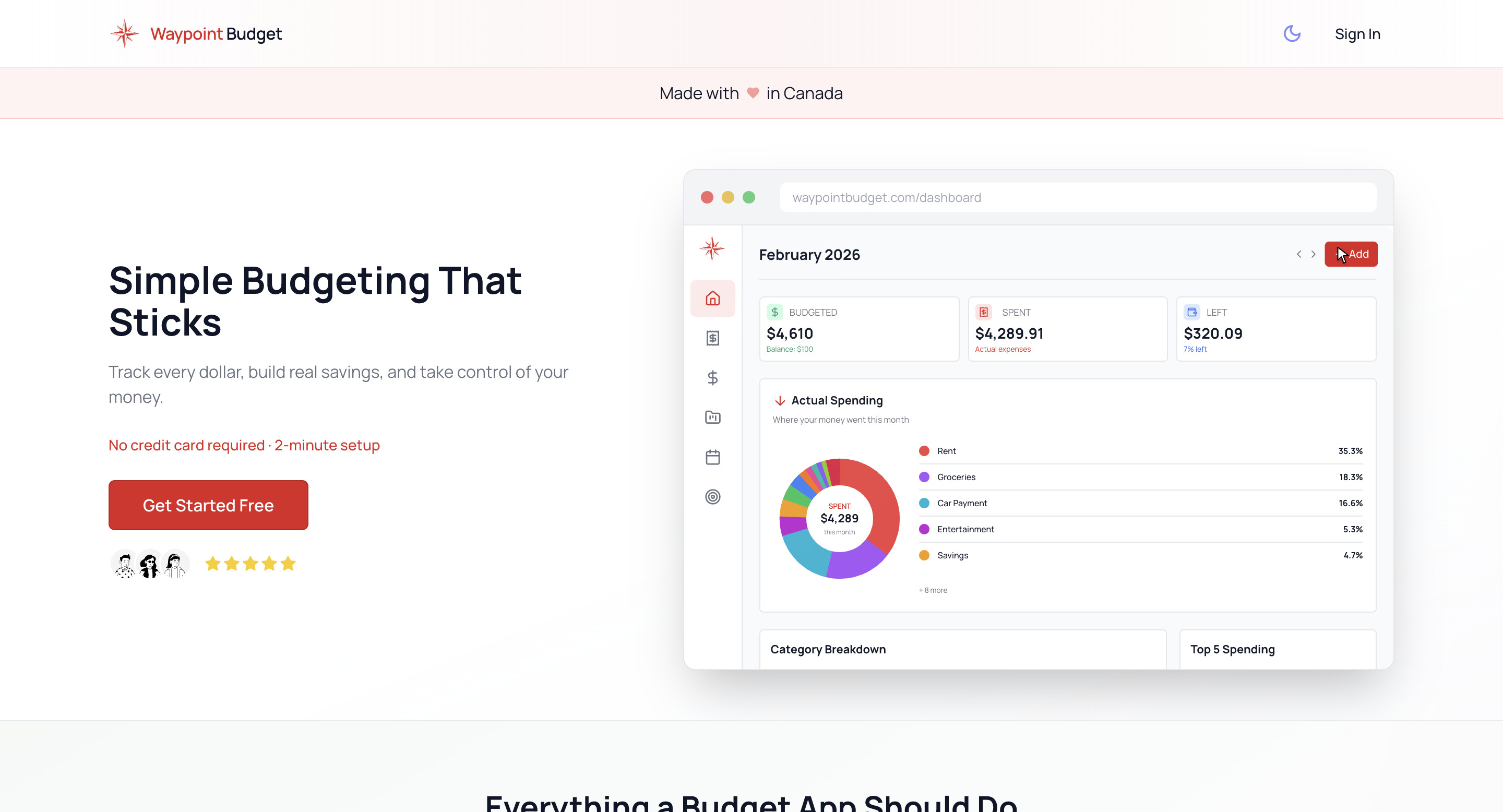
Waypoint Budget is a simple, beginner-friendly budgeting app for Canadians and Americans without the complexity. It serves everyday people who want to track their spending, build real savings, track their goals, and stay on top of their finances without a steep learning curve.
What makes us attractive to customers and what we hear consistently is that we're beginner-friendly and incredibly simple to use. Most of the people who migrated to Waypoint Budget did so because of that simplicity. Customer service has also been a big one. I listen, learn, and improve every day thanks to the requests I get in my inbox and on our https://waypointbudget.featurebase.app/roadmap. Community is a huge aspect here and every request and opinion is valued.
Today we're bringing in $700/month and growing each day.
How do you come up with the idea for Waypoint Budget?
Waypoint Budget initially started as a project to be better with my finances after months of sleepless nights where I was anxious about money. My fiancée finally sat down with me and we wrote everything down on a piece of paper, all my needs, my wants, and savings. It was eye-opening. In my 27 years of life, I had never once budgeted, and finally seeing everything on paper I realized how much I was underwater every month.
For a few months after that, I tracked everything on paper and it worked but I was finding it hard to track things with pen and paper leaving a lot out . Being a developer, I naturally looked for an app that could do what that piece of paper did, just better. I tried YNAB, Mint, and a few others, but they were either too complicated, too expensive, or didn't support Canadian banks properly. Nothing felt like that simple piece of paper.
So I decided to build something myself. The first version was honestly just for me, a clean interface(like my piece of paper) where I could see my budget at a glance without feeling overwhelmed. I shared it with a few friends, and the reaction was immediate: "This is so much simpler than everything else out there." That was the aha moment. I realized the problem wasn't that people didn't want to budget, it's that every tool made it feel like work.
I validated it by launching publicly on Reddit, at first for Canadians and listening. Every feature we've built since has come from real user feedback. Ever since then we have been growing daily and people are consistently checking their budget every single day so much that the complain now is that we want the app to be real time(which for anyone that has used budgeting apps would know is not possible at the moment in Canada).
How did you build the initial version of Waypoint Budget?
- Jamal built Waypoint Budget by initially tracking his own finances on paper and realizing the need for a simple budgeting tool.
- The first version was a clean interface designed to mimic the simplicity of his pen and paper method, shared with friends for feedback.
- Tools used included coding languages for app development, likely including HTML, CSS, and JavaScript, as well as databases for user data storage.
- The experience of building it involved iterating based on user feedback and validating ideas through public launches on platforms like Reddit.
- The first version likely took a few months to build and refine based on initial user reactions and feedback.
How did you launch Waypoint Budget and get initial traction?
This was a real learning curve as this was my first real business ever. But I had experience from my day job sitting in meetings with SEO and content teams, so I knew organic discoverability was where I needed to start.
I focused on SEO first and wrote a handful of blog posts. The entire month of December - nothing. Zero conversions. But I didn't stop and worked on it every day. Then on January 4th, right around New Year's and a day before our anniversary, we got our first paying customer. After that, we started seeing 1-2 free trials daily, and that's when I knew organic was where I needed to double down. This way my website was not only showing up in Google/Bing but also being recommended by AI agents like ChatGPT, Perplexity etc.
I also used Reddit as a marketing channel, focusing on Canada first because that's where I'm from and where good budgeting alternatives barely exist. The response was overwhelmingly positive. People were desperate for a simpler, cheaper alternative to YNAB and Monarch. When they found out I was building exactly that, signups shot up.
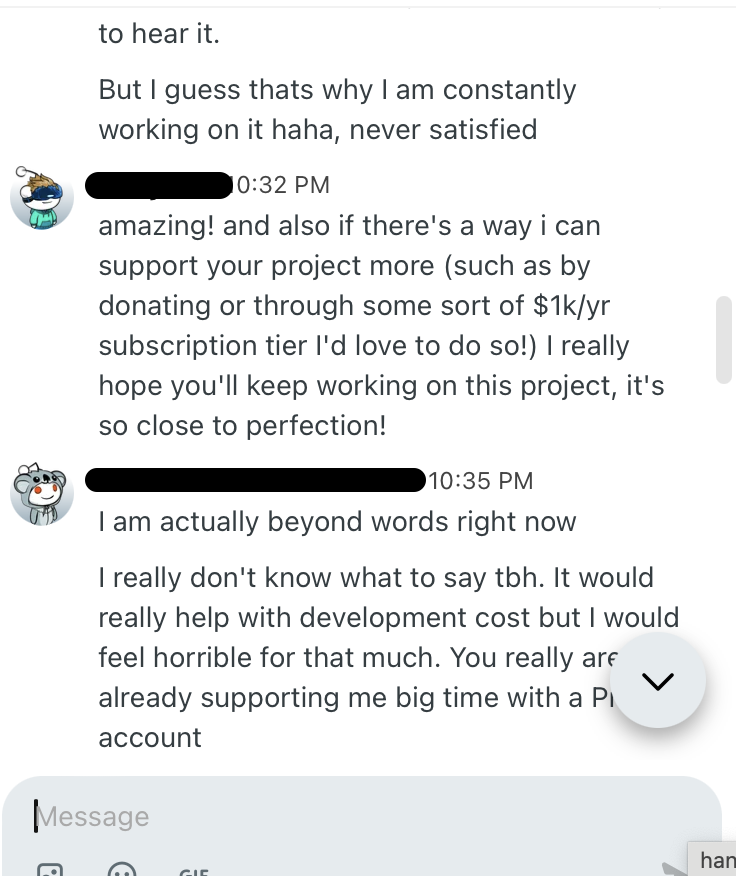
One person even reached out through DMs and contributed a thousand dollars so I could spend more time building the app. That told me the demand was real.
My image
What I'd do differently: I burned a lot of cash early on with Google Ads and Instagram Ads. That money would have been better spent listening to the customers I already had and improving the app based on their feedback.
The biggest personal lesson was realizing that starting a business isn't some massive undertaking reserved for a select few. Anyone with the right planning and organization can do it.
And having Claude as my copilot has been a gamechanger, it's like having a second brain, copywriter, and strategist available 24/7.
What was the growth strategy for Waypoint Budget and how did you scale?
My biggest advice to aspiring entrepreneurs: focus on organic first. Don't spend a dollar on ads until you have a product people actually want. Get your first few customers, listen obsessively to their needs, and build for a couple months before even thinking about paid channels.
For me, the growth playbook has been:
SEO & Content: I wrote 60+ blog posts targeting long-tail Canadian personal finance keywords like "TFSA contribution room 2026" and "best budgeting app Canada." This drives consistent organic traffic every day without spending a cent. Invest in link building early as it compounds over time.
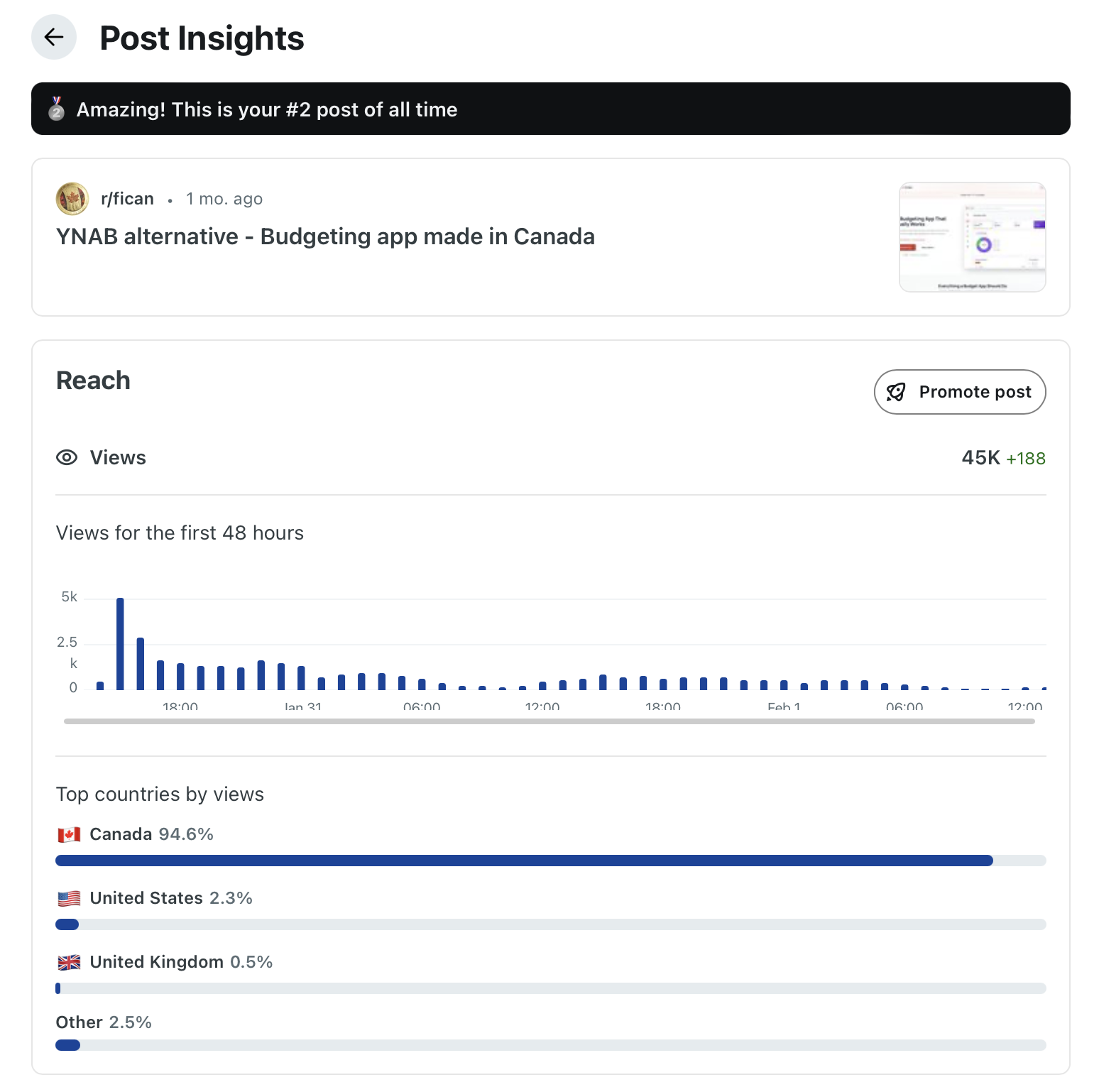
Reddit: I posted genuinely in r/fican and similar communities. Not spammy self-promotion but real helpful answers where Waypoint naturally fit. The Canadian personal finance space was underserved and people were actively looking for YNAB and Mint alternatives. When they found out someone was building exactly that, the response was overwhelming.
The post that catapulted my app discovery via Reddit
Customer service as a growth channel: I reply to every email fast, usually within hours. When someone tells me they're happy, I ask for a Trustpilot review. Simple as that. We now have dozens of 5-star reviews, which helps Google rank us higher and gives new visitors instant trust. Word of mouth from happy customers has been our most reliable growth engine.
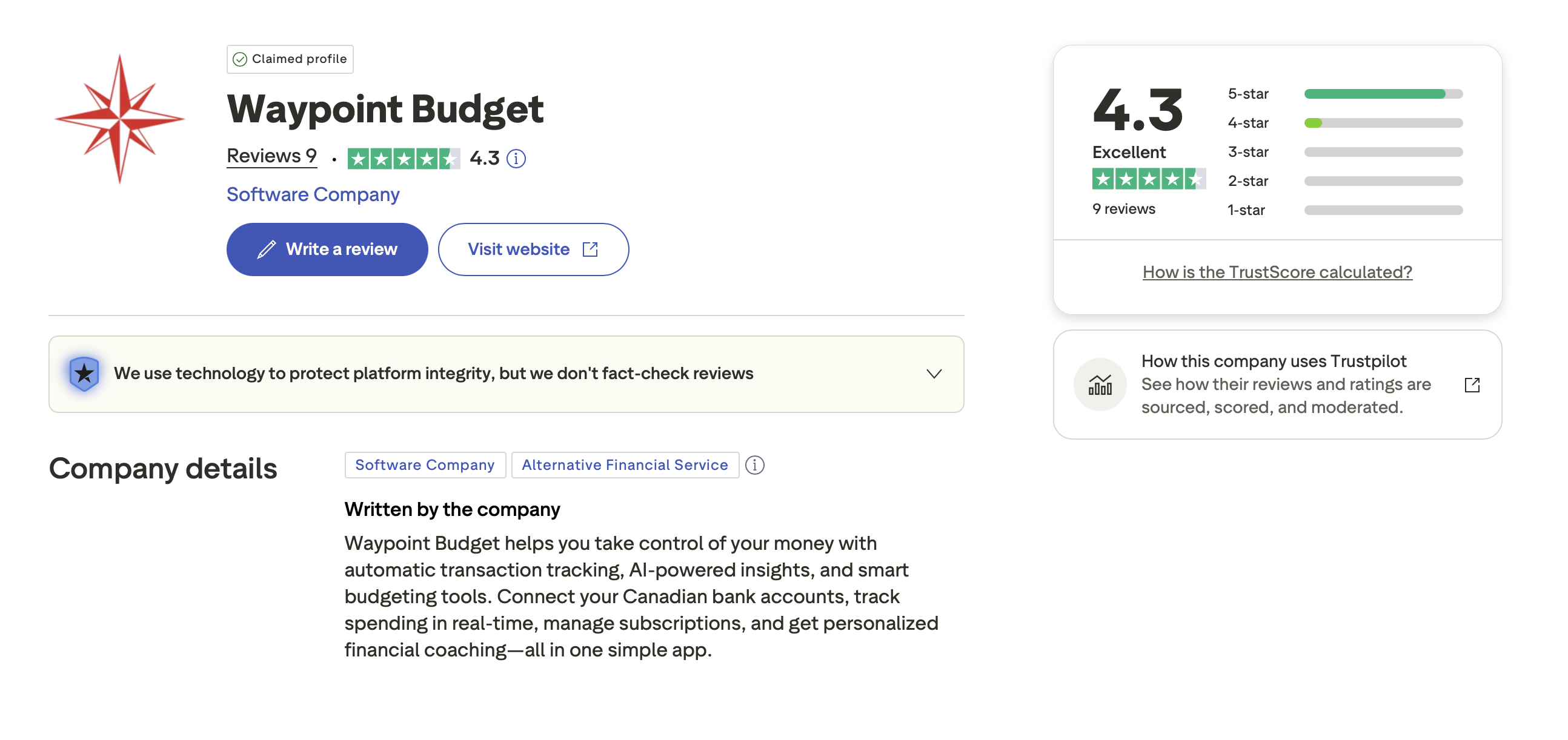
Our presence on Trustpilot
What I'd tell other founders: Skip the Google Ads and Instagram Ads early on. I burned cash there with little to show for it. That money is better spent on early business costs and maybe paying someone to help with writing blogs, link building or content creation. Do everything you can to improve the discoverability of your website early on.
What were the biggest lessons learned from building Waypoint Budget?
I think what I learned through this journey so far is that anyone can start a business. I have a very successful relative from Toronto who is doing very well for himself and he would always push me to create something for myself. He's seen my work and always thought there was potential in me but I never really believed in myself. I would always push back saying it's too hard, the market is saturated, how am I any different than the million of people out there and the list of excuses goes on.
I just never thought it could be this straightforward. It was only when one night I couldn't sleep and I was seriously I debt and growing every month that I decided to take a leap and finally start my own business to make some extra cash. I didn't know anything at first but every day I was learning something new and I didn't realize how much I already knew because I had past experience form work that I could apply. Very soon I realized it was the same but more process oriented and well planned. I started getting better at note taking, doing my work smarter not harder, leveraging AI where I fell short and very soon the puzzle pieces start falling in place. Now fast forward to today we have around 900 customers and a 105 paid.
I feel like the best decision I made along the way was talking about my business more but organically and listening to customers pain points early on. People really appreciated how fast I was to get back to them, how I kept notes of everything they needed to make their budgeting easier. I would get back to everyone on time and make sure they felt heard and that really helped with people talking about my business to their friends, relatives etc and that's why I have so many people signing up locally from Calgary.
What I would say is helped me to grow fast was to be open to change, be flexible and listen to your customers. Don't waste your money on ads or anything else thats not important until you really know what your customers want and leverage AI, these AI assistants are there to improve your productivity but at the end of the day you will have to be the one to call the shots so make sure you ask for clarification on everything and be willing to learn. If you think AI agents will take care of everything for you, you'll soon find out they are just like auto pilot mode on the plane, you still have to learn how to take off and land.
Discover Similar Business Ideas Like Waypoint Budget






More about Waypoint Budget:
Who is the owner of Waypoint Budget?
Ahmad Jamal is the founder of Waypoint Budget.
When did Ahmad Jamal start Waypoint Budget?
2025
How much money has Ahmad Jamal made from Waypoint Budget?
Ahmad Jamal started the business in 2025, and currently makes an average of $8.4K/year.
More Case Studies Like This





Starter Story × HubSpot
Free tools for every part of your business.
Find customers, win deals, and automate the busywork with HubSpot's free tools.