I Make $5K/Month Selling Tools For Investors
Who are you and what business did you start?
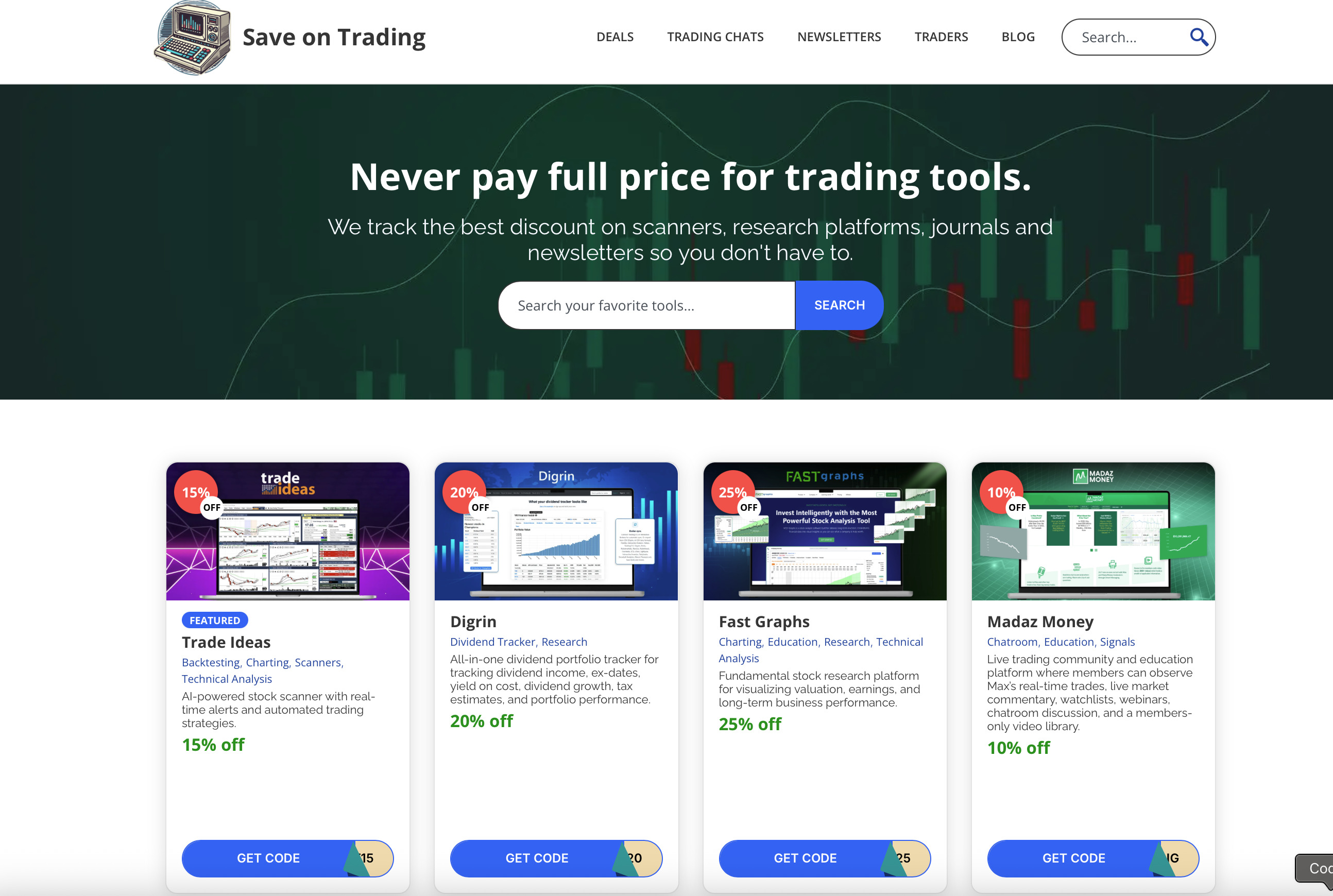
Hello! My name is Kyle Vallans, and I run Save On Trading, a site that helps traders and investors get the best prices on top trading tools and services.
Our customers are active traders, investors, and market participants looking for research, charting, scanners, brokers, education, and trading software.
What makes us different is that we are built specifically for traders. I’ve traded for nearly a decade, worked at a proprietary trading firm, tested hundreds of tools, and built relationships with founders and teams to secure better deals.
Today, Save On Trading brings in around $4.7K/month in revenue.
How do you come up with the idea for Save On Trading?
I came up with Save On Trading because I was already the target customer. I had been trading for nearly a decade, worked at SMB Capital/Kershner Trading Group as a proprietary trader, and tested hundreds of trading tools, brokers, scanners, journals, and research platforms.
When I was at the firm, my tech fees were often $30K-$50K per year. After years of blindly paying that, I started asking: could I reduce my tech stack to a few great tools, and could I get better deals by reaching out to founders directly?
That was the “aha” moment. I hate overpaying, and I wanted traders to know they were getting the best prices.
How did you build the initial version of Save On Trading?
To specifically build the product for Save On Trading, founder Kyle Vallans focused on creating a website that helps traders find the best prices on trading tools and services. He used a mix of SEO, content, newsletters, social media, Discord, YouTube, and guest posts to drive initial traction and growth. The development process involved creating useful pages around tools traders were already searching for, negotiating with founders for better offers, and building a trading community through Discord. The first version took about a year to build and was initially centered around lifetime deals before pivoting to recurring affiliate revenue and exclusive discounts. Kyle's advice for aspiring entrepreneurs is to pick a niche they understand, create content around buyer intent, and build relationships with companies selling into the target audience.
How did you launch Save On Trading and get initial traction?
I originally launched Save On Trading as a newsletter. My first idea was to build it around lifetime deals, almost like an AppSumo-style model for trading tools.
I learned pretty quickly that this was not realistic. Many of the best trading tools are established companies with data fees, ongoing infrastructure costs, and subscription-based businesses. They did not want to offer lifetime deals, and honestly, recurring revenue makes more sense for everyone involved.
That forced me to pivot, and I’m glad it did.
Instead of chasing one-time lifetime deals, Save On Trading became a place where traders can find the best prices on tools they already want, while I build recurring affiliate revenue from products I believe in and want to promote.
The first dollar came quickly because the value was obvious. Traders already needed these tools. If I could help them get a better deal, they had a reason to buy through us.
The lesson was simple: listen to the market. My original idea was not feasible, but the better version was sitting right next to it.
What was the growth strategy for Save On Trading and how did you scale?
I’ve grown Save On Trading through SEO, content, newsletters, social media, Discord, guest posts, cross-promotions, and direct partnerships with companies in the trading space.
The main strategy has been simple: create useful pages around tools traders are already searching for. Instead of trying to convince people they need something random, I focus on products they already want, then help them get the best price.
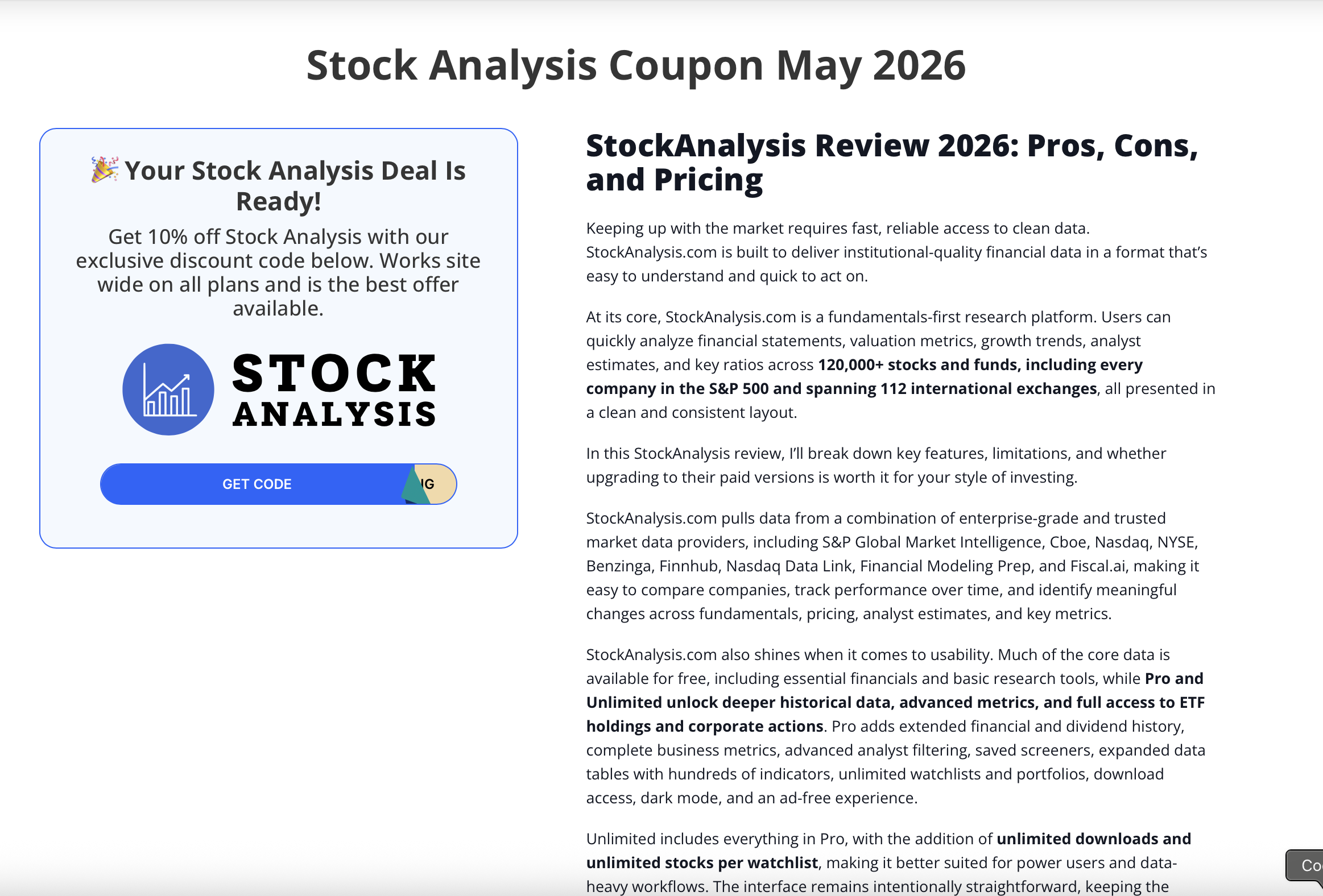
Offer Page
I’ve also grown through direct relationships. I reach out to founders, affiliate managers, and partnerships teams to negotiate better offers for my audience. Companies like working with us because we drive unique clicks, signups, and customers. I also have a real voice in the space as a trader with a prop trading background, so I can create content that feels more authentic than a generic coupon site.
The channels I use most are SEO, email, Discord, YouTube, social media, and guest posts. SEO works because people are already searching with buyer intent. Discord works because it builds trust and community. Email works because it lets me stay in front of people daily. Guest posts work because I can borrow the trust and distribution of companies I already partner with.
One strategy that has worked really well is my Discord funnel. Instead of pushing people to join a newsletter directly from our site (or anywhere), I invite them into my free Overnight Momentum Trading Discord. That gets people apart of a community first before I ever ask them to buy anything.
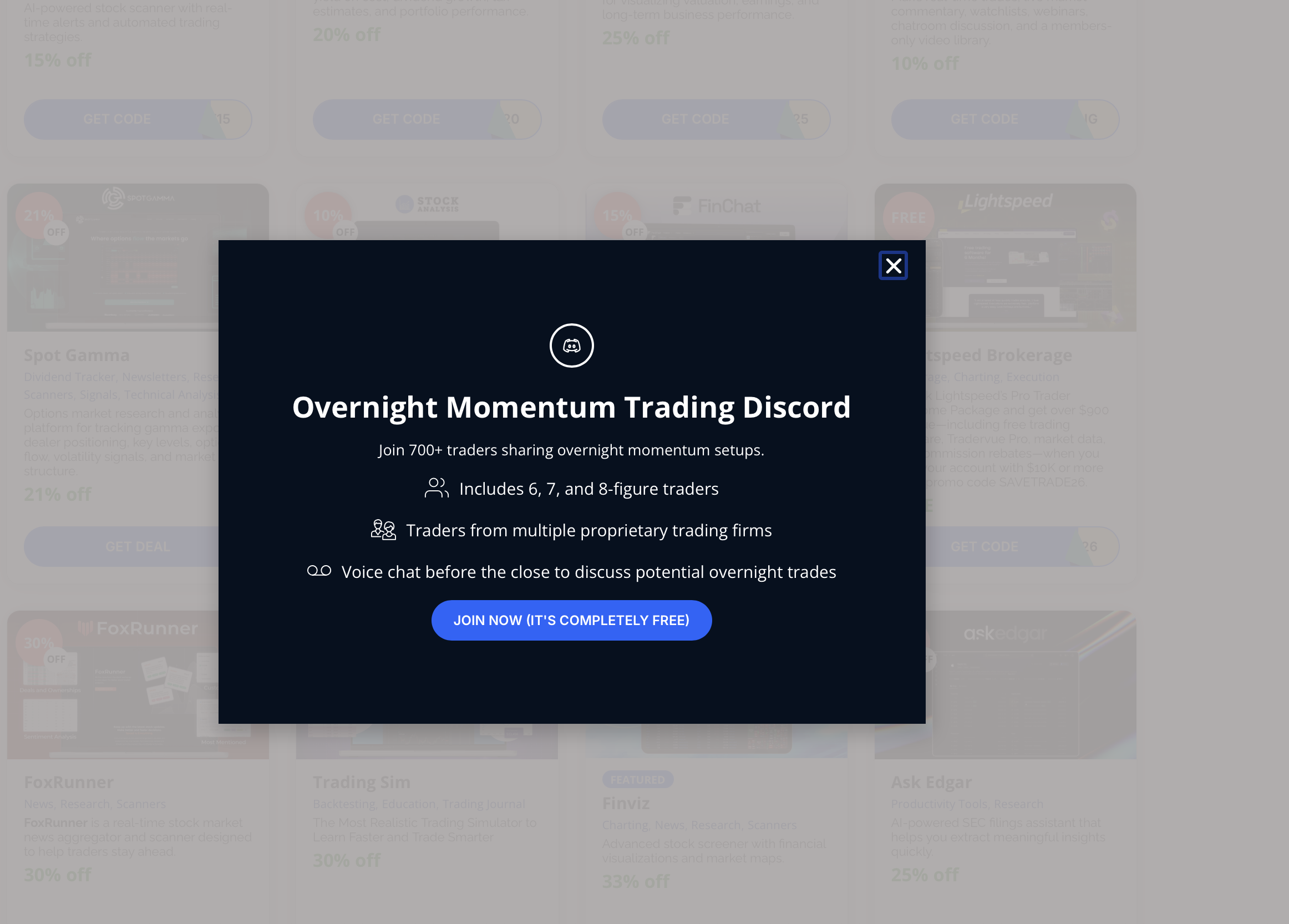
Pop up to join trading community instead of newsletter
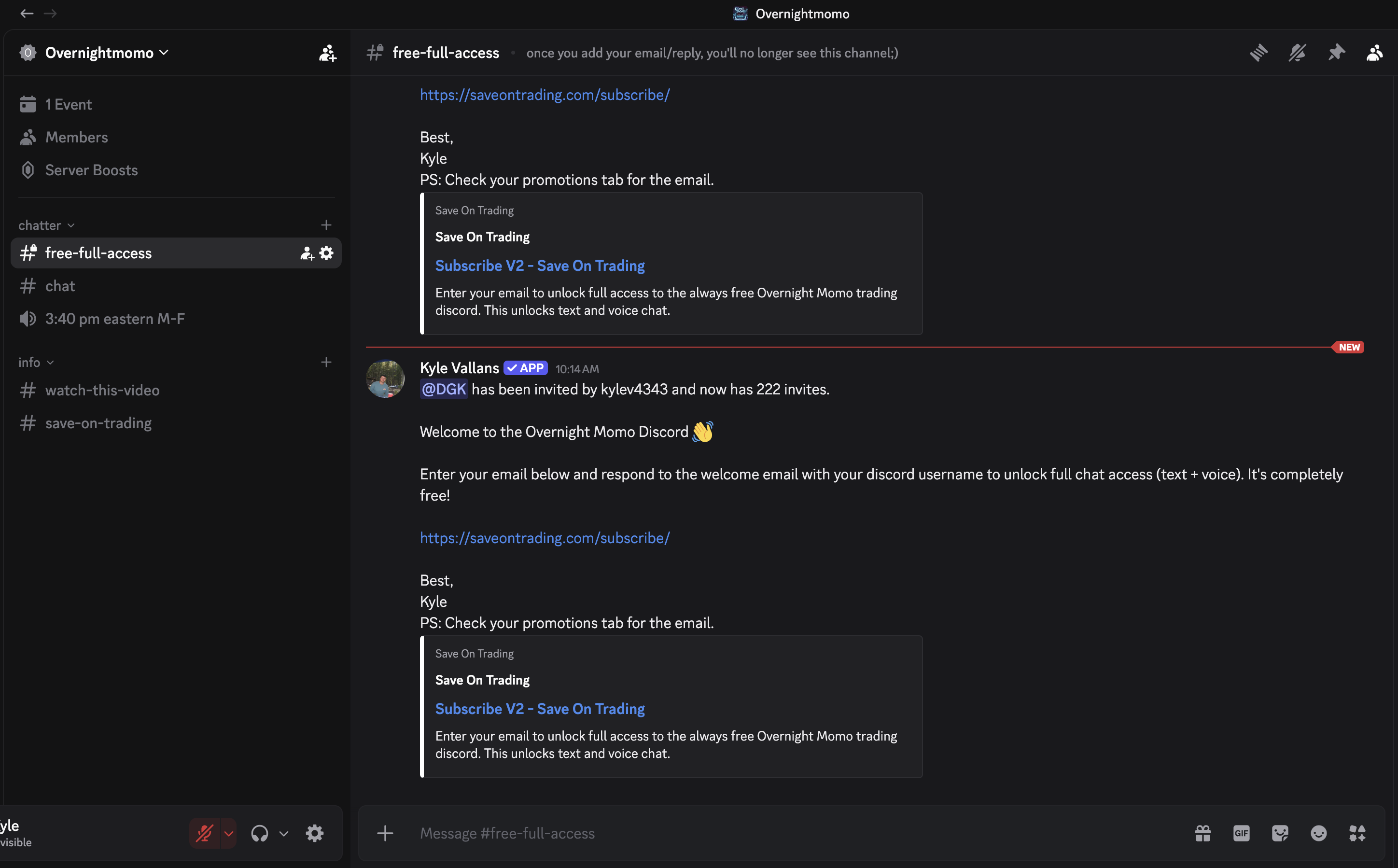
Asking for email for access to chat

Landing Page

Co-Registration Page #1 with partners
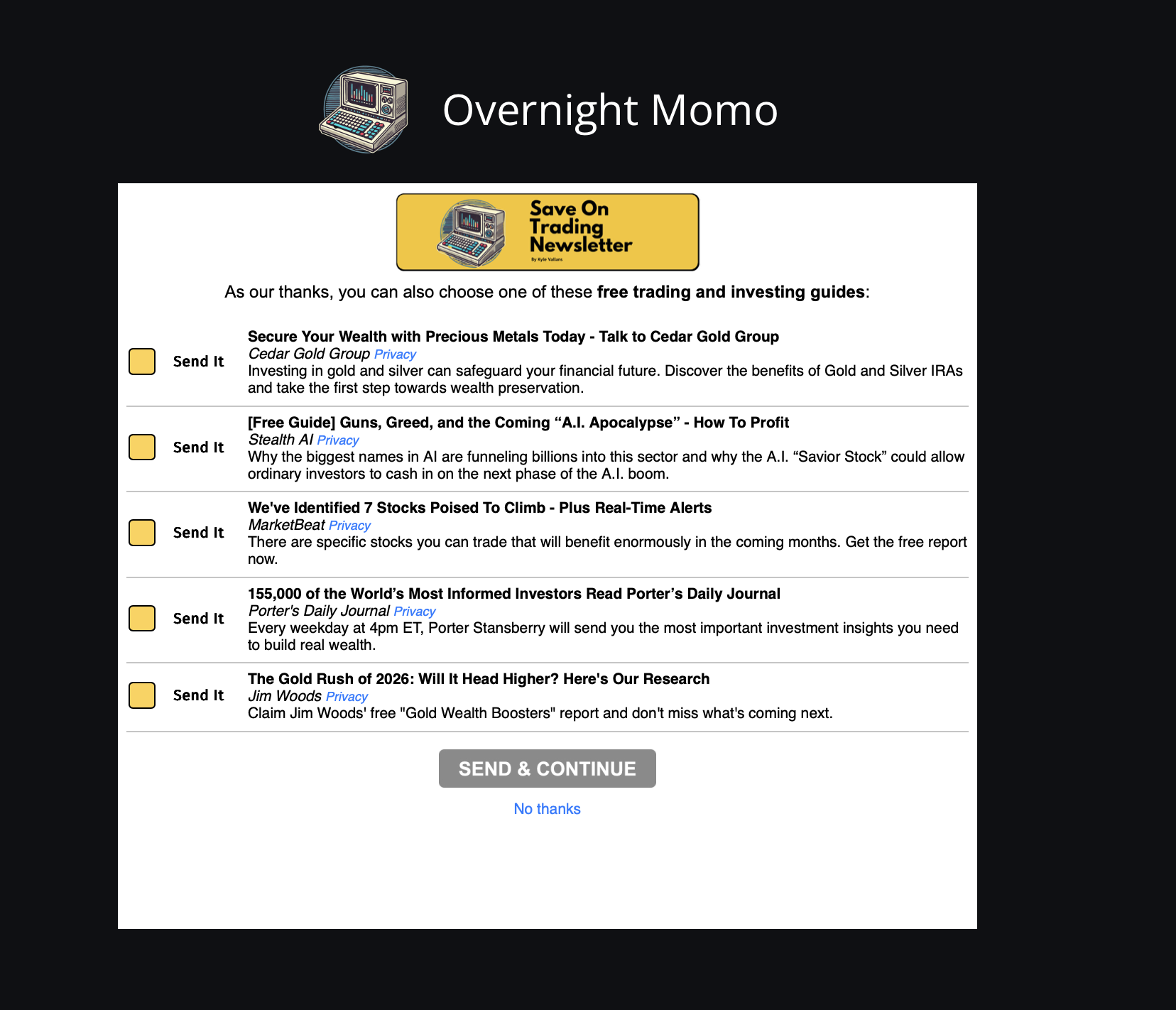
Co-Registration Page #2
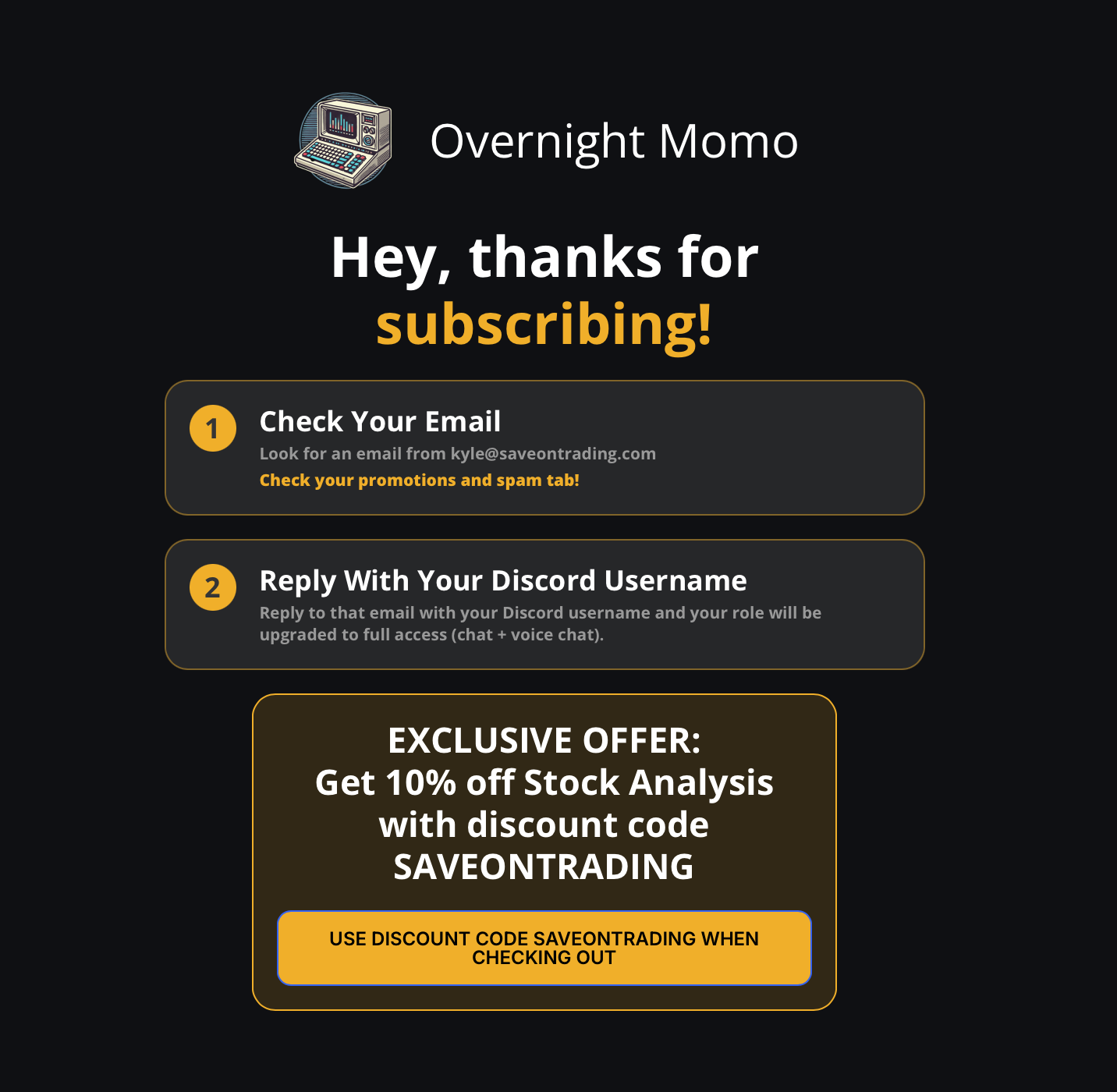
Thank You Page with Affiliate Offer
I also cross-promote with other Discord communities in the trading space. The idea is simple: we help them grow their Discord, and they help us grow ours. It is a much warmer way to grow than cold traffic because the audience already trusts the community owner.
This works because it gives people something valuable first: access to a free trading community. It also creates several revenue opportunities without making the user experience feel overly sales-driven.
My advice to aspiring entrepreneurs is to pick a niche you genuinely understand, create content around real buyer intent, and build relationships with companies that already sell into that audience. Distribution matters. A good deal is useful, but it only works if the right people see it.
What were the biggest lessons learned from building Save On Trading?
One of the biggest lessons I’ve learned is that the first version of the idea is usually not the best version.
I originally thought Save On Trading would be built around lifetime deals. I liked the AppSumo model and thought traders would love lifetime deals on trading tools. The problem was that most good trading companies did not want to run lifetime deals. They have data fees, infrastructure costs, support costs, and recurring revenue models for a reason.
That forced me to pivot, and it ended up being one of the best things that happened. Instead of chasing one-time deals, I focused on recurring affiliate partnerships and exclusive discounts. That is better for the companies, better for me, and still great for traders because they get the best available prices.
Another lesson is that distribution matters more than people think. A good offer is not enough. You need SEO, email, community, social, partnerships, and a reason for people to trust you. The best decision I made was building around a niche I actually understand. Because I’ve traded for years, understand trading tools, and enjoy writing, I can talk about these products with real context.
The mistake I see others make is jumping from one business idea to the next and never seeing one through. I think a lot of people quit before the compounding starts.
My biggest advice is not to go all in too early on a side project. I was already a full-time trader and had some money in the bank, so I could build Save On Trading on the side without forcing it to work immediately.
Funny enough, becoming the #1 affiliate for Stock Analysis through Save On Trading eventually led to me working internally for the company as Head of Partnerships. Even though Save On Trading averaged around $4,662.12/month in its first year, it should continue to compound through recurring affiliate revenue.
That is one of the best parts of the business. It did not just create income. It created relationships, trust, and an incredible opportunity to work at a company I genuinely love.
Discover Similar Business Ideas Like Save On Trading
|
|
Idea
|
Revenue
|
|---|
More about Save On Trading:
Who is the owner of Save On Trading?
Kyle Vallans is the founder of Save On Trading.
When did Kyle Vallans start Save On Trading?
2025
How much money has Kyle Vallans made from Save On Trading?
Kyle Vallans started the business in 2025, and currently makes an average of $56K/year.
More Case Studies Like This





Starter Story × HubSpot
Free tools for every part of your business.
Find customers, win deals, and automate the busywork with HubSpot's free tools.