My Mobile App Made $4,000 in 2 Weeks
Who are you and what business did you start?
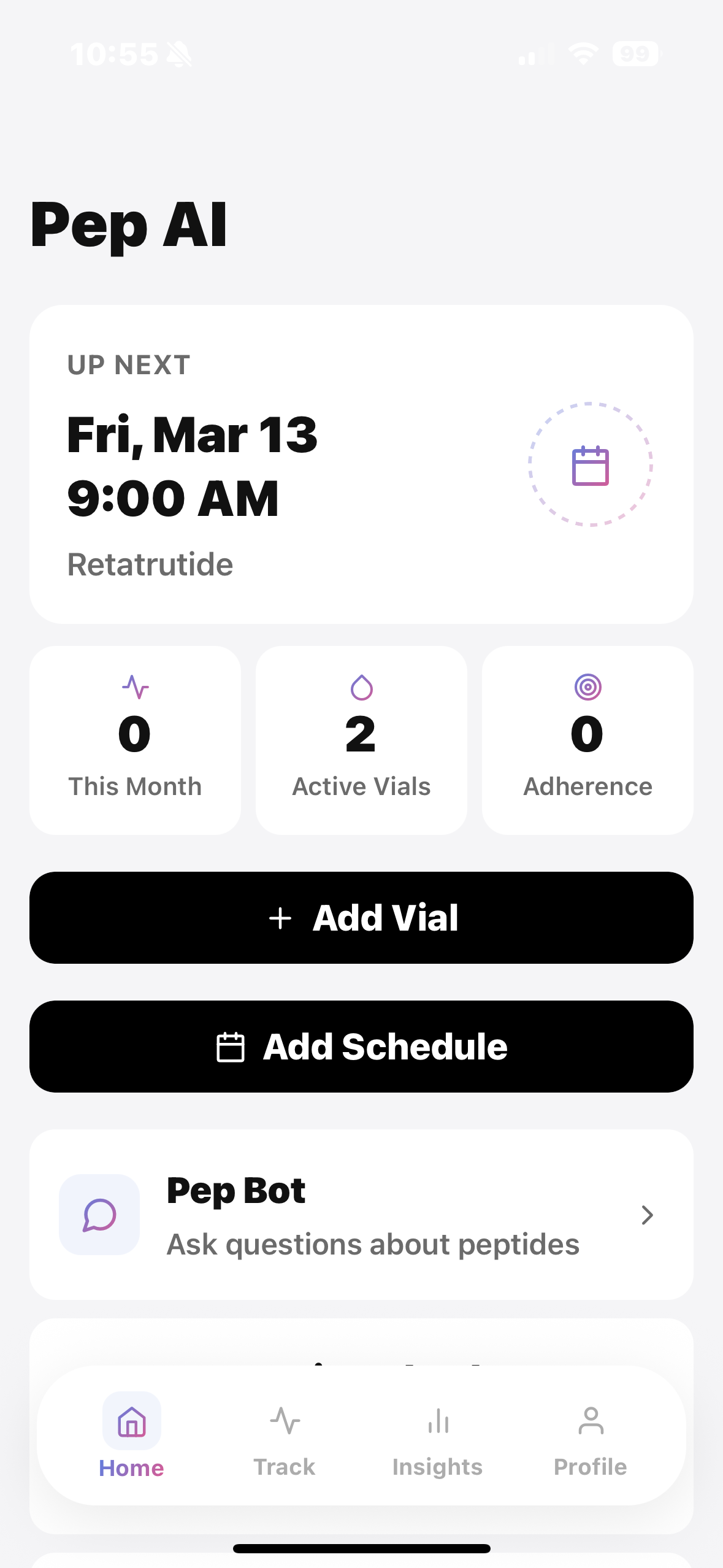
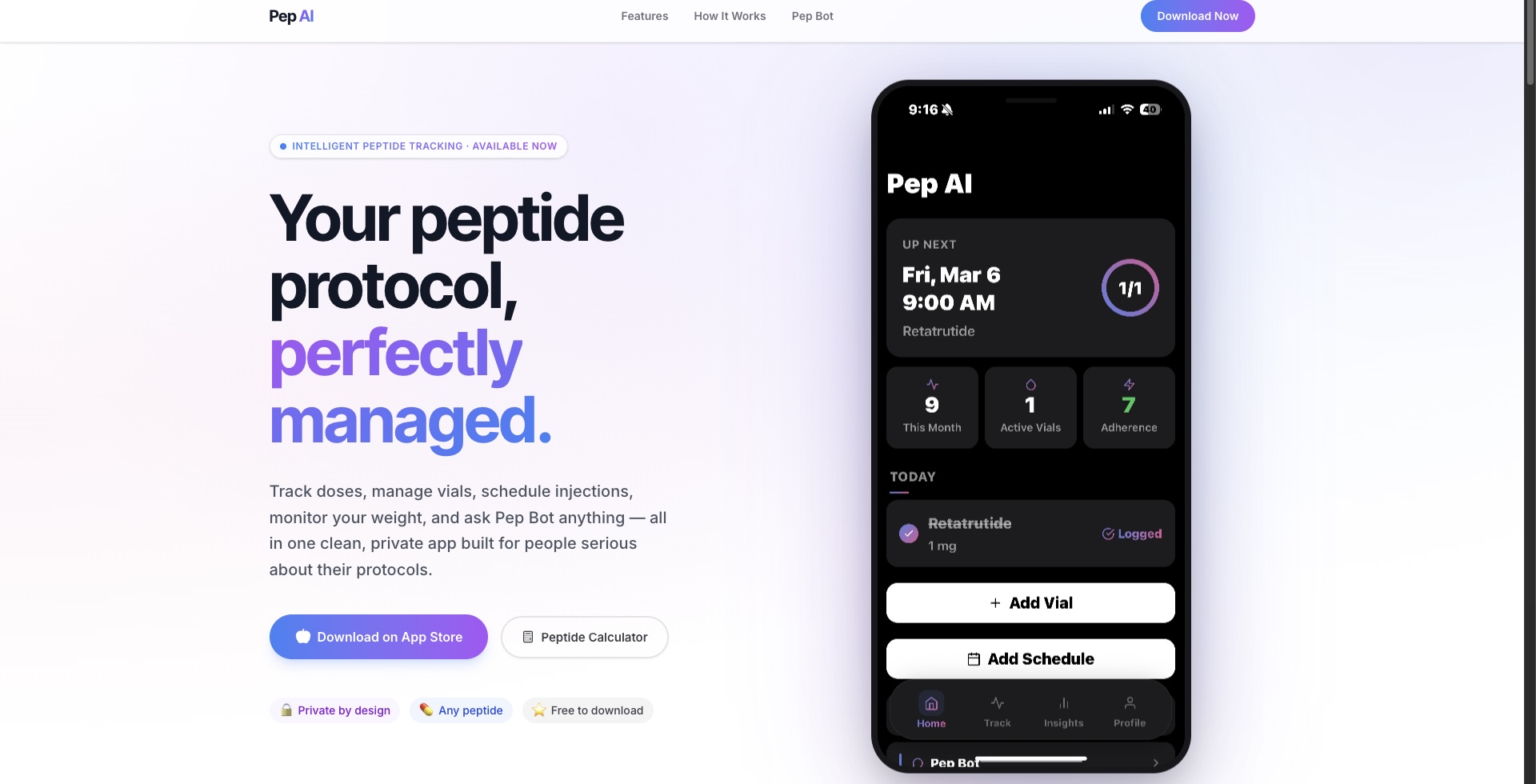
Hey, I'm Cedric Roberge — I'm a 22-year-old business student at the University of Oregon and the founder of Pep AI, a mobile app that helps people safely track their peptide protocols. Pep AI is built for the growing community of people using peptides like retatrutide, semaglutide, BPC-157, and others. The app lets users track vial lifespans, schedule doses, log injection sites, monitor side effects, and stay on top of nutrition and hydration — all in one place. What makes it different is that nothing like this existed before. Peptides have exploded on social media but there was no dedicated tool to help people use them safely. We even generate PDF reports users can bring to their doctor showing exactly what they've taken and for how long. We launched two weeks ago and have already hit 2,000 users and over $4,000 in revenue.
My image
How do you come up with the idea for Pep AI?
The idea came from my own experience. About two months ago I started taking a peptide called retatrutide and quickly realized there was no good way to keep track of everything — when I took my doses, how much was left in the vial, when the vial would expire. That last part is actually a safety issue. Peptide vials go bad after about 30 days once reconstituted, and if you keep using them past that point you can get really sick. A close friend of mine didn't know this and kept using his retatrutide vial well past 30 days and ended up getting seriously ill. That was the moment I knew this needed to exist. I started looking for an app that could help and there was nothing out there. People were using spreadsheets, notes apps, and random reminders to manage their protocols. Meanwhile peptides have blown up on social media — millions of people are now using them, and many of these compounds aren't even FDA approved yet. There was a real need for a tool that helped people be organized and safe about it. I come from a product and marketing background as a business student, and I'd already built and launched other apps through my company Zode Development LLC, so I knew I could build this quickly. To validate the idea I posted in a few Reddit and Discord communities where peptide users hang out, and the response was immediate — people were asking when they could download it before I even finished building it.
How did you build the initial version of Pep AI?
Cedric Roberge built Pep AI using AI tools such as Replit and Claude, allowing him to go from idea to a live, revenue-generating app in about a month. The initial prototype of Pep AI was launched on the App Store in mid-February 2026, with a focus on getting it in front of real users as quickly as possible. Despite launching with bugs and missing features, user feedback helped him iterate and improve the product rapidly. Cedric's biggest lesson was that speed beats perfection, and his use of AI tools enabled him to build a real product without needing a CS degree.
How did you launch Pep AI and get initial traction?
We launched Pep AI on the App Store in mid-February 2026. I didn't have a big launch plan — I just wanted to get it in front of real users as fast as possible. The night we went live I posted in a couple of Reddit communities and a few peptide Discord servers and went to bed. I woke up the next morning to dozens of downloads and my first paying subscriber. Someone had found the app, hit the paywall, and paid within the first hour of it being live. That was a surreal feeling — going from code on a screen to someone actually paying for something I built, overnight. By the end of the first week we had crossed 1,000 users and were approaching $2,000 in revenue. The response caught me off guard. People were DMing me saying they had been waiting for something like this. One user told me he had been tracking his entire protocol in a Google Sheet with 15 tabs and switched everything to Pep AI the same day he found it. The most common reaction was just "why didn't this exist already?" The biggest lesson from launch was that timing matters. Peptides are having a massive cultural moment right now — they're all over TikTok and Instagram, millions of new people are trying them, and the market was completely underserved in terms of tools. If I had launched this same app two years ago it probably would have gone nowhere. But launching right when the wave was peaking meant there was a huge audience already looking for exactly what we built. The other lesson was to just ship it. The app wasn't perfect on day one — there were bugs, missing features, and things I wanted to polish. But getting it into real users' hands immediately was more valuable than another month of tweaking things in private.
What was the growth strategy for Pep AI and how did you scale?
Our growth strategy has been built around three layers: organic community engagement, targeted paid ads, and word of mouth inside the peptide space. The foundation has been Reddit and Discord. The peptide community online is huge and incredibly active — subreddits like r/peptides and r/retatrutide have hundreds of thousands of members discussing protocols daily. Instead of just dropping links, I spent time actually participating in these communities. I'd answer questions about vial storage, reconstitution, and dosing schedules, and when it was natural I'd mention that I built an app to help with exactly that. One post in r/peptides where I shared the story behind building the app drove over 300 downloads in 48 hours without spending a dollar. Discord was similar — smaller private servers with a few thousand members each, but the trust level is higher so the conversion rate was even better. On the paid side, we've run Instagram ads targeting people in the peptide, biohacking, and fitness communities. The ads have been solid but the real unlock was creative that didn't look like an ad. Our best performing content was simple screen recordings of the app in action — showing someone logging a dose, checking their vial expiration, or scrolling through their protocol timeline. It felt native to the platform instead of salesy, and that made all the difference in engagement. The third layer has been organic word of mouth. Peptide users talk to each other constantly — in group chats, in DMs, on forums. When someone finds a tool that actually helps them, they share it. We've seen users post screenshots of their Pep AI dashboards in Reddit threads and Discord channels without us asking them to. That kind of unpaid advocacy is the most powerful growth channel we have and it compounds over time. Our next phase is scaling through content creators. The peptide space on TikTok is exploding — videos about retatrutide and semaglutide regularly get millions of views. We're building a team of peptide creators on Instagram and TikTok who will integrate Pep AI into their content naturally. We believe this creator-led approach combined with what's already working organically can push us past $20,000 in monthly revenue within the next 30 days. For anyone trying to grow a product in a niche space, my biggest advice is to become a real member of the community first. Don't show up just to promote — show up to help. The credibility you build by being genuinely useful earns you more customers than any ad campaign. And when you do share your product, it doesn't feel like marketing because people already trust you.
What were the biggest lessons learned from building Pep AI?
The biggest lesson I've learned is that speed beats perfection. I launched Pep AI with bugs and missing features, and it didn't matter — real user feedback taught me more in one day than another month of building alone ever would have. My biggest mistake was not understanding Apple's review guidelines before submitting. We got rejected multiple times and each one cost us days of momentum. Read the rules before you build. The best decision I made was using AI tools to build everything. I'm a business student, not an engineer. Replit and Claude let me go from idea to a live, revenue-generating app in about a month. You don't need a CS degree to build a real product anymore — you just need to understand the problem and move fast. My advice: stop waiting. The tools exist, the platforms exist. Start ugly, start small, start today.
Discover Similar Business Ideas Like Pep AI





More about Pep AI:
Who is the owner of Pep AI?
Cedric is the founder of Pep AI.
When did Cedric start Pep AI?
2026
How much money has Cedric made from Pep AI?
Cedric started the business in 2026, and currently makes an average of $360K/year.
More Case Studies Like This




Starter Story × HubSpot
Free tools for every part of your business.
Find customers, win deals, and automate the busywork with HubSpot's free tools.