How I Started A $4,500/Month Service Helping Creators Monetize With Digital Products
Who are you and what business did you start?
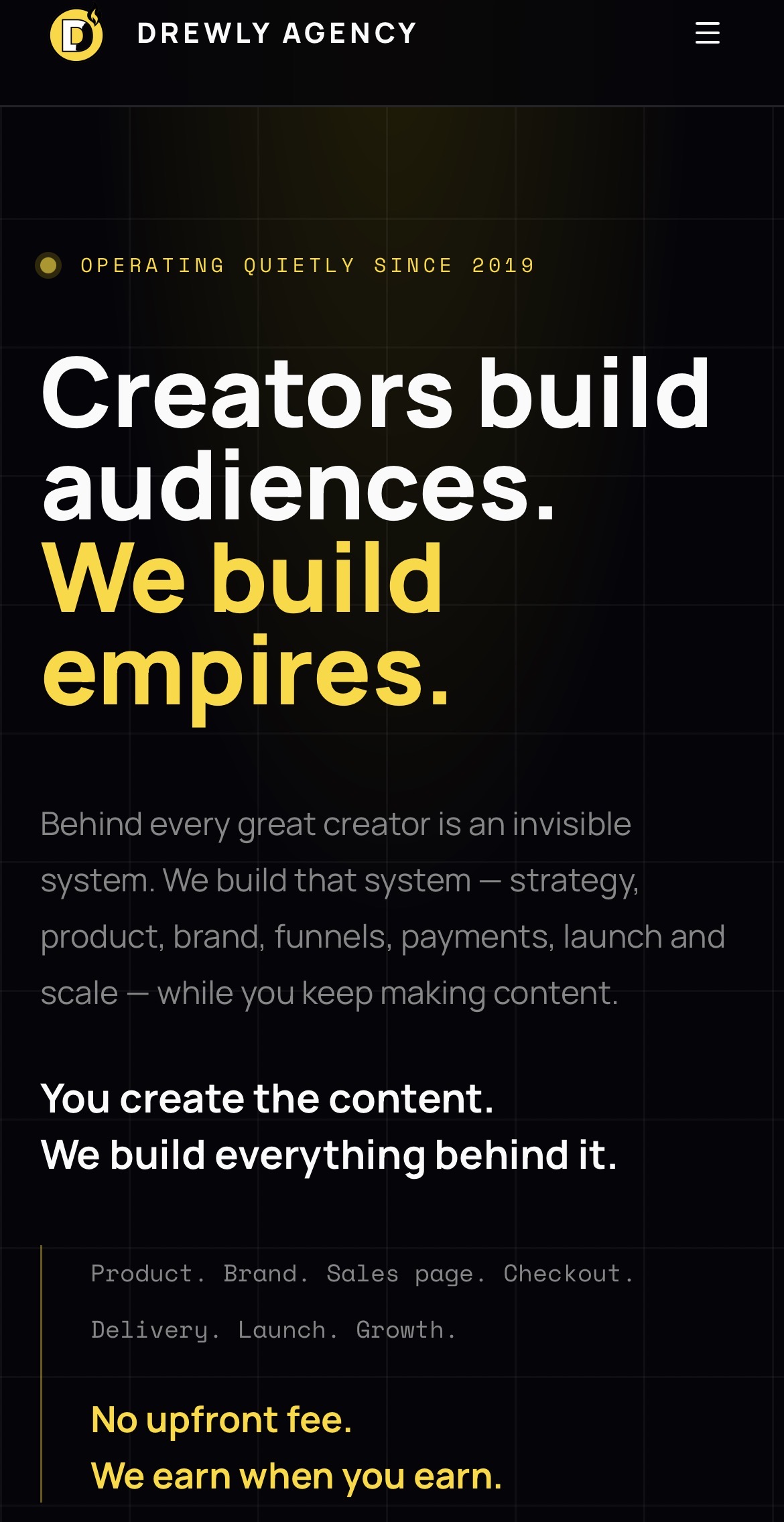
I’m Mike, and I’m the founder of Drewly. I started Drewly around a simple idea: creators already have the audience, the trust, and the knowledge, but a lot of them don’t have the time or expertise to turn that into a real digital product business. We partner with creators and help them turn ideas their audience already wants into products, while we handle most of the work behind the scenes — creating the product, designing it, building the sales page and checkout, setting up delivery, and handling the backend. Our main customers are creators with engaged audiences who want to make more money from their audience without having to build everything themselves.
What makes Drewly different is that we’re not really a traditional agency. We don’t just charge a creator a fee, hand them a product, and move on. We work with them as partners and make money when the product makes money. The creator brings their audience and promotes the product, while we take care of the business infrastructure behind it. I think that model is really interesting because it lets creators focus on what they’re already good at while giving them a way to build something they actually own and can grow. Today, Drewly brings in around $10K per month.
How do you come up with the idea for Drewly?
I came up with the idea for Drewly after spending years looking at different ways to make money online. I tried to understand what actually worked, but I kept running into the same problems. A lot of the models required a decent amount of money upfront, building a personal brand, showing my face, or spending years making content that people may or may not watch. I wanted something different. I wanted to stay behind the scenes and keep the upfront costs low. In fact, I literally started Drewly for free and landed my first client within a week. I also genuinely enjoy designing websites and digital books myself, so it was a business that naturally combined things I already liked doing.
The idea started to make sense when I began looking at creators from a different perspective. I noticed that many creators had highly engaged audiences but weren't selling anything around the topics their audiences clearly cared about. For many of them, sponsorships were one of the main ways they monetized their audience, but I saw an opportunity for them to build an additional revenue stream that they could have more control over. I also noticed that a lot of them had an email in their bio for business inquiries or told people to DM them for business, which showed me they were already open to opportunities and monetization. That was the first big realization: I didn't need to build an audience from zero if I could work with people who already had one.
The real “aha” moment was realizing that I could connect the two sides. A creator could bring the audience, trust, and content, while I could build everything they would need to actually turn that attention into a digital product business. Instead of asking a creator to learn product creation, website building, checkout systems, delivery, and all the other backend work, I could handle those parts for them. That was what made the idea feel different and much more practical than the other online business ideas I'd looked at.
I knew it was worth pursuing because the model solved problems I had personally experienced while trying to build online. I didn't want to be an influencer, I didn't want to spend years trying to grow an audience, and I didn't want to put a lot of money into something before knowing whether people wanted it. Drewly gave me a way to stay behind the scenes while creating something that could generate revenue from existing demand.
My background is largely self-taught and comes from years of experimenting with online businesses and digital products. Over that time, I've learned through actually building things — product creation, websites, design, marketing, sales, and figuring out how all the different pieces of an online business fit together. I wouldn't say I came into Drewly with one specific background that perfectly matched it. It was more that I had spent years learning all these individual skills, and Drewly was the first model where they all came together. And honestly, I made a lot of mistakes with the first influencer I worked with. I couldn't set up the payment page properly or get the revenue split working the way I wanted at first, but I figured it all out myself along the way. Those early mistakes taught me a lot about what needed to happen behind the scenes for the model to actually work.
I validated the idea by doing the simplest thing I could: I started reaching out to creators. I would look at their content, engagement, comments, and the questions their audiences were already asking, then think about what product could genuinely make sense for that audience. I wasn't just sending creators the same generic pitch. I was approaching them with an actual product idea based on what I saw. The responses were the validation. Creators started asking about the products, the revenue split, how the partnership would work, and what was involved in building them. That's when I knew I have hit a goldmine.
How did you launch Drewly and get initial traction?
I launched Drewly in a pretty simple way mainly through direct outreach. I started with cold emails and cold DMs, looking for creators who had engaged audiences and whose content could naturally translate into a digital product. My very first client actually came through cold email, and after that I mainly focused on cold DMs. I would study a creator's content and audience before reaching out and try to approach them with a specific product idea rather than sending a generic message saying I could help them make money.
I also experimented with a few ways to get more people to discover Drewly. I created an Instagram page where I could share the products and success stories from the creators I worked with, and I set up a referral program on my website where people could earn 10% of my profit by referring creators to Drewly. People started sharing the referral program on Reddit and other platforms, which brought more eyeballs to the business. At the same time, influencers started DMing me back and showing genuine interest, so I began seeing that the idea could spread beyond me personally reaching out to every creator.
One thing I learned very quickly was that getting creators to trust me was harder than I initially expected. I was approaching people through Instagram, but I didn't yet have a strong Instagram presence with a large following, so I realized that it was difficult to ask a creator to trust a business they couldn't easily verify. I also realized how important having a professional business email was. Something as simple as having a proper business email and a professional-looking Instagram page made the business feel much more legitimate and made people more comfortable clicking my links and responding to me. That was a valuable lesson because I realized that trust isn't just about what you say — it's also about everything people see when they look you up.
My first product took about a month from the initial agreement to actually being ready and monetized. I had to create the product, get everything set up, and work with the influencer while they created the content to promote it. When I finally made my first profit, it was $450. It wasn't a huge amount of money, but honestly, I couldn't believe I was looking at it. I was incredibly happy and excited because I'd spent years trying different ways to make money online, and this was the first time I had actually built something that generated real profit.
The biggest lesson I learned from launching Drewly was about consistency. Looking back at the other businesses and ideas I'd tried before, I think my biggest problem was that I wasn't consistent enough to give them a real chance. Drewly was different because I got my first client within a week. That gave me enough proof and motivation to keep going instead of moving on to the next idea. If I hadn't gotten that first client so quickly, I honestly don't know if I'd still be here today. That first result gave me the confidence to keep improving the business, learn from the mistakes, and continue reaching out to more creators.
If I were launching Drewly again, I'd still use cold outreach because it was what got the business started without requiring a large upfront investment. But I'd build the trust infrastructure much earlier — a professional business email, a stronger Instagram presence, clear success stories, and a referral system from the beginning. The biggest thing I'd keep, though, is simply starting before everything was perfect. I learned more from getting that first client and building the first product than I ever could have learned from spending another year researching different ways to make money online.
What was the growth strategy for Drewly and how did you scale?
The main way I've grown Drewly has been through direct outreach, especially cold DMs and cold emails. I still think this is one of the biggest advantages of the business because I don't need to wait for people to discover Drewly through search or spend a lot of money on advertising. I can actively find creators who are a good fit, study their audience and content, and reach out with a product idea that is specific to them. I mainly use Instagram because that's where the creators and their audiences already are, and email has also been important because it gives me a more professional way to reach creators and follow up with them.
One strategy that has worked particularly well is making the outreach personalized instead of treating it like mass cold outreach. Before contacting someone, I'll look at their recent posts, what their audience is commenting about, what topics get the most engagement, and whether there is an obvious product their audience might actually want. Then I'll build the pitch around that. For example, instead of saying, “You should sell a digital product,” I'll approach a creator with something much more specific, such as a guide, toolkit, blueprint, or resource based on the exact content their audience is already responding to. I think that works because the creator can immediately see that I actually looked at their business rather than sending them a copy-and-paste offer.
I've also used my own website and Instagram page as part of the growth strategy. I created the Instagram page so creators could look Drewly up after receiving a message and see what the business actually does and the products and success stories from creators I've worked with. That became particularly important because I learned early on that trust is one of the biggest challenges when you're contacting creators from an account they don't already know. I also set up a referral program where people can earn 10% of my profit by referring creators to Drewly. Some people shared the referral program on Reddit and other platforms, which brought additional attention to the business and created another way for potential creators to find me.
The biggest lesson I've learned about growing Drewly is that trust and personalization work together. Getting someone to reply to a cold DM is one thing, but getting a creator to trust you with their audience and build a business with you is completely different. Having a professional business email, a proper website, an Instagram presence, clear information about the model, and real examples of what I've built all help reduce that gap. Every time I noticed something making a creator hesitate, I tried to turn it into something I could improve in the business.
If I had to give an aspiring entrepreneur one piece of advice, it would be to focus on getting very specific about who you are trying to reach and why they should care. I don't think you always need a huge audience, paid advertising, or a complicated marketing strategy to get your first customers. For Drewly, I started with almost no money and simply went directly to the people I believed could benefit from the business. Then I used every response, objection, and mistake to improve the process. Once you find something that gets people to respond, the goal should be to understand why it worked and make that process better and more repeatable.
I'm still very hands-on with customer acquisition today. The business has grown by continually improving the same basic system: find the right creators, understand their audience, approach them with something genuinely relevant, build trust, and then use the results to create more proof for the next creator. For a business like Drewly, I've found that this has been much more valuable than trying to be everywhere at once.
What were the biggest lessons learned from building Drewly?
One of the biggest things I've learned from building Drewly is that you don't need to know everything before you start. In fact, I probably knew less than I should have when I started. I made a lot of mistakes with my first influencer partnership, especially around the payment setup and revenue split. I didn't know how to properly set everything up at first, and there were moments where I had to stop, figure out what was wrong, research it, and solve it myself. Looking back, those were some of the most valuable parts of building the business.
Another challenge I didn't expect was dealing with creators changing their minds. There were times when a creator agreed to the idea, and I would spend days creating the full product, building the website, setting everything up, and getting it ready to launch, only for them to casually change their mind or even block me. That was frustrating, especially when I had already put a lot of work into something.
But those experiences taught me an important lesson: building the product isn't enough. I also needed to get much better at selling the partnership itself and making sure the creator was genuinely committed before I invested a lot of time into the work. I started taking sales and marketing much more seriously and read a lot of business and marketing books to improve my pitches, understand objections, communicate the value of Drewly better, and figure out how to qualify creators before moving forward.
That also changed the way I approach creators today. I'm much more intentional about understanding what they actually want, making the opportunity clear, and getting real commitment before doing all the work. I've learned that getting someone excited about an idea is very different from getting them committed to executing it.
Another challenge I didn't expect was trust. I initially thought that if I had a good product idea and explained it well, creators would naturally be interested. But I quickly learned that from their perspective, I'm a stranger approaching them online and asking them to trust me with something connected to their audience and money. I realized that having a professional business email, a proper website, a strong Instagram presence, clear information about how the partnership works, and eventually real success stories all matter.
One of the best decisions I made was starting with almost no money instead of waiting until I had everything figured out. I didn't spend a lot on ads or build a huge team. I went directly to the people I thought could benefit from the business and started talking to them. Getting lucky enough to land my first client within a week gave me the motivation to keep going, and then every challenge became something I could improve rather than a reason to quit.
I also learned that consistency was probably my biggest weakness before Drewly. I'd tried different online business ideas in the past, but I would often lose momentum before giving them enough time to work. Drewly was the first time I had something happen quickly enough to make me believe in the model. That first client gave me a reason to stay consistent, and consistency gave me the opportunity to get better. I think sometimes people underestimate how important that is. You can have a great idea, but if you keep abandoning it before you learn what works, you'll never really know whether the idea was bad or whether you simply didn't give it enough time.
There were also some things outside of my control that helped. The creator economy was already moving toward creators looking for more ways to monetize their audiences beyond sponsorships, and digital products made it possible to create something without the cost and complexity of a traditional physical business. I was also lucky in the sense that I found a model where my existing interests — designing websites, creating digital products, and working behind the scenes — all fit together.
One ability that has helped me more than anything is being willing to figure things out. I'm largely self-taught, so I've gotten used to reaching a problem I don't know how to solve and researching until I understand it. I don't think you need to be an expert at everything to start a business. You need to be comfortable admitting when you don't know something and then doing the work to learn it.
If I could give someone starting out a few pieces of advice, the first would be don't spend years preparing to start. Start with something small and get a real person to interact with it as quickly as possible. The second would be don't confuse looking successful with actually building something. A professional website and branding are important for trust, but they don't replace having a real customer. And third, pay attention to what people are already asking for. With Drewly, I don't have to invent demand from scratch. I look at what an audience is already interested in and then figure out how to turn that into something useful.
One mistake I see people make is trying to copy a business model without understanding why it works. They see someone making money with something and immediately want to replicate the surface-level version of it. I spent years doing something similar. What changed for me was focusing less on “What business can I start?” and more on “What problem can I solve, and who already has the people who need that solution?”
The biggest lesson I've taken from Drewly is that your first version doesn't have to be perfect. Mine definitely wasn't. I started with no money, made mistakes, dealt with creators changing their minds, had to improve my sales skills, learned how to build trust, and figured things out as I went.
The first $450 I made wasn't life-changing financially, but it was incredibly important to me because it proved that I could actually build something that made money. From there, the goal became simple: keep learning, keep improving, and keep showing up. That's probably the biggest advantage I've gained from building Drewly — I finally learned that consistency can turn something that starts as a small experiment into a real business.
Discover Similar Business Ideas Like Drewly
|
|
Idea
|
Revenue
|
|---|---|---|
|
High-end escort service offering the Girlfriend Experience. |
$250K /mo | |
|
Online education for aspiring book publishers. |
$120K /mo | |
|
Resume and LinkedIn writing for job seekers. |
$2K /mo | |
|
Crime and trauma scene cleanup franchise. |
$1.25M /mo | |
|
Local and corporate transportation with top-notch service. |
$250K /mo | |
|
Blog proofreading service for content creators. |
$2K /mo | |
|
Mobile locker rentals for event-goers. |
$34K /mo |



More about Drewly:
Who is the owner of Drewly?
Mike Drew is the founder of Drewly.
When did Mike Drew start Drewly?
2026
How much money has Mike Drew made from Drewly?
Mike Drew started the business in 2026, and currently makes an average of $54K/year.
More Case Studies Like This


Starter Story × HubSpot
Free tools for every part of your business.
Find customers, win deals, and automate the busywork with HubSpot's free tools.