How I Built A $12K/Month Creative Agency Powered By Proprietary AI SaaS
Who are you and what business did you start?
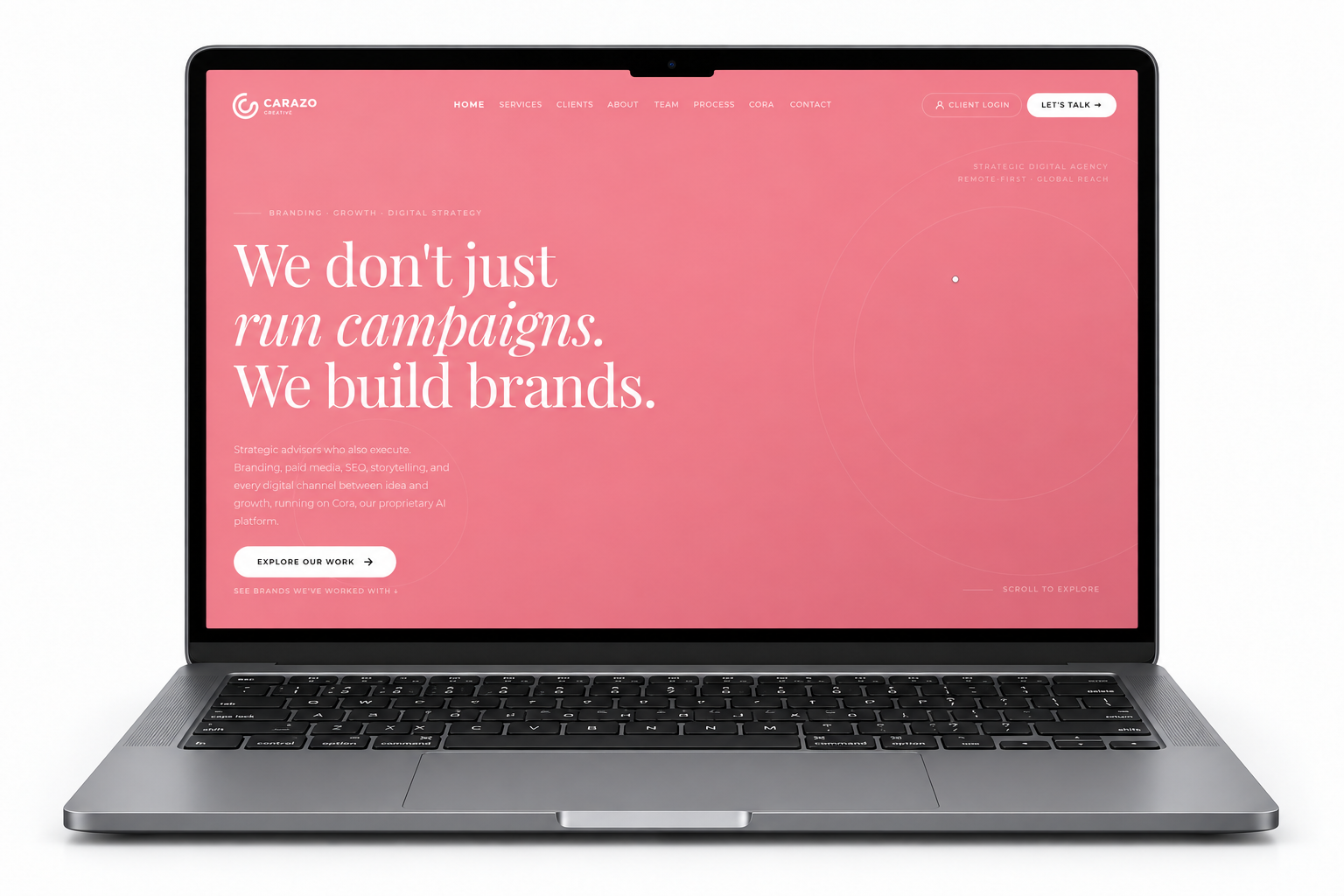
Hi! I’m Carolina Monestel, founder and CEO of Carazo Creative, an independent creative and digital marketing agency I started in 2021. We work with brands across creative, marketing, ecommerce, and growth, bringing those disciplines together rather than treating them as separate functions. Last year, we brought in about $180,000 in revenue. Now, we’re changing the revenue model by building technology alongside the agency, with the goal of accelerating that growth significantly through the end of this year and beyond.
Carazo Creative is building the next generation of the agency model, combining human creative and strategic expertise with Cora, our proprietary AI-powered SaaS platform. Cora is doing work that would otherwise live across a pile of separate products and require significant time from the people running them: continuous technical auditing, daily rank tracking, keyword and backlink intelligence, AI visibility with sentiment and share of voice, live client reporting, content calendars, social dashboards, creator intelligence, and paid media guardrails. But the human element is just as important to what we’re building. I don’t believe the future of an agency is automating away the people who make the work valuable. It’s using technology to take more of the repetitive and data-heavy work off their plates so they have more time for strategy, creativity, judgment, problem-solving, and relationships. Cora gives us a way to scale the technology around talented people rather than trying to replace them.

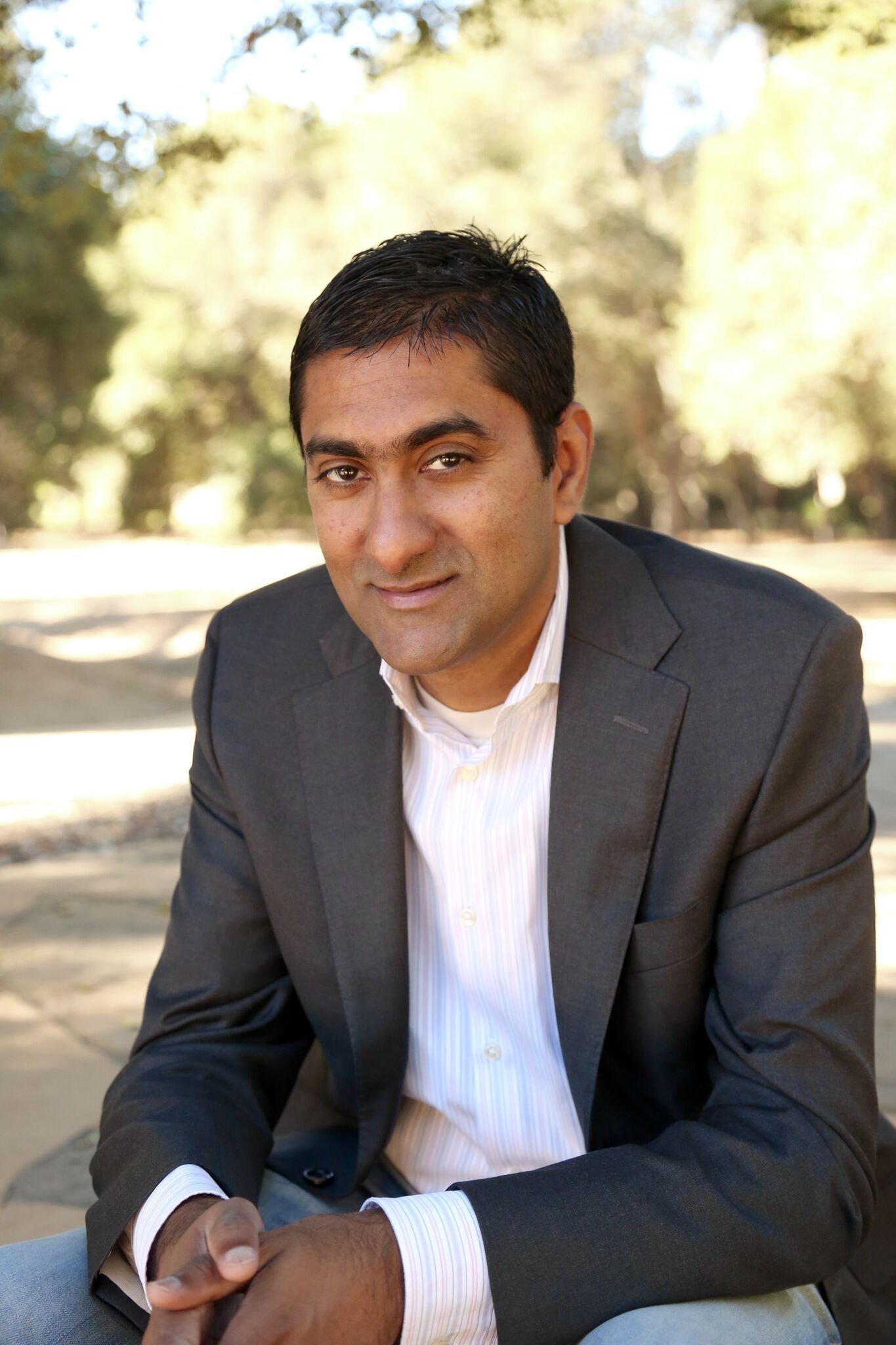
Carolina Monestel, Founder of Carazo Creative
How do you come up with the idea for carazocreative.com?
Carazo Creative really came from my own experience working in marketing. Before starting the company, my background spanned brand strategy, creative, digital marketing, ecommerce, and growth across beauty, fashion, luxury, and consumer brands. I kept seeing how interconnected all of those areas were, but businesses often treated them as completely separate functions. One team handled creative, another handled paid media, someone else handled SEO, another partner managed ecommerce, and everyone was working from different information. I started Carazo Creative in 2021 because I wanted to build an agency where those pieces actually worked together. It started very much as a side project with one client, and by the end of that first year, I had made less than $20,000 from the business. That first client is still with us today. Since then, we’ve collaborated with more than 40 brands, and last year Carazo Creative generated approximately $180,000 in revenue.
The second part of the idea came from running the agency itself. As we grew, I started noticing another kind of fragmentation. We had talented people spending a huge amount of time moving between platforms, pulling data, checking rankings, researching competitors, building reports, monitoring performance, and simply trying to figure out what had changed and what needed attention. We kept adding software to solve individual problems, but adding another tool often created another place someone had to check.
That was the real aha moment behind Cora. Instead of continuing to buy separate products and asking our team to connect all of the information themselves, I started thinking about what it would look like if we built the technology around the way we actually worked.
Cora started as an internal solution, which was also how we validated it. We weren't building software based on what we thought an agency or marketing team might need. We were building it around work we were already doing for real clients and then using it ourselves. If something saved our team time, made an account easier to understand, or helped us identify an opportunity faster, we knew it was useful. If it didn't, there was nowhere for that to hide because we were the users.
Over time, Cora became much bigger than the internal tool we originally set out to build. It now brings together technical auditing, daily rank tracking, keyword and backlink intelligence, AI visibility, live reporting, content planning, social data, creator intelligence, and paid media guardrails, with AI helping analyze that information and surface what deserves attention. Eventually, it became clear that what we had built could be useful beyond Carazo Creative, which is what led us to turn Cora into an AI-powered SaaS product.
What has made this idea different from other ideas I've had is that it wasn't created in isolation and then taken to market in search of a problem. The problem came first. We experienced it ourselves, built something to solve it, used it in the real world, and only then began turning it into a product.
That experience has also shaped how I think about AI more broadly. My goal has never been to automate as much of the agency as possible. The question I keep coming back to is, “Can AI do this?” is not the same question as “Should AI do this?” I want technology handling more of the repetitive, information-heavy work so talented people have more time for the things that benefit from human judgment, creativity, context, problem-solving, and relationships. That balance between technology and people has become central to both Cora and the company we're building around it.
How did you launch carazocreative.com and get initial traction?
I launched Carazo Creative in 2021 much more quietly than I would launch a business today. There wasn’t a big campaign or a perfectly orchestrated announcement. I had already built my career across brand strategy, creative, digital marketing, ecommerce, and growth, so I started by letting people in my existing network know that I was building something of my own and was available to work directly with brands.
My first clients came primarily through relationships, referrals, and word of mouth. In the early stages of the business, more than half of our clients came through referrals. I wasn’t trying to make Carazo Creative look like a huge agency or spending heavily on marketing to acquire clients. I focused on being useful, doing really strong work, and becoming someone clients trusted with increasingly important parts of their businesses. One project would lead to another, a client would introduce me to someone else, or a relationship I had built earlier in my career would turn into an opportunity. We started with one client, who is still with us today, and have since collaborated with more than 40 brands.
What surprised me was how quickly the scope of what clients needed expanded. Someone might initially come to us for one area of marketing, but once we understood the business, there were usually opportunities across creative, paid media, SEO, ecommerce, analytics, or technology. That reinforced the idea I had when I started Carazo Creative: these things work better when someone is looking at how they connect rather than treating every channel as its own little world.
I also learned very quickly that starting an agency and being good at agency work are two different skills. Suddenly I wasn't only responsible for the marketing. I was responsible for finding clients, pricing the work, managing relationships, building processes, making financial decisions, and eventually figuring out how to create a company that didn't depend on me personally touching every single thing. I learned a lot of that by doing it.
If I were launching Carazo Creative again, the biggest thing I would change is that I would start building the company's public presence much earlier. For a long time, I was very focused on the work itself. That worked because referrals and relationships brought us business, but it also meant a lot of what we were learning and building stayed behind the scenes. Today, we take a much more active approach to growth through SEO, content, PR, founder-led thought leadership, and social media rather than relying as heavily on referrals alone.
What I would absolutely do the same is start close to the customer. Some of the biggest decisions we've made since then have come from paying attention to recurring problems rather than deciding in advance what the company was supposed to become. Carazo Creative started because I saw how disconnected marketing had become. Years later, Cora came from noticing a different problem inside the agency: even when you bring the right people together, they can still lose an enormous amount of time to repetitive work, disconnected software, and too much information.
That has probably been the most important lesson for me as a founder. You don't necessarily need to know what the business will look like five years from now when you make your first sale. You need to understand the problem you're solving, get close enough to the work to see what the next problem is, and be willing to let the business evolve when you see a better opportunity.
What was the growth strategy for carazocreative.com and how did you scale?
For most of Carazo Creative’s history, growth has been very relationship-driven. Referrals, word of mouth, and doing good work for existing clients have been some of our strongest sources of new business. I’ve always believed that the best marketing for an agency is having clients who are willing to put your name in front of someone else. That meant our early growth was less about spending heavily on customer acquisition and more about building a reputation, expanding relationships, and becoming the team clients trusted with more of their business over time.
SEO has also been important to me because it compounds. We work in SEO ourselves, so I’ve invested in building Carazo Creative’s organic presence rather than relying entirely on outbound sales or paid acquisition. The same thinking applies to content. I want the things we create today to continue introducing people to the company months or even years from now.
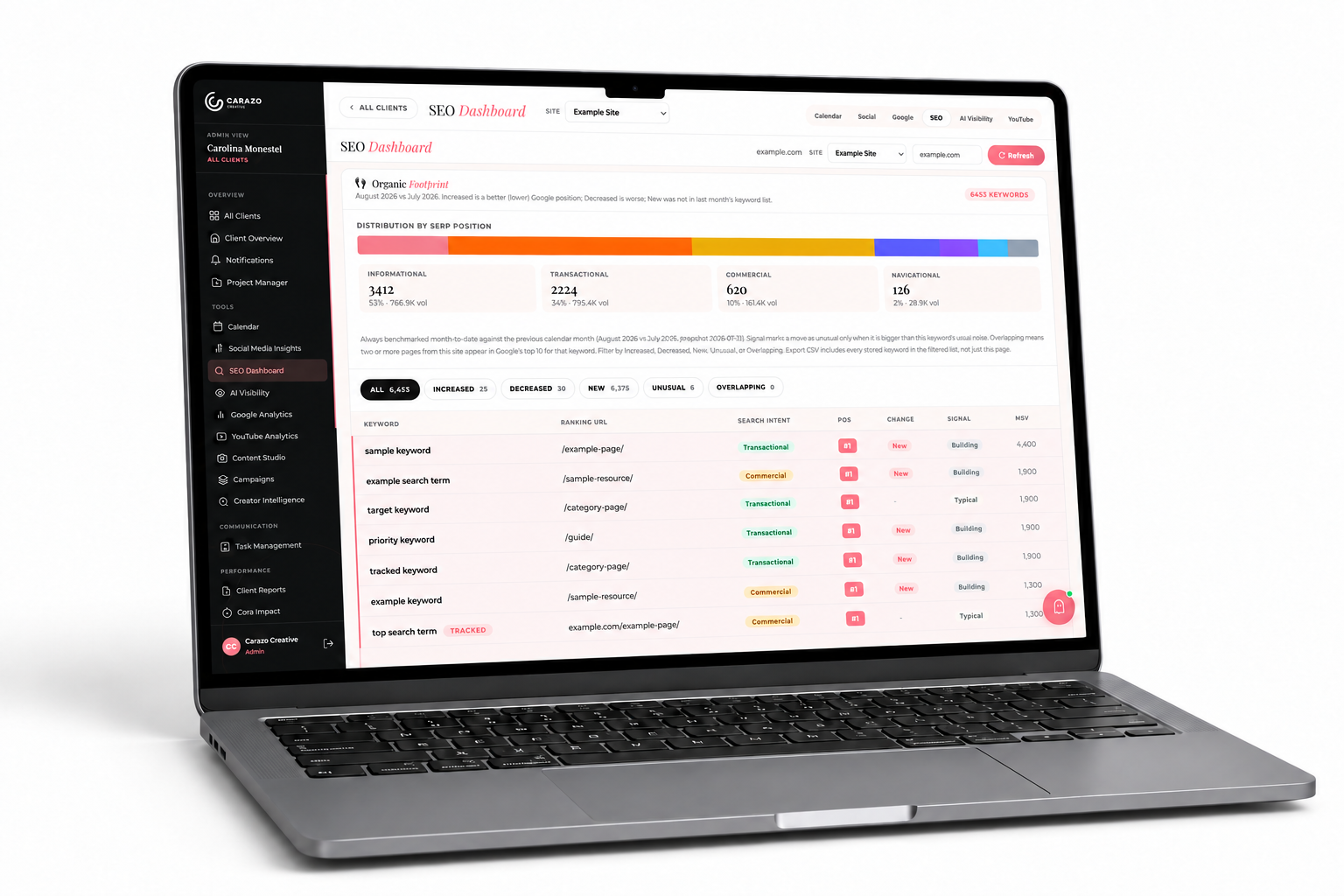
Cora’s SEO Dashboard tracks keyword rankings and search volatility, using statistical analysis to distinguish meaningful movement from normal fluctuations so our team can identify real trends and opportunities.
More recently, I’ve become much more intentional about founder-led marketing and PR. As we evolve from a traditional service business into a company with both agency revenue and a SaaS product, I think it becomes increasingly important for people to understand not just what Carazo Creative does, but what we believe about where marketing and AI are going. I’ve been putting more of my own perspective out there through interviews, media, social content, and writing rather than keeping all of that thinking behind the scenes.
My book Smart Girls Use AI is part of that strategy. The book gave me a way to explore something I was already thinking about constantly while building Cora: AI is incredibly powerful, but being able to automate something doesn’t necessarily mean you should. I believe the more widely available AI becomes, the more valuable judgment, taste, creativity, expertise, and accountability become. That point of view is also at the center of how we’re building Carazo Creative and Cora.

Carolina Monestel, Author of 'Smart Girls Use AI'
One strategy I think other founders can learn from is to build authority around the problem you solve, not just promote the product you sell. If all I talked about publicly was Cora’s features, there would only be so much to say. The much bigger conversation is about what AI is doing to marketing, how agencies will change, what work should be automated, what should remain human, and how companies can use technology without losing the expertise that made them valuable in the first place. Cora becomes evidence of our point of view rather than the only thing we have to talk about.
We’re now applying that approach much more intentionally across SEO, media coverage, founder interviews, social content, and thought leadership. The goal is for those channels to reinforce one another. Someone might first discover an idea through an interview or social post, come across the book, visit Carazo Creative, and eventually learn about Cora. That gives us multiple ways to build trust before someone ever becomes a customer.
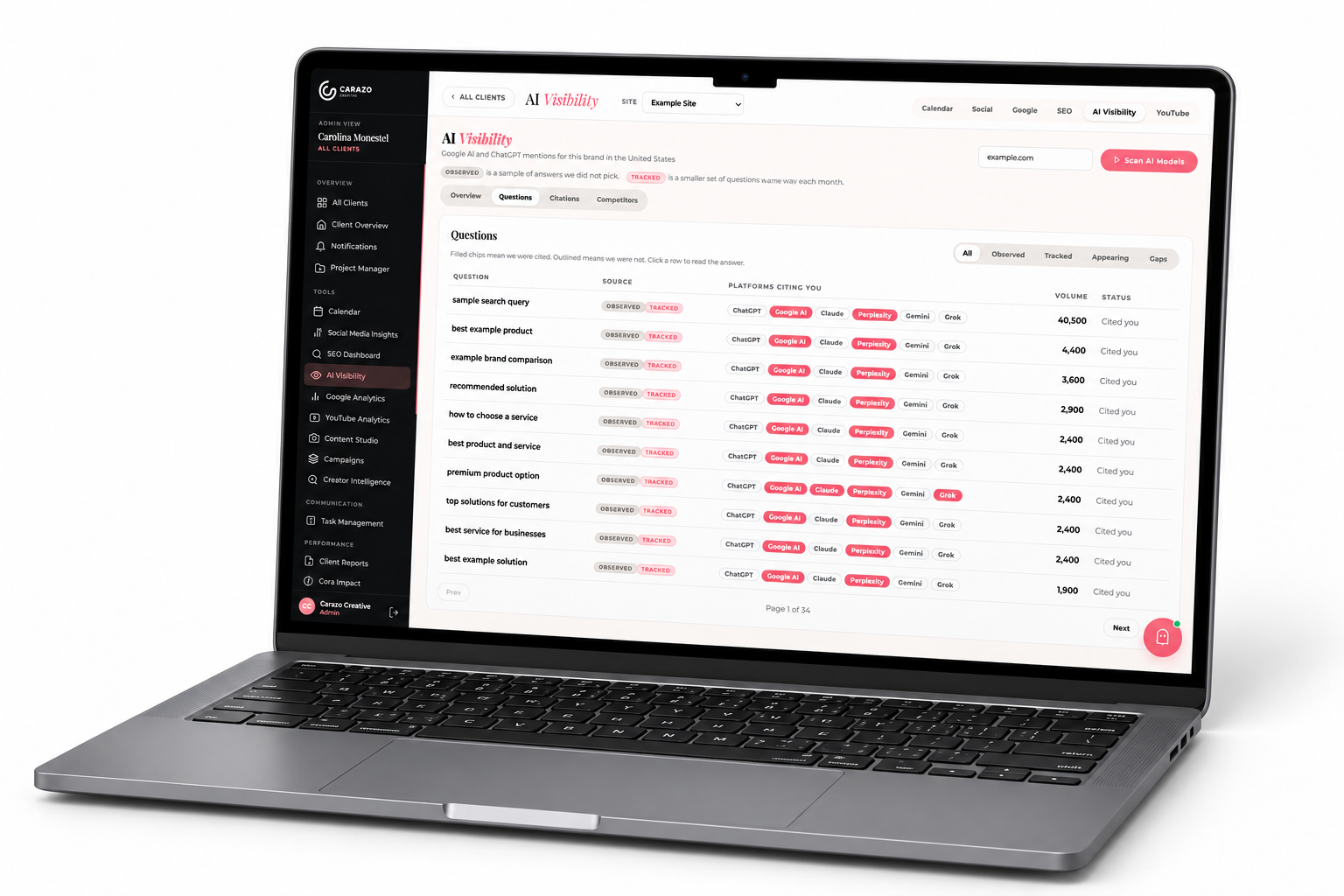
Cora’s AI Visibility Dashboard tracks the questions that matter to each brand and shows when, where and how it is cited across ChatGPT, Google AI, Claude, Perplexity, Gemini and Grok, revealing both competitive strengths and visibility gaps.
The biggest lesson I’ve learned about growth is that I would start building that public presence much earlier if I were doing it again. For years, I was very focused on doing the work and growing through the work. That built a strong foundation, but great work happening privately can only travel so far. My advice to other founders would be to do the work first, develop a real point of view from it, and then get comfortable talking about what you’re learning. You don’t need to become a full-time content creator, but people need a way to discover what you know and what you’re building.
What were the biggest lessons learned from building carazocreative.com?
One of the biggest things I’ve learned is that being capable of doing something yourself doesn’t mean you should continue doing it yourself.
In the early years of Carazo Creative, knowing how to work across creative, strategy, ecommerce, paid media, SEO, analytics, and other areas was a huge advantage. It helped me understand how the pieces connected and allowed me to solve problems without waiting on someone else. But the same ability can eventually become a bottleneck. If too much knowledge, decision-making, or execution lives with the founder, the business can only move as quickly as that person can.
I’ve had to learn to separate the things that genuinely need my judgment from the things I was doing simply because I knew how to do them. That applies to delegation, but increasingly it applies to technology too. If something is repetitive, information-heavy, or requires someone to continuously collect and organize data before making a decision, I want to question whether a person should still be spending their time doing it.
That thinking became one of the foundations for Cora. We didn’t build it because I wanted to automate as much of the company as possible. We built it because I wanted talented people spending more of their time on the things they are actually talented at.
That distinction has become even more important as AI has accelerated. One of the questions I come back to constantly is: “Can AI do this?” is not the same question as “Should AI do this?”
AI can generate an idea, but that doesn’t mean it knows whether the idea is good. It can analyze enormous amounts of information, but someone still needs to understand the context. It can make a process faster, but faster isn’t necessarily better if you’re automating the part where judgment, creativity, taste, accountability, or a human relationship actually matters.
I think one mistake companies are making right now is measuring AI adoption by how much they can automate. I’m much more interested in whether we’re automating the right things. For us, success means using technology aggressively where it gives people leverage, while being equally deliberate about the work we want humans to continue owning.
Another lesson has been the importance of paying attention to recurring frustrations. Some of the best opportunities in the business have come from something that initially just felt annoying. If my team has to do the same manual process every week, if we’re constantly switching between five products to answer one question, or if a client keeps running into the same problem, I pay attention to it. Cora exists because enough of those frustrations repeated themselves that eventually I stopped seeing them as individual inconveniences and started seeing a product.
I’ve also learned not to confuse being busy with building something scalable. Client work can keep an agency incredibly busy, and it’s easy to spend every day delivering what is immediately in front of you. Some of the most important work I’ve done as a founder has required creating enough space to ask what the company should look like several years from now, not just what needs to be delivered this week.
That is a big part of why we’re moving further into technology and SaaS today. Last year, Carazo Creative generated revenue primarily as a service business. I’m proud of that foundation, but I don’t want to assume the business model that got us here has to be the one that takes us where we want to go. Building Cora gives us the opportunity to create a more scalable revenue model while keeping the human expertise that made the agency valuable in the first place.
If I could give another founder one piece of advice, it would be to get very good at noticing what keeps repeating. The recurring customer request, the task your team hates doing, the spreadsheet you keep rebuilding, the decision that always takes too long, or the workaround everyone has quietly accepted might be telling you something important.
You don’t always need to go looking for the next big business idea. Sometimes it is already happening inside the business you have.
Discover Similar Business Ideas Like carazocreative.com







More about carazocreative.com:
Who is the owner of carazocreative.com?
Carolina Monestel is the founder of carazocreative.com.
When did Carolina Monestel start carazocreative.com?
2021
How much money has Carolina Monestel made from carazocreative.com?
Carolina Monestel started the business in 2021, and currently makes an average of $144K/year.
More Case Studies Like This




Starter Story × HubSpot
Free tools for every part of your business.
Find customers, win deals, and automate the busywork with HubSpot's free tools.