How SaaS Pegasus Achieved $100K Profit with Django Boilerplates

Who is Cory Zue?
Cory Zue, the founder of SaaS Pegasus, is a software developer and entrepreneur based in South Africa. A graduate of MIT, Cory previously served as CTO at Dimagi, where he honed his skills in software development and project management before transitioning into the indie hacker space.
What problem does SaaS Pegasus solve?
SaaS Pegasus helps customers quickly build their SaaS applications by providing a pre-built Django template, addressing the headache of setting up basic yet essential functionalities like user authentication and billing, enabling them to focus on their unique business logic.
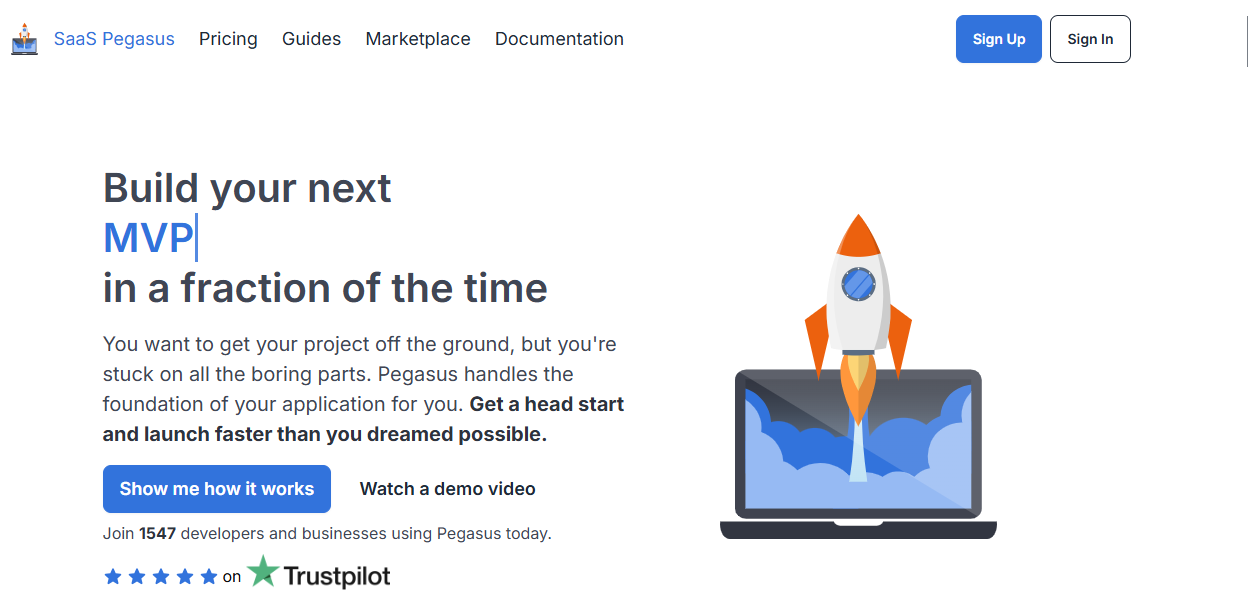
SaaS Pegasus Homepage
How did Cory come up with the idea for SaaS Pegasus?
Cory started developing the idea for SaaS Pegasus after working on a few other projects and realizing they often shared the same core features like user accounts, billing systems, and standard frontend components. Rather than reinventing these elements each time, Cory saw an opportunity to streamline this process not just for himself but for other developers too.
He did some initial research and noticed there weren't many high-quality Django boilerplates on the market, which further validated the potential for his idea. What drove him was the potential to fill this gap in the Django community, turning his repeated coding tasks into a single, shareable product that could help others build SaaS applications more quickly and efficiently.
He refined his idea by focusing on clean, customizable code that developers could easily adapt to their needs, ensuring the boilerplate wouldn’t be overly cluttered with unnecessary features. Cory also gathered early feedback from a small group of testers, which provided valuable insights and helped him make essential adjustments before fully pursuing the project.
How did Cory Zue build the initial version of SaaS Pegasus?
Cory Zue built SaaS Pegasus by leveraging his extensive experience with Django to create a SaaS boilerplate, streamlining the process of starting new projects. He developed SaaS Pegasus using Python and Django on the backend, initially using React for the front end before transitioning to using HTMX and Alpine.js for a more low-JavaScript approach. The stack also includes CSS frameworks like Tailwind and build tools like Sentry for error monitoring. Building the first version involved numerous iterations and enhancements based on feedback from the Django community and customers, focusing heavily on coding and refining the template, which included key SaaS features like user authentication, billing, and teams. It took Cory several months of dedicated work, with challenges mostly around packaging complex features in a way that kept the template clean yet customizable.
How did Cory launch SaaS Pegasus and get initial traction?
No specific launch story details such as launch platforms or viral moments were provided in the sources.
What was the growth strategy for SaaS Pegasus and how did they scale?
Content and SEO
Cory Zue, the founder of SaaS Pegasus, recognized early on that content creation and SEO were pivotal for growing the business. He focused on writing in-depth guides about tasks related to the features in Pegasus. These guides not only provided value to the readers by offering detailed insights but subtly pitched Pegasus as a solution that could save potential customers substantial time and effort.
Why it worked: This approach established Cory as an authority in the SaaS for Django niche and helped build trust with potential customers. The detailed content drew organic traffic from search engines, as these guides addressed specific search queries from users in the Django community. Consequently, this increased visibility led to higher conversions for SaaS Pegasus.
Mailing List and Community Engagement
SaaS Pegasus leveraged a mailing list to nurture leads over time. By initially reaching out to a subset of his mailing list offering early access, Cory was able to secure initial customers. Additionally, a Slack community for Pegasus users was established, creating a platform for users to share experiences, feature requests, and support one another.
Why it worked: Regular engagement with an email list keeps potential and existing customers informed about new features and updates, which helps maintain interest over time. The Slack community facilitated user interaction and strengthened the sense of belonging among its users, fostering loyalty and encouraging word-of-mouth marketing.
Partnerships and Testimonials
The SaaS Pegasus website features testimonials and case studies from real users, helping to build credibility and trust. Cory highlights success stories of users who have built substantial businesses using Pegasus, amplifying the product's reliability and effectiveness.
Why it worked: Social proof is a powerful motivator for prospective customers. Seeing real-life examples of successful businesses built with Pegasus served as compelling evidence of the product’s value. Moreover, highlighting partnerships or users from recognizable companies provided additional layers of trust and validation.
What's the pricing strategy for SaaS Pegasus?
SaaS Pegasus offers a Django SaaS boilerplate priced at $249 for a lifetime license, emphasizing time-saving features like user accounts and billing integrations.
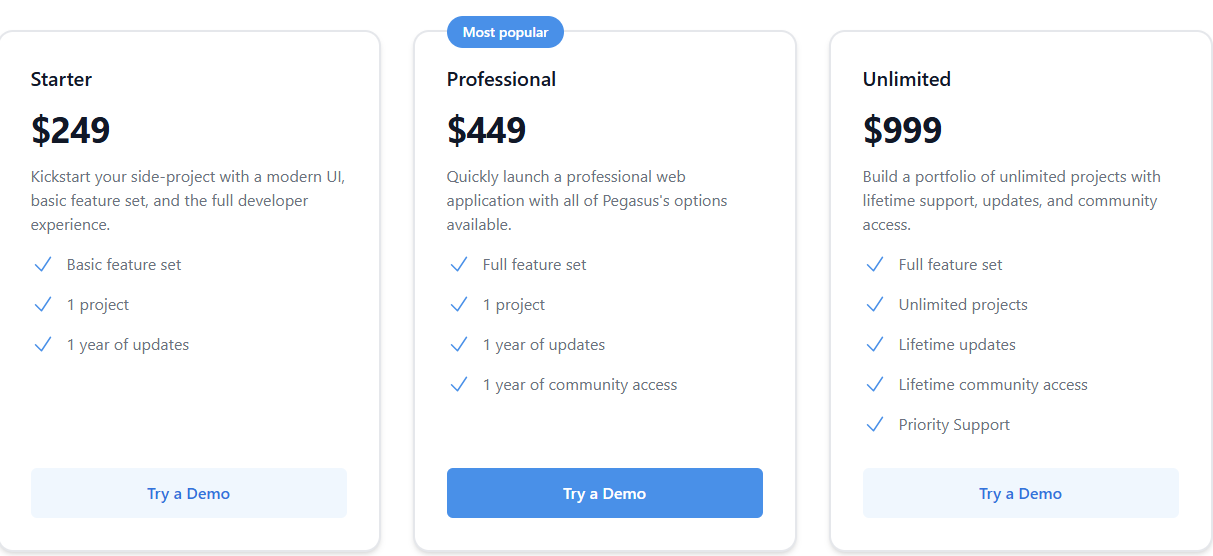
SaaS Pegasus Pricing
What were the biggest lessons learned from building SaaS Pegasus?
- Slow and Steady Launch: The modest initial launch of Pegasus, relying on a single successful sale, underscores the importance of starting small. It's okay to build momentum over time rather than expecting overnight success.
- Customer-Centric Approach: Focus on delighting your early customers can turn them into advocates. Listening to feedback and being highly responsive can build strong customer relationships and a positive reputation.
- Embrace Feedback for Growth: The willingness to adapt based on customer insights is crucial. By incorporating user feedback into future updates, you create a product that truly meets market needs.
- Multiple Revenue Streams: Relying on various projects, such as SaaS Pegasus and Place Card Me, demonstrates the value of diversifying income sources. It can help mitigate risks and create more stable financial footing.
- Community Engagement: Building and nurturing a community around your product not only aids in product development with real-world feedback but also fosters loyalty and collective growth among users.
What platform/tools does SaaS Pegasus use?
Discover Similar Business Ideas Like SaaS Pegasus





More about SaaS Pegasus:
Who is the owner of SaaS Pegasus?
Cory Zue is the founder of SaaS Pegasus.
When did Cory Zue start SaaS Pegasus?
2019
What is Cory Zue's net worth?
Cory Zue's business makes an average of $8.33K/month.
How much money has Cory Zue made from SaaS Pegasus?
Cory Zue started the business in 2019, and currently makes an average of $100K/year.