How Peter Suhm Grew Reform and Exited in 12 Months

Who is Peter Suhm?
Peter Suhm, the founder of Reform, hails from Copenhagen, Denmark, and has a background in software development, previously working on WordPress plugin businesses before co-founding Reform to build a streamlined form builder solution.
What problem does Reform solve?
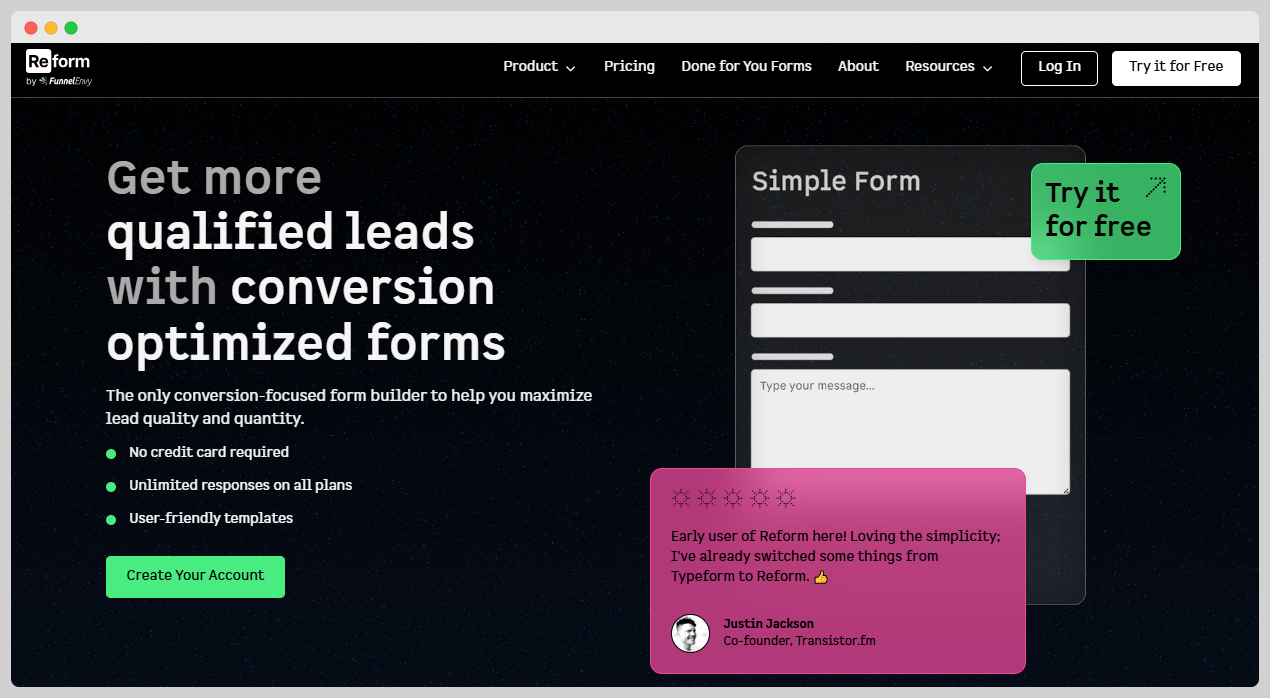
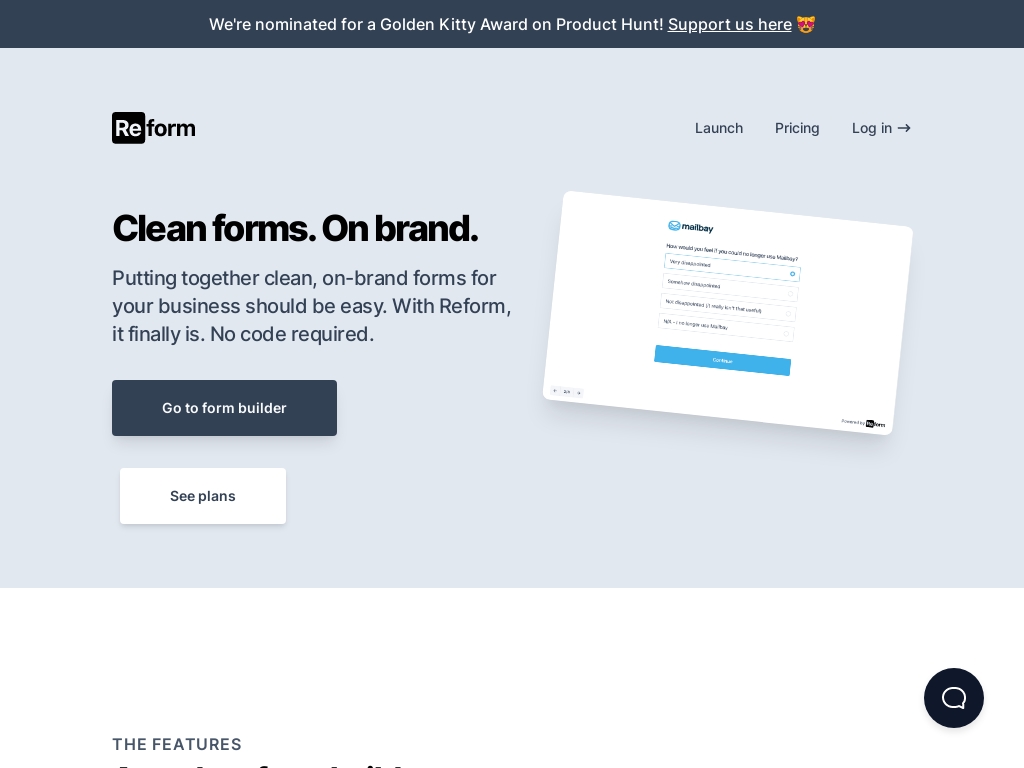
Reform solves the headache of creating forms that don't match your brand by offering a simple solution for quickly building forms that look professional and seamlessly integrate into your own design, avoiding the complexity and clutter of other options.
Founder-Market Fit
Skills
What skills did Peter Suhm have that led to their success?
How did Peter come up with the idea for Reform?
Peter Suhm's journey to creating Reform began after a previous venture, Branch, didn't work out as planned. With resources still available thanks to his past successes, Peter embarked on a quest for a new idea. During this period, he discovered a lack of satisfaction with existing form builders when he needed one himself. Conversations with startup friends revealed a shared frustration about the complexity and over-customization of available options, which sparked the notion of a simpler, more intuitive form builder.
To validate this idea, Peter and his team created a makeshift landing page with form mockups to gauge interest. The response on Twitter was overwhelming, with a significant number of people signing up for early access, indicating a strong need for their concept. Throughout the ideation phase, he remained focused on simplicity, ensuring that whatever they built would be user-friendly and aesthetically pleasing. This iterative process, heavily reliant on feedback, was supported by robust research, like Rob Fitzpatrick’s “The Mom Test,” helping them sharpen their vision into what ultimately became Reform.
Despite initial skepticism due to the competitive market, Peter's decision to pursue Reform was bolstered by its rapid early traction and the unique vision he saw for a more streamlined form-building experience. One of the critical lessons from this process was the importance of maintaining a clear vision and not being overwhelmed by competing feature requests. Instead, they prioritized ease of use and an uncluttered approach, differentiating them from those with more complex offerings.
How did Peter Suhm build the initial version of Reform?
Peter Suhm co-founded Reform with his co-founder, Bjørn, focusing on building a simple and clean-looking form builder that they felt the market lacked. The development process began by building a landing page to gather interest and feedback, which took about a month to create. They used Figma for designing mockups of the form and a hard-coded version of a form as their early access signup tool, serving as a demo of their intended product. The initial prototype process was intensely detail-oriented, involving feedback from around 20-30 people to refine the design and copy. Building the actual product took a couple of months, with the first version undergoing rapid development to replace the early access signup form with the Reform form, resulting in their first early access customer. The experience was challenging, demanding a lot of effort and iteration, given the competitive nature of the form builder space and the need to validate their unique value proposition.
What were the initial startup costs for Reform?
- Funding: Reform received funding from the TinySeed accelerator and several angel investors, including a contribution from a well-known VC firm.
How did Peter launch Reform and get initial traction?
Twitter Promotion
Peter Suhm, the co-founder of Reform, used his personal Twitter account to generate early interest in Reform. He shared a landing page that demonstrated the concept of Reform and invited his followers to sign up for early access. This tweet achieved over 100,000 impressions, helping them gather 500 signups on the first day alone.
Why it worked: Peter’s active presence on Twitter and strong engagement with his followers allowed him to tap into a ready audience. By announcing Reform and asking for support in amplifying the message, he created buzz and attracted immediate interest from potential users.
Early Access Landing Page
Before launching the full product, Reform created a detailed landing page with mockups designed to illustrate the product's vision. This page also included a hard-coded form as an early access sign-up tool. They spent significant time refining the page, getting feedback from around 20-30 people to ensure it was compelling enough to attract signups.
Why it worked: The polished presentation and the strategic use of a hard-coded form as both a demo and signup tool provided potential customers with a clear understanding of what Reform would offer. This approach built interest and trust, leading to substantial signups.
Product Hunt Launch
Reform launched on Product Hunt a few months after its initial validation steps. Peter and his team dedicated 2–3 weeks to preparing a comprehensive launch and leveraged the platform’s audience to increase visibility. Their efforts resulted in Reform being the number one product of the day and week on Product Hunt.
Why it worked: The planned and methodical approach to the Product Hunt launch, based on well-known strategies, ensured that Reform was positioned effectively. The presence of satisfied early customers who provided positive reviews solidified Reform's reputation and drove further awareness.
Metrics:
- The tweet announcing Reform's landing page got more than 100,000 impressions.
- Initially garnered 500 signups in one day, growing to 1,300 by the official launch.
- Achieved the status of number one product of the day and week on Product Hunt.
What was the growth strategy for Reform and how did they scale?
Reform utilized Twitter significantly during its early stages to gauge interest and validate ideas. Peter Suhm, one of the founders, actively shared updates and engaged with his network, which helped generate substantial attention. A notable tweet received over 100,000 impressions, resulting in 500 signups on the first day and 1,300 signups by the time they launched. Twitter played a crucial role in building initial traction and a community around the product.
Why it worked: Twitter allowed for real-time engagement and feedback from a wide audience. By sharing the journey publicly and encouraging followers to participate, Reform created an engaging narrative that attracted potential users and supporters. This approach helped in validating the product concept efficiently and at a low cost.
Product Hunt
Reform had a successful launch on Product Hunt, becoming the number one product of both the day and the week. They followed a detailed launch playbook, which included preparing all assets in advance, scheduling the launch appropriately, and activating their network of satisfied customers to advocate for the product on the launch day.
Why it worked: Product Hunt is a platform that caters to tech enthusiasts and innovators, making it an ideal environment for launching a SaaS product like Reform. By ensuring they had a solid product with happy customers before launching, Reform leveraged Product Hunt's community effectively, resulting in increased visibility and validation from a broader audience.
SEO and Content
Peter mentioned that understanding SEO is crucial for growing Reform, given its low-priced and highly self-serve nature. The strategy involves refining the product’s reach through organic search channels to drive consistent traffic over time.
Why it worked: SEO allows startups to build a sustainable traffic stream that doesn't rely on paid advertising. By focusing on relevant keywords and building authoritative content around their product space, Reform can attract users who are actively searching for solutions that the product offers, resulting in a higher conversion rate due to high-intent traffic.
What's the pricing strategy for Reform?
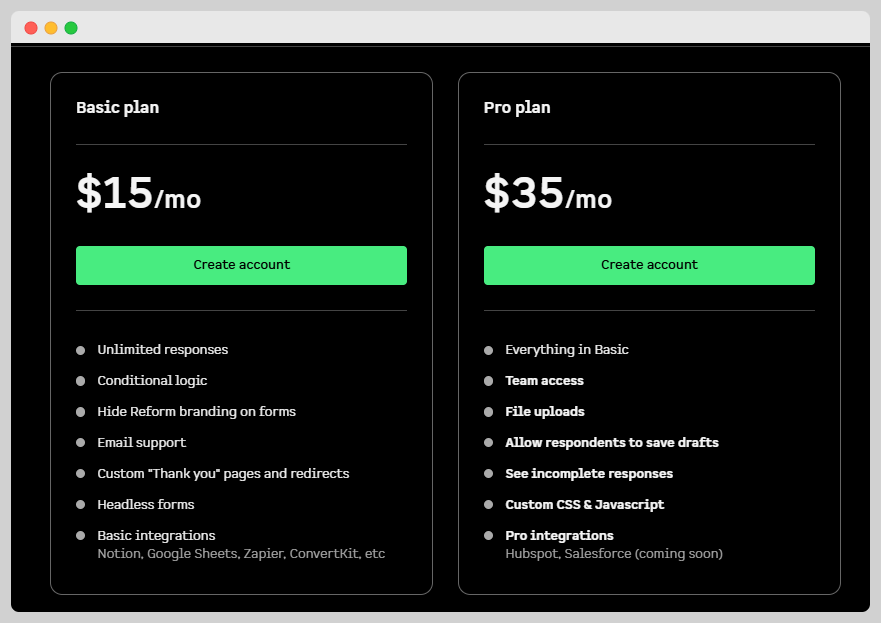
Reform charges a $15 monthly subscription fee for its simple form builder, a low-cost, self-serve SaaS model without free offerings.
What were the biggest lessons learned from building Reform?
- Test Before You Invest: Peter validated Reform's concept with early Twitter feedback and prototypes before fully committing to development, emphasizing the importance of gauging interest in a competitive market.
- Simplicity Sells: Reform stood out by offering a simple, clean design, differentiating from competitors by reducing options and complications users faced with other form builders.
- Strategic Launches Matter: Following a detailed strategy, Reform's Product Hunt launch succeeded due to preparation and leveraging existing user satisfaction, highlighting the value of strategic planning in marketing.
- Perseverance Through Plateaus: Despite revenue stagnation, the team focused on resetting strategies and expectations, illustrating the resilience needed when facing growth challenges in entrepreneurship.
- Value Your Team and Adapt: When co-founder Bjørn decided to move on, Peter adjusted and carried forward solo, emphasizing flexibility and maintaining positive relationships within the team.
What platform/tools does Reform use?
Reform Acquisition: How much did Reform sell for and what was the acquisition price?
Reform was acquired by FunnelEnvy in April 2023. FunnelEnvy, experts in funnel optimization, plans to build on Reform's original vision and serve its customer base.
Discover Similar Business Ideas Like Reform
|
|
Idea
|
Revenue
|
|---|---|---|
|
AI quiz generator for educators.
|
$4K
monthly
|
|
|
"AI tool for effortless video content creation."
|
$600K
monthly
|
|
|
AI tool that helps content creators, founders, ...
AI tool that helps content creators, founders, and marketers make VIRAL content & ads with AI while saving 100's of hours per month |
$400K
monthly
|
|
|
"Email signature marketing hub for solopreneurs."
|
$55K
monthly
|
|
|
AI-powered social media carousel creator.
|
$10K
monthly
|
|
|
AI chatbot builder for businesses.
|
$180K
monthly
|
|
|
"Create real-time status pages for seamless cus...
"Create real-time status pages for seamless customer updates." |
$24K
monthly
|





More about Reform:
Who is the owner of Reform?
Peter Suhm is the founder of Reform.
When did Peter Suhm start Reform?
2021
What is Peter Suhm's net worth?
Peter Suhm's business makes an average of $0/month.
How much money has Peter Suhm made from Reform?
Peter Suhm started the business in 2021, and currently makes an average of $0/year.