How Project.co Attracted 3,500 Customers and $93K in Three Weeks

Who is Matt Byrom?
Matt Byrom, founder of Project.co, is a seasoned entrepreneur from the UK who also founded Wyzowl, a leading animated explainer video agency. Prior to creating Project.co, he gained significant industry experience and was driven to develop project management solutions tailored for creative teams and clients.
What problem does Project.co solve?
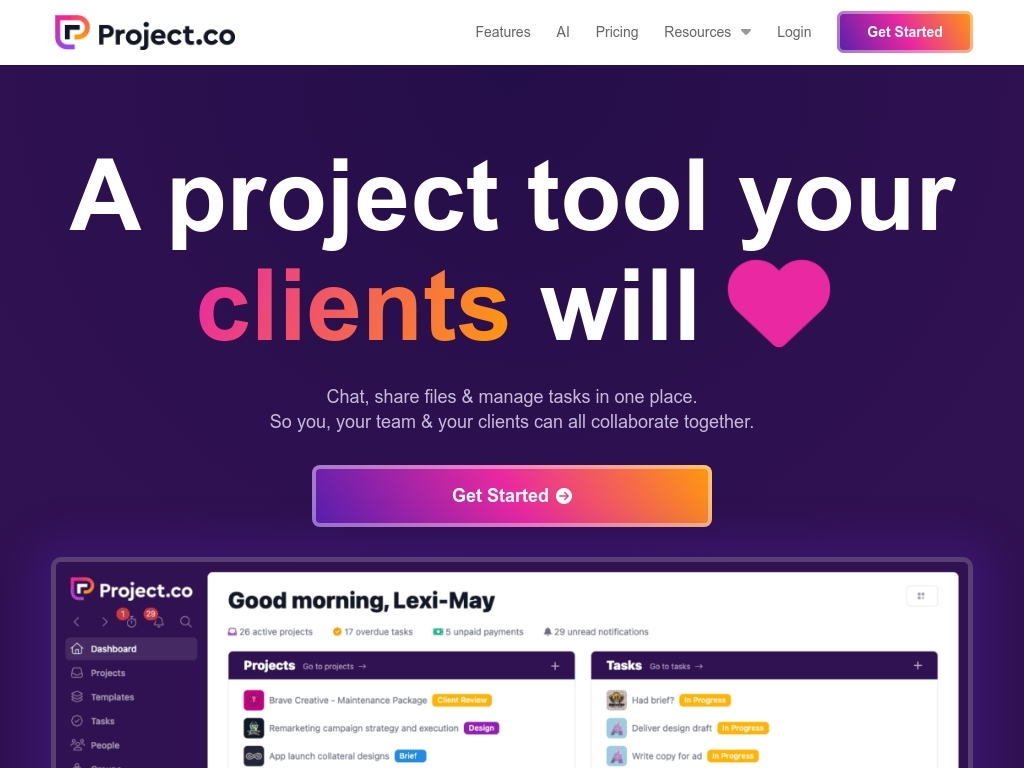
Project.co solves the headache of managing projects by keeping all communication, tasks, and files in one place, ensuring no messages or deadlines get missed amidst cluttered email threads and scattered notes. Users pay for this convenience because it saves them time, reduces stress, and enhances team collaboration—all critical for successful project completion.
How did Matt come up with the idea for Project.co?
The idea for Project.co was born out of necessity rather than a deliberate search for a business opportunity. As part of the team behind Wyzowl, a leading creator of animated explainer videos, the founders understood the critical role of communication and organization in project management. They faced challenges in managing projects both on the team and client sides and realized existing tools fell short of their needs.
The decision to build Project.co came after an extensive search for a suitable project management tool that could accommodate their requirements of keeping all messages, tasks, notes, payments, and deadlines in one accessible place. When they couldn't find an adequate solution, they decided to create their own, grounded in their firsthand experiences and insights. This tool was initially an internal solution for Wyzowl, but the positive feedback from clients prompted them to refine it for broader use.
Project.co's development involved listening to customer feedback and iterating based on those insights, illustrating the importance of flexibility and adaptability in meeting user expectations. Key lessons learned from this process include the value of building a solution closely aligned with real-world needs and the importance of remaining open to change based on user experiences.
How did Matt Byrom build the initial version of Project.co?
To build Project.co, the team embarked on a complex journey of software development, starting with the realization that existing tools couldn't meet the comprehensive project management needs of their animation agency, Wyzowl. The initial version, developed in-house, primarily served as an internal tool to streamline the agency's processes. However, when it was launched to the world as version 1, it turned out to be too rigid for diverse business processes. Learning from customer feedback, the team decided to overhaul the system and spent 18 months redesigning and building version 2 from scratch. They used client feedback to guide this redesign, creating a version that was flexible and user-friendly for a wider audience. Despite the challenge and the extended timeline, the iterative approach led to a robust tool that effectively manages project workflows for both internal teams and their clients.
What were the initial startup costs for Project.co?
- Marketing Campaign: Project.co partnered with AppSumo for a promotional campaign, generating $93,884 in revenue from 3,713 accounts created.
- Event Costs: Before the AppSumo campaign, Project.co paid $129 for a listing on Betali.st, which helped get noticed by AppSumo.
What was the growth strategy for Project.co and how did they scale?
AppSumo
Project.co experienced a significant boost by partnering with AppSumo, a platform known for offering software deals. By launching a promotion on AppSumo, Project.co gained exposure to a vast audience of 800,000 early adopters looking for software deals. This partnership helped them acquire over 3,700 accounts, including 1,431 paid ones, in a short span. The promotion offered a lifetime deal for a minimal cost, instantly amplifying their user base.
Why it worked: The AppSumo launch targeted tech-savvy customers who are eager to try new tools, providing Project.co with both new users and valuable feedback. This influx of feedback allowed them to improve the product quickly and efficiently while the network effect led new users to invite others, further increasing their visibility.
Organic Signups
Project.co successfully leveraged organic traffic, resulting in more than 10,000 signups. Their commitment to transparency, sharing both successes and failures, created trust and encouraged word-of-mouth recommendations. Interest grew as potential users saw the tool’s potential through authentic experiences shared online.
Why it worked: The transparent sharing of their journey resonated with other entrepreneurs and businesses. This authenticity built a community around Project.co, where users felt a sense of involvement and trust, encouraging more signups and exploration of the tool.
Partnerships
Another key element of Project.co's growth was forming partnerships with complementary brands which provided mutual benefit through shared audiences. These alliances helped Project.co tap into established customer bases and build credibility within their industry.
Why it worked: Strategic partnerships allowed Project.co to integrate seamlessly into other workflows, enhancing its utility and appeal. By working with brands that had similar user bases but different services, Project.co expanded its reach and strengthened its reputation without needing large marketing expenditures.
Continuous User Feedback
From the beginning, user feedback has been integral to the evolution of Project.co. Engaging directly with users, gathering feedback, and iteratively improving the tool based on these conversations have been pivotal to its refinement and success.
Why it worked: This direct line of communication demonstrated Project.co's commitment to user satisfaction and adaptability. By incorporating user suggestions, Project.co ensured their tool remained relevant and useful, thereby increasing customer retention and advocacy as users felt their input was valued.
What's the pricing strategy for Project.co?
Project.co offers a free plan with up to 5 creator users and 10 active projects, alongside paid plans such as the Team Plan at $10/month ($8/month annually) and the Agency Plan at $14/month ($12/month annually), with options for unlimited client users and white labeling.
What were the biggest lessons learned from building Project.co?
- Value Customer Feedback: Project.co learned that their initial product was too rigid for diverse business needs. By listening to customer feedback and redesigning from scratch, they created a more flexible and widely accepted version, highlighting the importance of adapting based on user input.
- Embrace Transparency: Being open about successes and failures, like sharing their journey on public platforms, fostered trust and provided real value to their audience. This transparency helped drive community engagement and provided crucial insights.
- Leverage Strategic Partnerships: Collaborating with platforms like AppSumo allowed Project.co to access a large audience quickly. This strategy can be a game-changer for exposure and feedback, despite the revenue split, if approached as part of a broader growth plan.
- Iterate and Improve: The transition from version 1 to version 2 was a response to customer needs, illustrating that continuous improvement and iteration are key to staying relevant and meeting user expectations.
- Prioritize Support: During their AppSumo launch, Project.co focused heavily on customer support, turning feedback into actionable insights. This not only solved immediate problems but also informed future product enhancements.
What platform/tools does Project.co use?
Discover Similar Business Ideas Like Project.co
|
|
Idea
|
Revenue
|
|---|---|---|
|
AI quiz generator for educators.
|
$4K
monthly
|
|
|
"AI tool for effortless video content creation."
|
$600K
monthly
|
|
|
AI tool that helps content creators, founders, ...
AI tool that helps content creators, founders, and marketers make VIRAL content & ads with AI while saving 100's of hours per month |
$400K
monthly
|
|
|
"Email signature marketing hub for solopreneurs."
|
$55K
monthly
|
|
|
AI-powered social media carousel creator.
|
$10K
monthly
|
|
|
AI chatbot builder for businesses.
|
$180K
monthly
|
|
|
"Create real-time status pages for seamless cus...
"Create real-time status pages for seamless customer updates." |
$24K
monthly
|






More about Project.co:
Who is the owner of Project.co?
Matt Byrom is the founder of Project.co.
When did Matt Byrom start Project.co?
2019
What is Matt Byrom's net worth?
Matt Byrom's business makes an average of $/month.
How much money has Matt Byrom made from Project.co?
Matt Byrom started the business in 2019, and currently makes an average of .