How Two Founders Scaled Pre.dev to $400K ARR in 5 Months

Who is Adam Elkassas?
Pre.dev was co-founded by Adam Elkassas and Arjun Raj Jain. Adam Eskassas, originally from Puerto Rico and involved in tech consulting, previously worked in a crypto hedge fund, while Arjun has experience in building startups and focusing on aggressive strategies to quickly scale.
What problem does pre.dev solve?
Pre.dev makes it quick and easy for non-technical founders to turn ideas into software prototypes, eliminating the confusion and expense of planning projects themselves.
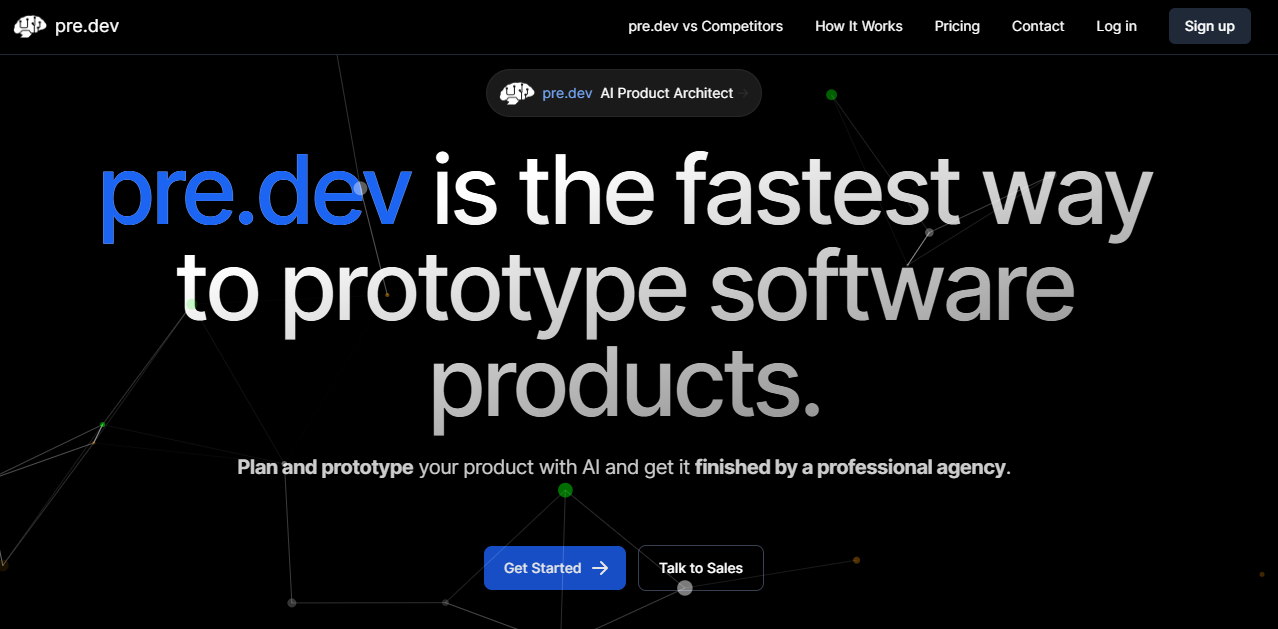
Pre.Dev Homepage
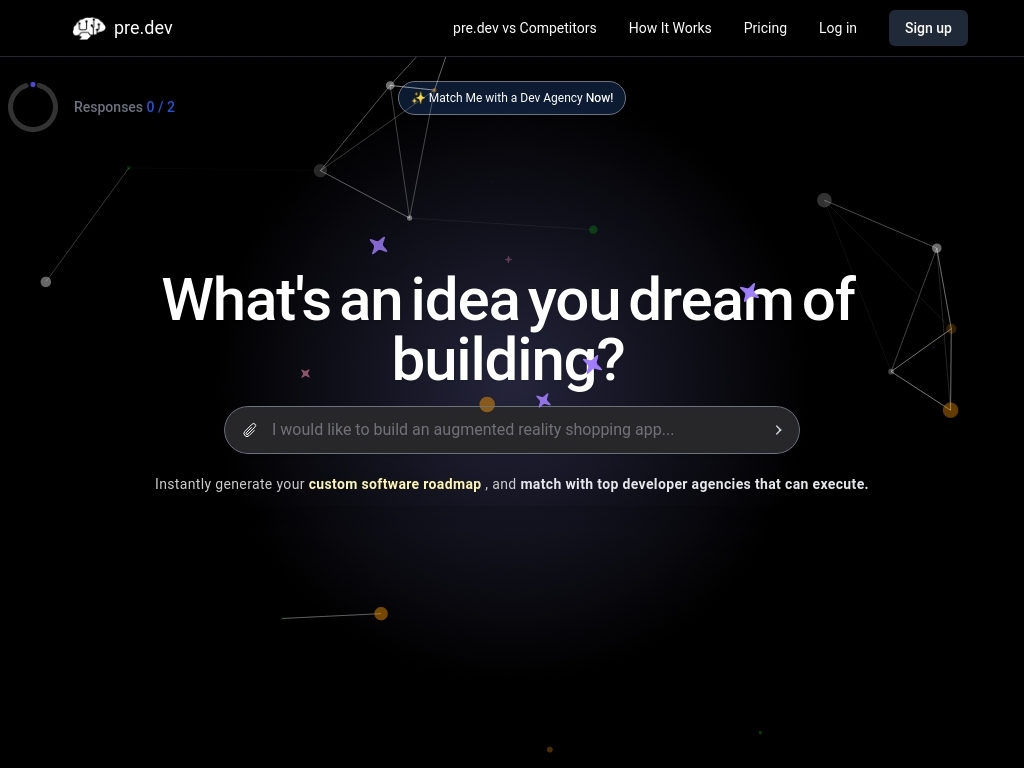
Founder-Market Fit
Skills
What skills did Adam Elkassas have that led to their success?
How did Adam come up with the idea for pre.dev?
In the midst of the pandemic, Adam Elkassas found himself grappling with restrictive US crypto regulations while working at a hedge fund in Puerto Rico. This led him to rejuvenate his tech consulting venture, where he frequently encountered the challenge of clients struggling to articulate their software project needs. Observing the rise of AI technologies like ChatGPT, Elkassas conceived an internal app to streamline client communication using AI to extract project details quickly.
The success of this internal app sparked the realization that it could be transformed into a customer-facing platform. Elkassas teamed up with Arjun Raj Jain, who proposed developing it into a SaaS product named pre.dev. They identified the widespread difficulty non-technical founders face in discussing project requirements with engineers, a gap pre.dev was designed to fill by automating and simplifying the project planning process. Elkassas’ initial experiments and feedback prompted refinements, ensuring the platform could efficiently address this common pain point.
This ideation journey was guided by the need to reduce time spent in client consultations. Elkassas focused on creating a solution that allowed backend efficiency without compromising customer understanding or project quality. Through quick iterations, the founders overcame uncertainties by validating their idea with real-world usage, which confirmed they were solving a genuine problem faced by many founders and small development agencies.
How did Adam Elkassas build the initial version of pre.dev?
Pre.dev was built through a process of rapid iteration and strategic automation. The development team leveraged a mental model approach, honed from past experiences across various industries, to identify similarities that could be automated. This reduced time spent on tasks like authentication and API structure, allowing them to focus on the specifics of the product. The first version of pre.dev was completed remarkably quickly, with initial development beginning on August 1 and sales starting by mid-September. Planning was a crucial phase, though it was initially frustrating for the founders. Nonetheless, they recognized it as essential to timely and efficient product and feature rollout, avoiding any unnecessary hiccups. They also utilized pre.dev itself for internal planning, testing the AI to continuously improve and streamline both customer and in-house project management processes.
What was the growth strategy for pre.dev and how did they scale?
Clutch.co Listings and Targeted Sales
Pre.dev focused on targeted sales by leveraging Clutch.co, a platform where agencies publicly list their minimum rates. The company strategically targeted agencies that would benefit the most from their software prototyping solutions. By reaching out directly through agency websites and contact forms, they clearly communicated their offering. This approach allowed them to engage with quality leads that were genuinely interested in their product.
Why it worked: This channel was effective because it allowed pre.dev to focus their efforts on a select group of potential customers who had a clearly identified need for their solution. By being open about their offering during initial contacts, they attracted higher-quality leads, streamlining the sales process.
Aggressive Pricing Strategy
Pre.dev adopted an aggressive pricing strategy by aligning their product's value with the time saved for their customers. They worked closely with clients who valued time-saving measures, often those with higher rates, which justified the premium pricing of pre.dev’s services. Feedback and case-by-case adjustments helped them refine and settle on sustainable pricing that echoed this value.
Why it worked: This strategy helped pre.dev maximize revenue by attracting clients who perceived significant value in the time savings provided by the software. It also meant they were engaging customers who were more likely to pay a premium for efficiency, enhancing recurring revenue streams.
Google for Startups Cloud Program Partnership
Joining the Google for Startups Cloud Program provided pre.dev with access to Google Cloud's infrastructure and resources. This partnership enhanced their offerings by providing advanced infrastructure, technical training, and Google Cloud credits, which allowed them to scale efficiently.
Why it worked: The partnership with a trusted tech giant like Google enhanced pre.dev's credibility and enabled them to offer robust, scalable solutions. It also provided essential resources that supported growth and innovation, which were appealing to both existing and potential clients.
Networking and Local Partnerships
Pre.dev boosted their visibility and growth through local networking, particularly after moving operations to Miami. They partnered with Venture Miami to assist startups in areas like product development using AI, thereby tapping into a local startup ecosystem while expanding their client base.
Why it worked: By embedding themselves in a vibrant tech community and leveraging local partnerships, pre.dev was able to access a steady stream of startups eager to use their AI-driven tools. This not only increased their customer base but also strengthened their presence in the tech and startup community.
What's the pricing strategy for pre.dev?
Pre.dev employs an aggressive pricing strategy, offering individual plans and enterprise subscriptions at $99/month to attract high-value clients seeking time savings and efficiency.
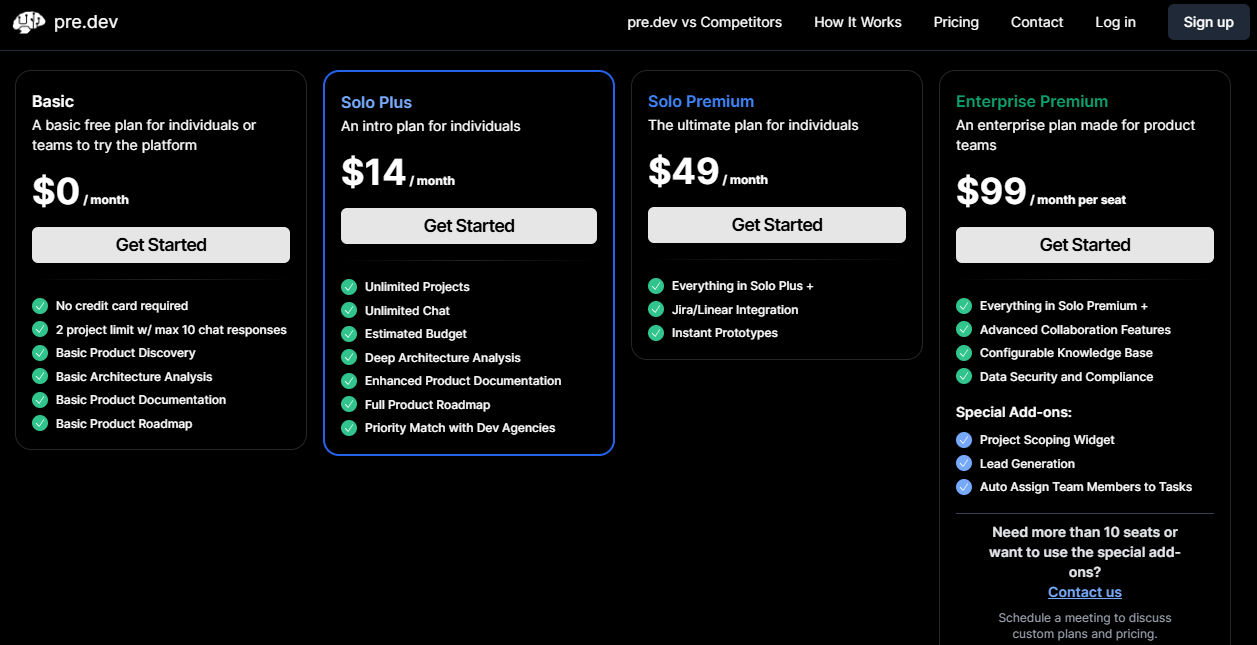
Pre.Dev Pricing
What were the biggest lessons learned from building pre.dev?
- Niche Down Strategically: Pre.dev found success by targeting a niche market—audience that values time-efficient solutions, like agencies looking to reduce client onboarding time, rather than generic MVP builders. This focus allowed them to refine their offerings and expand from a solid foundation.
- Embrace Customer Feedback for Growth: Pre.dev adapted by reaching out to potential clients and modifying its features based on needs, such as creating a hackathon-specific feature. Listening to customers and integrating their feedback helped improve the product and expand its market fit.
- Iterate and Automate: Rapid iteration and automation were crucial for Pre.dev's development speed. By automating repetitive tasks, the team could focus on refining product nuances, speeding up feature development, and improving their AI tool using their own platform.
- Prioritize Sales Over Marketing Early: Pre.dev focused on direct sales and client outreach instead of traditional marketing early on. By being transparent about their offering and maintaining clear communication during sales calls, they converted quality leads and sustained growth.
- Validate Ideas Quickly: Emphasizing 'failing fast,' Pre.dev tested and validated ideas rapidly to minimize development risks. Building MVPs swiftly and getting them to potential users ensured that they focused on successful ideas and quickly moved past unviable ones.
What platform/tools does pre.dev use?
Discover Similar Business Ideas Like pre.dev





More about pre.dev:
Who is the owner of pre.dev?
Adam Elkassas is the founder of pre.dev.
When did Adam Elkassas start pre.dev?
2023
What is Adam Elkassas's net worth?
Adam Elkassas's business makes an average of $36K/month.
How much money has Adam Elkassas made from pre.dev?
Adam Elkassas started the business in 2023, and currently makes an average of $432K/year.