How 2 Founders Built A Booming Consumer Research Platform With PickFu

Who is Justin Chen?
Justin Chen and John Li are the co-founders of PickFu. Justin graduated during the dot-com bust and worked at Microsoft, while John studied computer science at UC Berkeley and worked at HP before they both pursued entrepreneurship.

What problem does Pickfu solve?
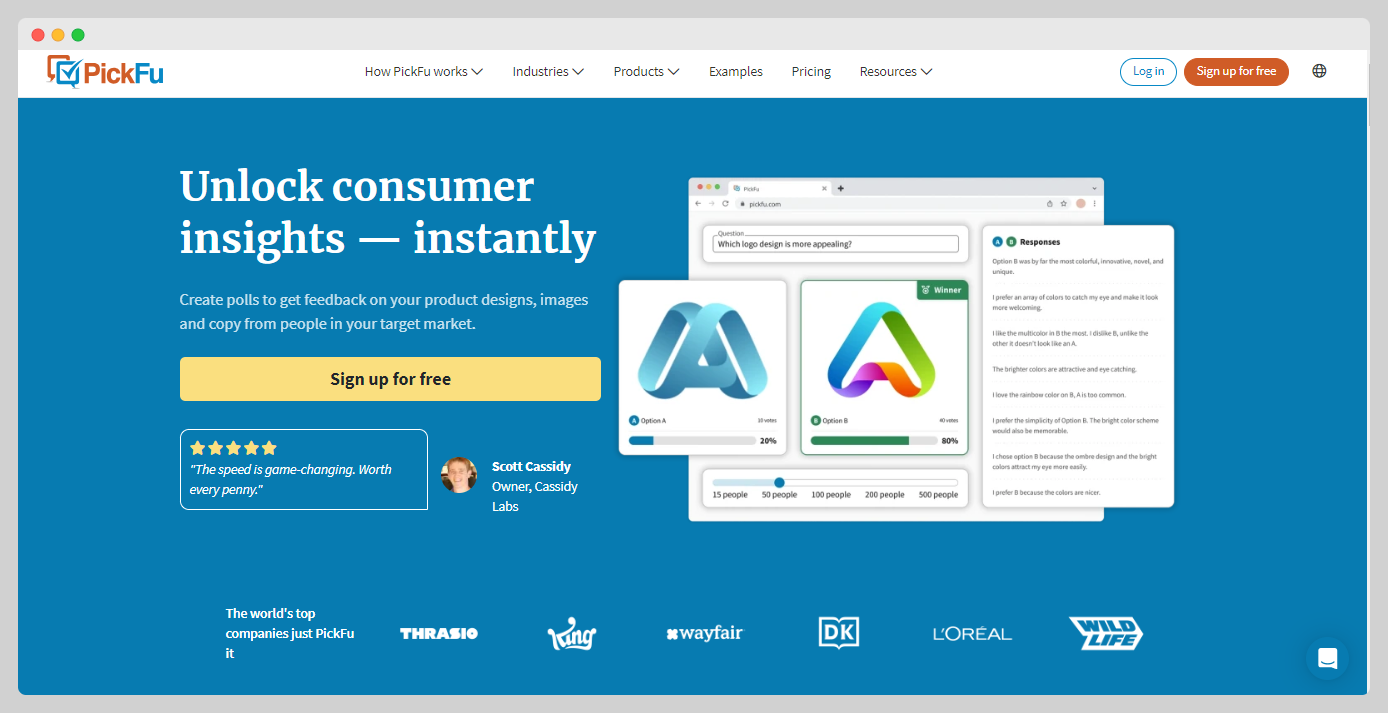
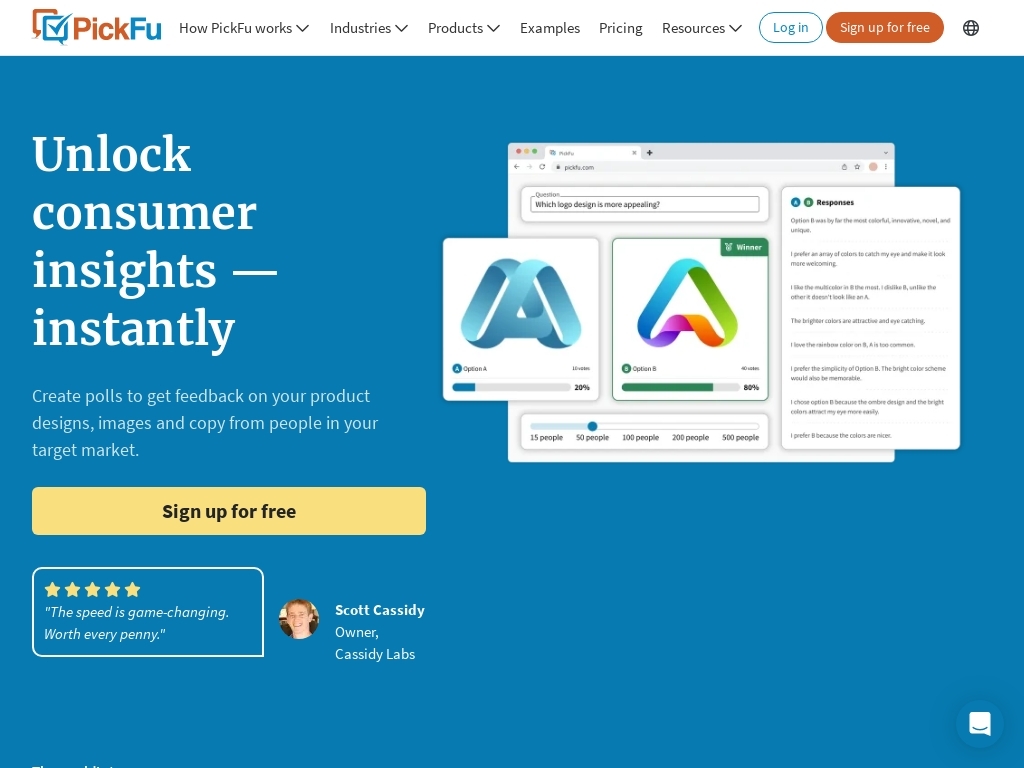
PickFu swiftly provides reliable consumer feedback, helping businesses avoid costly design, branding, and product launch mistakes. This makes decision-making faster and reduces the risk of ineffective strategies.
How did Justin come up with the idea for Pickfu?
Justin and John both craved entrepreneurial freedom and wanted to learn valuable lessons outside their corporate jobs. They initially launched a restaurant menu aggregator, but soon stumbled upon a bigger need while working on their first venture. They required consumer feedback for design decisions and realized asking friends and family was ineffective.
They built a simple tool to gather unbiased feedback from the public and saw a steady, organic interest in the tool. This prompted them to shift their focus onto what would become PickFu. Over time, they refined their service based on user feedback and expanded its capabilities, constantly validating the need through customer interactions. The genuine market value and consistent demand for consumer insights convinced them to transition fully to PickFu.
How did Justin Chen build the initial version of Pickfu?
Justin Chen and John Li built the first version of PickFu over a long weekend using Mechanical Turk to source their initial panelists. They developed a straightforward tool focusing on simplicity, allowing users to submit questions and receive quick, unbiased feedback. The technology stack initially featured a PayPal button for ease of transactions, demonstrating effective use of software development skills from their backgrounds at Microsoft and HP. The initial build phase encountered typical challenges such as validating user demand and ensuring quality responses from Mechanical Turk. Their prototype garnered gradual user traction over several years, convincing them of its potential market fit, especially as the feedback volume organically grew across different verticals.
What were the initial startup costs for Pickfu?
- Product Development: The co-founders initially built PickFu themselves during a long Thanksgiving break, with minimal investment beyond their time.
- Initial Marketing: They posted on Hacker News, getting a small number of responses and organic growth from word-of-mouth.
- Funding: There was no mention of external funding; the business is bootstrap-funded.
- User Acquisition: The platform slowly attracted users who found value, such as self-publishing authors and mobile game developers. This organic growth occurred without significant marketing expenditure.
- Unexpected Costs: With the tilt towards using third-party market research panels, costs have likely increased compared to initial recruitment via Mechanical Turk. Additionally, there were costs associated with developing AI tools for summarizing lengthy poll responses.
How did Justin launch Pickfu and get initial traction?
Kickstarter
The founders launched PickFu as a Kickstarter campaign to fund the initial development of their consumer feedback platform. They managed to raise $300,000 in sales within the first three months by offering a 10% discount to early backers.
Why it worked: Kickstarter provided an initial surge of customers eager to see a new tool for getting consumer feedback. With 1,000+ backers, they achieved significant attention and could begin iterating based on user feedback.
Hacker News
To get the initial word out about PickFu, they posted on Hacker News. Although not hugely viral, the post garnered 104 points and generated some early interest. They received feedback, including suggestions to raise their pricing.
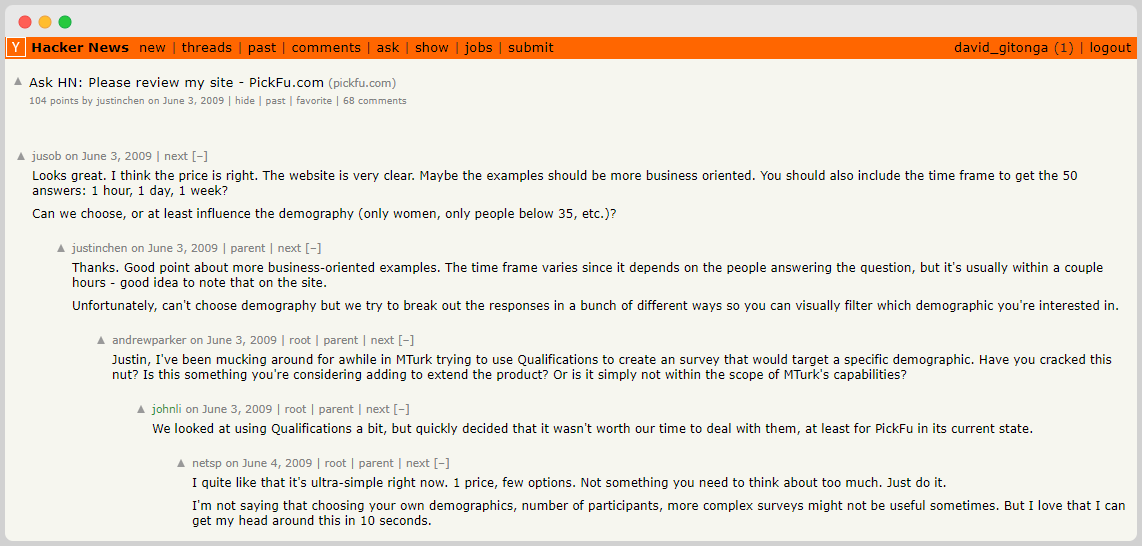
Why it worked: Hacker News helped them reach a technically savvy audience who could see the tool's potential, offering both initial customers and valuable feedback on the pricing model.
Word of Mouth in Niche Communities
Early adopters in specific communities like self-publishing authors and mobile game developers discovered and shared PickFu organically. These users found immense value in the tool, using it to test book covers, titles, game concepts, and more.
Why it worked: Specific communities had natural use cases for consumer feedback, which led to high engagement and word-of-mouth referrals. Authors could test book covers and titles, and game developers could validate character designs, leading to a slow but steady increase in users.
Metrics:
- Within the first year from just word-of-mouth and organic growth, PickFu had a growing base of self-publishing authors and game developers.
- Doubling the price based on feedback did not deter existing users but helped boost revenue.
- Engaging with e-commerce sellers eventually led to more significant traction and repeat usage, particularly from Amazon sellers optimizing product listings.
By leveraging Kickstarter, Hacker News, and organic growth within niche communities, the founders effectively launched PickFu and achieved a solid initial user base.
What was the growth strategy for Pickfu and how did they scale?
Networking and Referrals
PickFu leveraged networking and referrals effectively. One of their pivotal moments was when an Amazon selling coach discovered their platform and shared it with their students, who found it immensely valuable for increasing their sales by split-testing product images. This kind of customer-driven awareness played a significant role in expanding PickFu's user base within the e-commerce sector.
Why it worked: By networking with key influencers in the e-commerce community, PickFu was able to tap into a wide market of potential users who directly benefited from their service. The enthusiastic recommendations from satisfied, influential users lent credibility and brought in numerous new customers.
Content Marketing and Education
PickFu's growth was also fueled by content marketing and customer education. They consistently provided examples and use cases tailored to various industries, such as e-commerce, self-publishing, and mobile gaming. Their aim was to illustrate the broad utility of their service and how it could solve specific industry problems.
Why it worked: Content marketing helped potential customers see the value and application of PickFu in real-world scenarios, driving more informed and ready-to-buy users to their platform. Customer education ensured users understood how to use PickFu effectively, maximizing the tool's utility and increasing customer satisfaction and retention.
Strategic Partnerships
PickFu formed strategic partnerships with market research panels to broaden their respondent base. This gave them access to a large and varied pool of potential panelists, enhancing the reliability and specificity of the feedback their platform could provide.
Why it worked: Strategic partnerships with established market research panels allowed PickFu to offer highly targeted and reliable insights, which appealed to a wide range of industries. This level of depth and accuracy in their service offerings made PickFu a valuable tool for businesses needing precise consumer feedback, thereby driving higher usage and customer retention.
What's the pricing strategy for Pickfu?
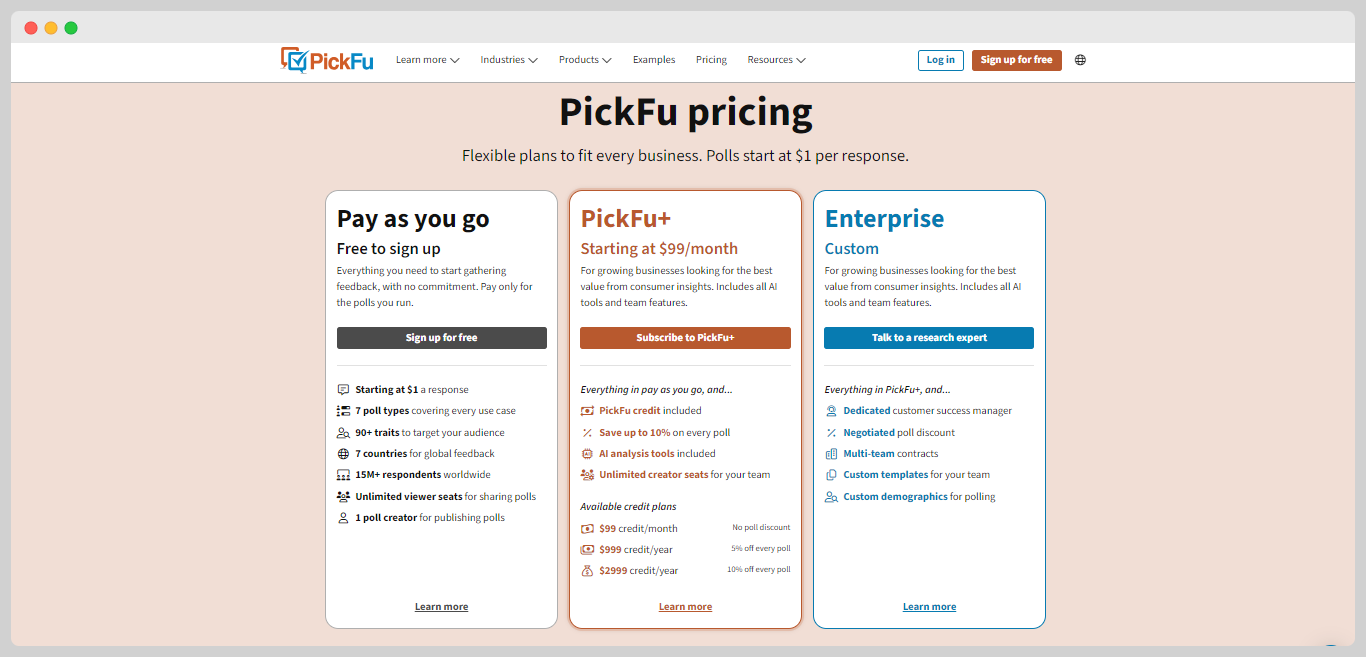
PickFu leverages a freemium pricing model where a basic poll costs $50 for 50 responses, with more advanced targeting options and larger sample sizes available at additional costs, allowing businesses to optimize early-stage decisions effectively.
What were the biggest lessons learned from building Pickfu?
- Listen to the Market: PickFu found success by tapping into the needs of different customer segments like self-publishing authors, mobile game developers, and e-commerce sellers. This adaptive approach helped them identify and focus on the most profitable and scalable market segments.
- Iterate Based on Feedback: Initially, PickFu's platform leveraged Mechanical Turk for feedback, but they continuously improved their offering by integrating with various third-party panels and refining their targeting capabilities to cater to specific demographics.
- Simplicity Sells: One reason for PickFu's growth is its simple and user-friendly interface, which allowed users to set up polls quickly and receive timely feedback. This ease of use attracted a broad range of customers from different industries.
- Educate Your Customers: PickFu realized that detailed customer education was essential. By offering examples and use cases tailored to different industries, they effectively communicated the value of their platform, encouraging more frequent and diverse usage.
- Embrace Resilience and Patience: PickFu's journey from a side project to the main focus took years. Their willingness to let the project grow organically, observe the natural traction, and pivot when necessary are key lessons in resilience and patience in entrepreneurship.
What platform/tools does Pickfu use?
Discover Similar Business Ideas Like Pickfu







More about Pickfu:
Who is the owner of Pickfu?
Justin Chen is the founder of Pickfu.
When did Justin Chen start Pickfu?
2008
What is Justin Chen's net worth?
Justin Chen's business makes an average of $83.3K/month.
How much money has Justin Chen made from Pickfu?
Justin Chen started the business in 2008, and currently makes an average of $1M/year.
Sources (22)