How My Mobile App Makes $300K/Month
Who are you and what business did you start?
Introduce yourself and the business you run (this entire interview should be written in the first person)
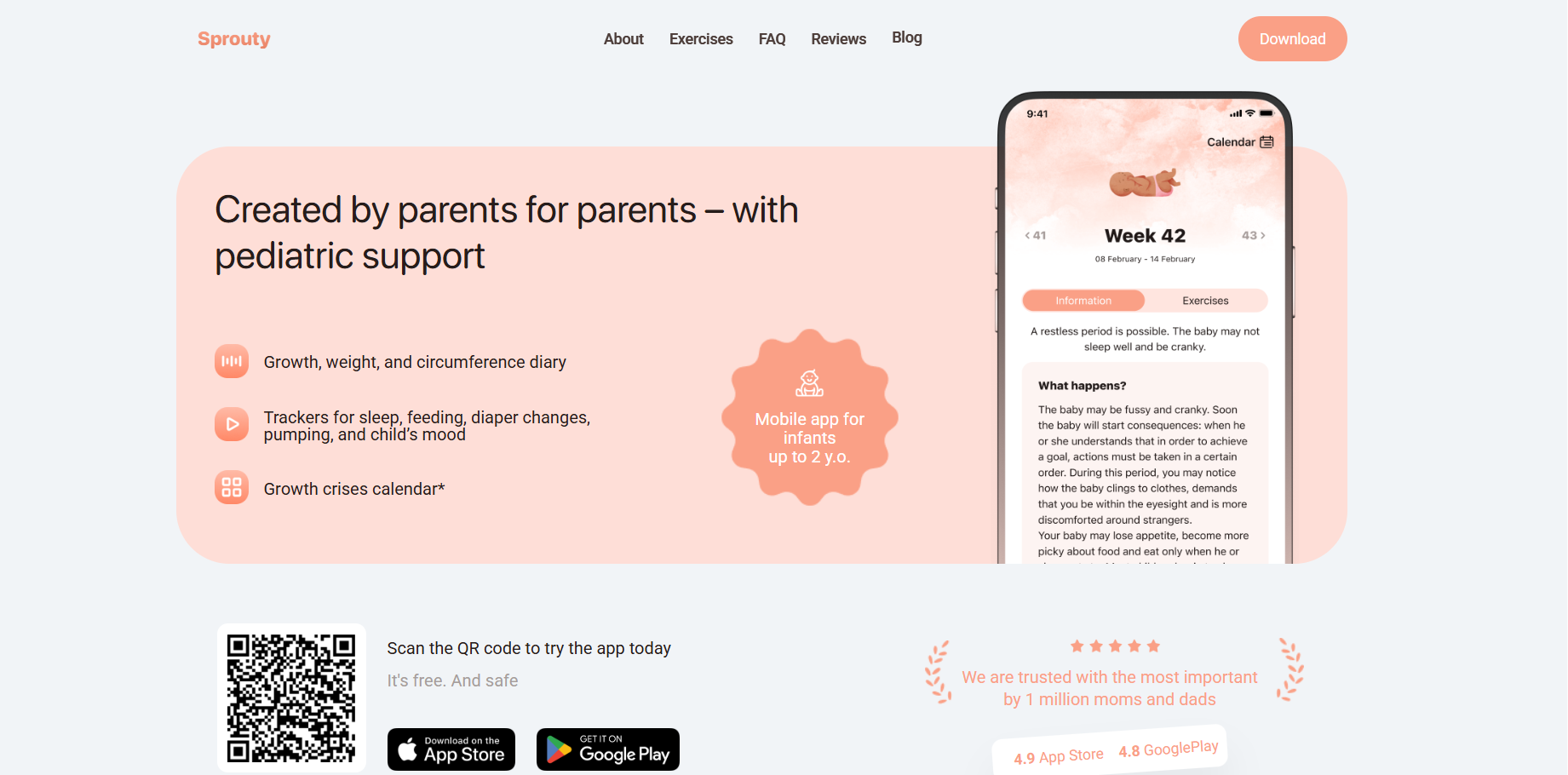
Hi, I’m Dmitry Rumbeshta, co-founder and CEO of Sprouty — a mobile app with an AI companion that helps parents navigate the first years of their child’s life. Before Sprouty, I worked in product management and engineering, mostly in fintech and early-stage startups. That background helped me build scalable products but Sprouty came from something much more personal. We built it to solve real problems my wife and I faced when we became parents ourselves.
What is the name of your business and who are your primary customers?
Our company is called Sprouty, and it’s built for parents of babies aged 0–3 years. Our primary users are families navigating early parenthood — first-time parents who are figuring out routines and coping with uncertainty, as well as more experienced parents who still want clarity, structure, and reassurance during one of the most intense developmental phases in life.
What makes your business unique and/or special?
Sprouty isn’t a typical tracking or generic content app. We use the data parents share with us to understand their current situation and deliver only the information that is relevant at that moment. Only evidence-based and maximum personalization. This reduces overload and helps parents feel more confident and in control, rather than overwhelmed.
Provide one line about your revenue. (i.e. Today we bring in around $20K/month).
By January 2026, our monthly revenue reached $300K.

My image
How do you come up with the idea for Sprouty?
How did you come up with your idea? The idea came directly from our own family experience. In early 2022, my wife and I moved to a new country — Cyprus, while she was pregnant. When our daughter was born, we didn’t have family nearby to support us, and we felt completely overwhelmed. There were plenty of apps, but none that really helped us feel grounded or understand what was going on day to day. So we started building something very simple — initially just for ourselves — to bring structure and predictability back into our lives.
How did you come up with your business idea? We started by trying to solve our own problem. Together with a friend, we built a very simple product for personal use before thinking of it as a business.
How did you know this was the right idea to work on? When we released an early version publicly, even with very limited access, parents immediately wanted in. We capped registrations at 30 per day, and people kept trying to sign up anyway — and messaged us when they couldn’t. That was the moment we realized this wasn’t just our problem. A lot of parents were feeling the same way. Looking back, it seems obvious — but at the time it really wasn’t.
Was there an "aha" moment? Yes, when users started demanding access to an unfinished product. That’s when it became clear we were solving a real pain point.
How was this different from other business ideas you had? This wasn’t a theoretical idea. It was rooted in a daily, emotionally intense problem we were personally experiencing.
What is your expertise/background related to your business? I have a background in engineering, product management, and growth. I’ve led product teams, managed fintech products, and worked in early-stage startups. From a skills perspective, this experience is directly relevant to building and scaling Sprouty. From a content and subject-matter perspective, my expertise is in technology rather than medicine or pediatrics, which is why all clinical guidance in Sprouty comes from pediatricians and child development experts.
How did you validate your idea? From the very first week, retention was around 60%, which is strong for any app. Parents also gave us very direct feedback — what helped, what didn’t, and what they needed next. That combination of usage data and honest feedback made it clear we were solving a real problem.
How did you build the initial version of Sprouty?
Dmitry Rumbeshta and his team built Sprouty to help parents navigate the early years of their child's life by solving real problems they faced as parents themselves. Using their background in engineering and product management, they created a mobile app with an AI companion that delivers personalized, evidence-based information to parents. They started by building a simple product for personal use before realizing the broader potential. The first paywall was introduced in July 2023, and they received their first paying users immediately, with a 60% retention rate from the first week. As they iterated on the product based on user feedback, they focused on organic growth channels like App Store optimization and word of mouth recommendations from parent to parent.
How did you launch Sprouty and get initial traction?
How did you 'launch' the business?
We didn’t really launch it formally at first. Initially, we focused on building a product that was genuinely valuable for ourselves and for the parents asking for it. Once the product was useful, we introduced a free core experience and a paid layer with deeper personalization. Strong conversion and retention showed us that the product was genuinely valuable to parents.
At first, we saw an opportunity to create real value. Then, we saw the opportunity to build a business. And as we started researching the market and speaking with different stakeholders — partners and investors — we realized there was an opportunity to build a startup and become a category leader in this space.
That’s why we’ve raised investment from Altair Capital, even though we were growing well while bootstrapped — to give ourselves a launchpad for the next stage of growth
How did you tell the world you were in business?
We didn’t really announce it or tell the world in any deliberate way. The app was originally built for our own needs, and at the beginning it solved just one very narrow use case. The only thing we did intentionally was set up App Store optimisation properly. Beyond that, we didn’t expect it to grow the way it did or to turn into a business at that stage. At the time, we honestly didn’t expect it to turn into a real business.
What tactics or strategies did you use to get the word out?
Our initial visibility came from a combination of App Store optimisation and word of mouth. From the very beginning, ASO was set up well and started performing quickly. Because users spent a lot of time in the app and showed strong engagement, the App Store algorithms recognised the product as high quality and began ranking it higher for key search terms. At the same time, parents started recommending Sprouty to each other organically, which reinforced that growth.
How did people respond to your launch? (whether it was online or in-person, what did people say?)
The response surprised us; we got a lot of messages from parents saying it genuinely helped them. Parents shared gratitude, relief, and concrete suggestions for improvement. Many said it made them feel less alone and more confident in their parenting journey. One memorable example: a parent recognized that I work at Sprouty through a local community chat, realized they were already a user, and later sent a heartfelt note describing the difference the app made in their daily life. We receive messages like this almost weekly from professionals, parents, and caregivers alike, and it’s a constant source of motivation.
What lesson did you learn from your launch? What would you do the same or different?
The biggest lesson was the importance of understanding real user pain before trying to scale. That understanding comes only from living the experience and staying closely connected to your users. In hindsight, we could have dedicated more time early on. Balancing the early product build with other jobs slowed us down. If I could go back, I would focus more time from day one.
Share the story behind making your first dollar or making your first sale.
There wasn’t a dramatic story — we simply introduced a paywall and added new functionality. Our first paying users were existing users who wanted more features and were willing to pay to unlock them. It validated that the product had tangible value.
How did you attract your first few clients?
Through organic discovery and parent-to-parent recommendations.
How long did it take to make your first dollar? (1 day? 2 months? 5 months?)
It depends on how to count it. We initially built and released the app for ourselves in early 2023. The first paywall was introduced in July 2023 to test whether there was real product–market fit beyond free usage. Once we launched the paywall, we received our first paying users immediately. Since we offered a seven-day trial, the first dollar technically came about a week later.
What lessons did you learn about yourself or the business?
That when people are stressed and sleep-deprived, even small product decisions matter much more than you expect.
What was the growth strategy for Sprouty and how did you scale?
What tactics or strategies have you used to get more customers? (SEO, social media, PR, newsletters, knocking on doors, etc. be as specific as possible)
Sprouty has grown organically and via disciplined, revenue-reinvested paid acquisition. We rely heavily on a content-driven approach, leveraging micro-influencers on barter and paid terms to create authentic short-form content. That content is then repurposed as user-generated ads for paid acquisition. Most of our paid campaigns are built around authentic, relatable UGC rather than traditional advertising.
What channels have you used to grow your business? (Twitter, Reddit, newsletter, media, Facebook, etc.) Why did you use this channel? Share a real example of a strategy or tactic you used to grow your customer base
Once we saw that word of mouth was working well, we realised that influencer marketing and social platforms were the most natural organic channels for us. Parenting recommendations tend to spread best from people to people, especially on social networks. We started with influencer marketing on Instagram, and once that worked, we launched paid acquisition there using very similar messaging and UGC-based creatives from those influencer integrations. After Meta ads began performing consistently, we expanded to TikTok, which is highly relevant for the same reasons and follows a similar content-driven model.
Why did this strategy/tactic work? What can readers learn from your experience?
What really mattered was understanding how parents actually discover products like ours. Parents don’t discover apps through abstract advertising; they look for recommendations from people they already trust, including bloggers and creators they follow. Once we understood that, we focused on doing more of what was already working - just more consistently and at a larger scale. We didn’t invent a new growth model; we amplified the way users already discover and trust products like ours.
Do you have any recommendations on how aspiring entrepreneurs can grow their business?
When it comes to finding a scalable growth channel, the first step is observation and asking questions. In our case, we were lucky - the product started spreading organically, so our task was to understand how and then replicate that mechanism at scale. If that doesn’t happen naturally, you need to go and learn it directly from users. We did this through Jobs To Be Done interviews, focusing on how people currently solve the problem your product addresses: where they look for solutions, whom they trust, and what they think about first when the problem appears. You need clear answers to those questions, using whatever methods are available.
What were the biggest lessons learned from building Sprouty?
Mistakes/poor decisions you made, missed opportunities, things you got blindsided by, things that were hard for you to do, things you had to learn, other challenges/obstacles
One of the most important lessons I’ve learned is the value of slowing down and fully considering your options before making decisions. Early on, we had a situation where we couldn’t agree on terms with a potential key employee. We probably should have spent more time exploring alternatives and thinking through the discussion more carefully. It taught me to slow down and not close doors too quickly.
Good decisions you made (e.g. marketing, partnerships, etc)
Building a team of people you trust and respect - every member of our team has been critical to our success. Leaning into organic growth channels like App Store optimization and parent-to-parent recommendations. Investing in authentic content and UGC for marketing, rather than traditional ads.
Forces out of your control that helped, i.e. luck, timing, trends
Timing played a big role. It just seems like now parents are more willing to try apps that actually help, which wasn’t always the case. Trends in parenting tech, social media, and mobile adoption created a favorable environment for Sprouty to grow.
The lessons you learned, and how you applied them (or could have applied them)
When users are emotionally overloaded, adding value often means simplifying, removing friction, and reducing cognitive load rather than adding more features.
Helpful habits/abilities/skills that you possess
My co-founder Nick and I constantly challenge each other’s decisions. It’s not always comfortable, but it usually helps us avoid blind spots and make better calls. I try to stay focused on one clear objective while keeping multiple possible paths (strategies) to reach it in mind.
Your top tips and learnings; things that might not be obvious
Patience and consistent effort are critical. Be extremely clear about what you want, how you’ll measure success, and whether your goals are realistic. Take things step by step: iterate, test, and adjust as you go. Regularly check if your goals are still meaningful and achievable. Talk to people, learn from them, and build from shared experience. Many founders try to solve every problem alone, but collaboration and learning from others is one of the strongest assets in entrepreneurship.
Mistakes you often see other people making
One common mistake I see is that people don’t talk to other people enough and don’t learn from those around them. Too many founders try to hit every obstacle themselves instead of learning from others’ experience. It’s true that some knowledge feels locked behind elite circles or large companies, but there is almost always a community around you that is willing to share. That exchange of experience is one of the real strengths of entrepreneurship.
Inspire us!!!
Helping someone feel a little less lost on a difficult day is a powerful thing to build a business around. If you start there, many other things tend to fall into place.
Discover Similar Business Ideas Like Sprouty






More about Sprouty:
Who is the owner of Sprouty?
Dmitry Rumbeshta is the founder of Sprouty.
When did Dmitry Rumbeshta start Sprouty?
2024
How much money has Dmitry Rumbeshta made from Sprouty?
Dmitry Rumbeshta started the business in 2024, and currently makes an average of $3.36M/year.
More Case Studies Like This





Starter Story × HubSpot
Free tools for every part of your business.
Find customers, win deals, and automate the busywork with HubSpot's free tools.