I Built A $5K/Month Site That Helps Texans Compare Real Electricity Costs
Who are you and what business did you start?
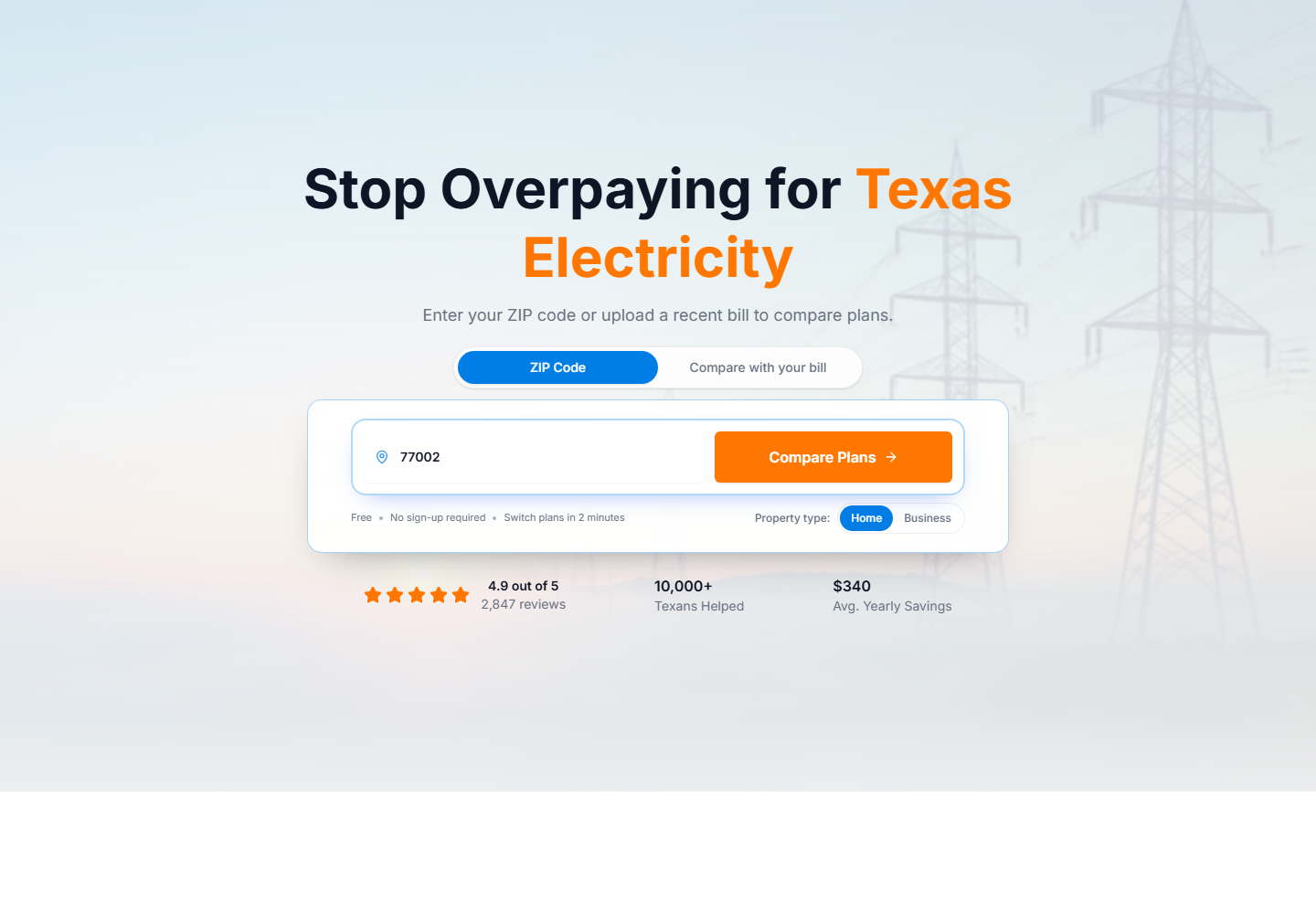
I’m Roi Cahana, founder of SlashPlan, a website that helps Texas homes and businesses compare electricity plans based on what they would actually pay, rather than advertised rates that can be misleading and costly.
We look at how each customer uses electricity and include all the charges and credits in each plan. This shows them what their monthly bills could look like in a real apples-to-apples comparison, making it easier to understand their options and choose a plan.
Customers can get their actual usage history, compare plans, and sign up directly on our website, all in just a few minutes and for free.
Our clients typically save 20–30% compared with their existing plans, often tens and sometimes hundreds of dollars a month.
SlashPlan currently brings in $5,000 a month and is seeing strong month-over-month growth.

My image
How do you come up with the idea for SlashPlan?
After moving to Texas, I found myself paying more than I needed to for electricity. I started comparing plans against my own usage instead of relying on the advertised rate. That changed the question from 'Which rate looks cheapest?' to 'What would my bills actually be on this plan?'
Before we had a website, we initially helped about 30 friends and family members manually. Referrals then brought roughly another 10 to 20 people a year. We calculated bills and compared plans for them over several years. Seeing the same problem come up across those people made this feel like more than a problem with my own bill.
It was especially noticeable with bill-credit and time-of-use plans. A credit or a cheap time period could make a plan look attractive on paper, but that did not necessarily match how our friends used electricity. Some ended up paying much more than they needed to. Looking at actual usage and all the charges and credits gave us a more useful comparison than the advertised rate alone.
That manual work was how we tested the idea. We were already helping people choose plans, and referrals kept bringing more people to us. It also gave us a clear process to build around: get someone's usage history, compare what their bills could be on different plans, and help them enroll.
The idea brought together technology and saving money, and it felt like a service that could help people around me. The business model was different from other businesses I had worked on. We could earn commissions from electricity providers without charging customers for our help.
I had no background in the energy industry, so I learned by reading and through trial and error. Eventually, we decided to turn the manual service into a public product. The goal was to make the same useful comparison available to more people without having to calculate every plan for them ourselves.
How did you build the initial version of SlashPlan?
Before building a website, SlashPlan's service was manual: the founder calculated bills and compared plans for about 30 friends and family members over several years, which defined the process the product would automate. The first website was a small MVP that went live around October 2020, with plenty of problems in hindsight but functional enough for people to sign up. The sources don't specify how long the first version took to build or which tools and tech stack were used. The hardest part was connecting to multiple electricity providers, whose systems didn't follow one consistent set of requirements, and some partners had limited technical resources to help resolve issues. The founder later rebuilt the entire comparison engine from scratch, relaunching in February 2026.
How did you launch SlashPlan and get initial traction?
The first SlashPlan website launched around October 2020. We started by telling friends and family about it and posting on social media. We had already been helping people compare electricity plans manually, so the website was a way to let people enroll through the service.
Our first customers were friends who needed to change their electricity plans but did not know where to start. In the first few months, we had a few dozen enrollments. The website was a small MVP with plenty of problems in hindsight, but it was functional enough for people to sign up for a plan. It took a few months before we began making our first dollars.
The biggest technical challenge was connecting with multiple electricity providers. In our experience, their systems did not follow one consistent set of requirements. Each connection worked differently, including what information the systems expected and how they exchanged it. Some integration partners also had limited technical resources, which made working through those issues together more difficult.
After that initial start, the website received only minimal updates for about two years while I was busy with other business opportunities. It grew slowly, but we were not putting much time or focus into new features. Having a live website did not mean we were actively developing it.
We eventually decided to overhaul the website and build the entire comparison engine from scratch. We relaunched in February 2026. That was a new phase for SlashPlan after a long period of slow growth and limited activity.
Our marketing has also developed gradually. We started with personal connections and social media, later tried ads, and saw organic traffic increase over time. Today, we are using SEO, online advertising, and direct outreach to build on that beginning.
What was the growth strategy for SlashPlan and how did you scale?
Today, about 35% of our enrollments come from paid social media ads on Facebook and Instagram. We also get enrollments through a mix of other sources, including organic visitors, people coming directly to our website, and traffic from LLMs such as ChatGPT. Those are different ways people find us, alongside our ongoing work on SEO, blogging, Google Ads, and direct outreach.
The message behind our SEO and blogging is the same problem we saw while helping people manually: a low advertised electricity rate does not always mean a low bill. Our aim is to explain how actual usage, charges, and credits affect the comparison, and help people find SlashPlan when they are researching their options.
Facebook and Instagram ads have become a concrete source of enrollments for us. The point we want people to understand is practical: they can get their usage history, compare plans, and enroll on the same website, rather than try to work through every plan themselves.
With Google Ads, our goal is to reach people who are actively looking for an electricity plan and bring them to that comparison process. Direct outreach gives us a more personal way to introduce SlashPlan to potential clients and explain what it does.
Organic traffic has grown gradually, and our reach now extends beyond the friends, family, and referrals we started with. We are still learning how to balance these channels as we grow. Across all of them, our goal is to make the service easier to find and explain clearly how comparing actual bills can help.
What were the biggest lessons learned from building SlashPlan?
The strongest validation came from doing the work manually. We initially helped about 30 friends and family members, and referrals brought roughly another 10 to 20 people a year. That was a much more concrete reason to build SlashPlan than simply thinking an electricity comparison website sounded like a good idea. We had a recurring problem to solve before we had a product.
The bill comparisons also taught us why a low advertised rate is not enough. Bill-credit and time-of-use plans could look cheap on paper but turn out expensive for the way our friends actually used electricity. That is why we built our comparison around actual usage and the full charges and credits in each plan. The lesson for me was to understand the customer's real cost before deciding what information the product should emphasize.
Our first website launched around October 2020 and brought in a few dozen enrollments in the first few months. It had plenty of problems, but people could use it. I would keep the decision to launch a small version because it gave us a real starting point. What I would do differently is give the product more consistent attention after that initial launch.
Working with different electricity providers also showed us how much a product can depend on systems outside our control. The connections had different requirements, and the way they exchanged information was not always consistent. Some partners had limited technical resources to help resolve issues. My advice would be to treat those connections as a major part of the work, rather than assume they will be straightforward because your own website is ready.
For a few years, the website received minimal updates while I focused on other business opportunities. It grew slowly, but we were not spending much time developing new features. That is a different challenge from simply needing patience. Launching a website and continuing to build a business around it require different commitments.
We eventually rebuilt the entire comparison engine from scratch and relaunched in February 2026. Looking back, my advice is to be clear about the time you can give a product after it goes live. Early enrollments are a useful beginning, but the next stage still needs deliberate attention and development.
Discover Similar Business Ideas Like SlashPlan
|
|
Idea
|
Revenue
|
|---|
More about SlashPlan:
Who is the owner of SlashPlan?
Roi Cahana is the founder of SlashPlan.
When did Roi Cahana start SlashPlan?
2020
How much money has Roi Cahana made from SlashPlan?
Roi Cahana started the business in 2020, and currently makes an average of $60K/year.
More Case Studies Like This





Starter Story × HubSpot
Free tools for every part of your business.
Find customers, win deals, and automate the busywork with HubSpot's free tools.