My NYC Co-Working Business Makes $600K/Year
Who are you and what business did you start?
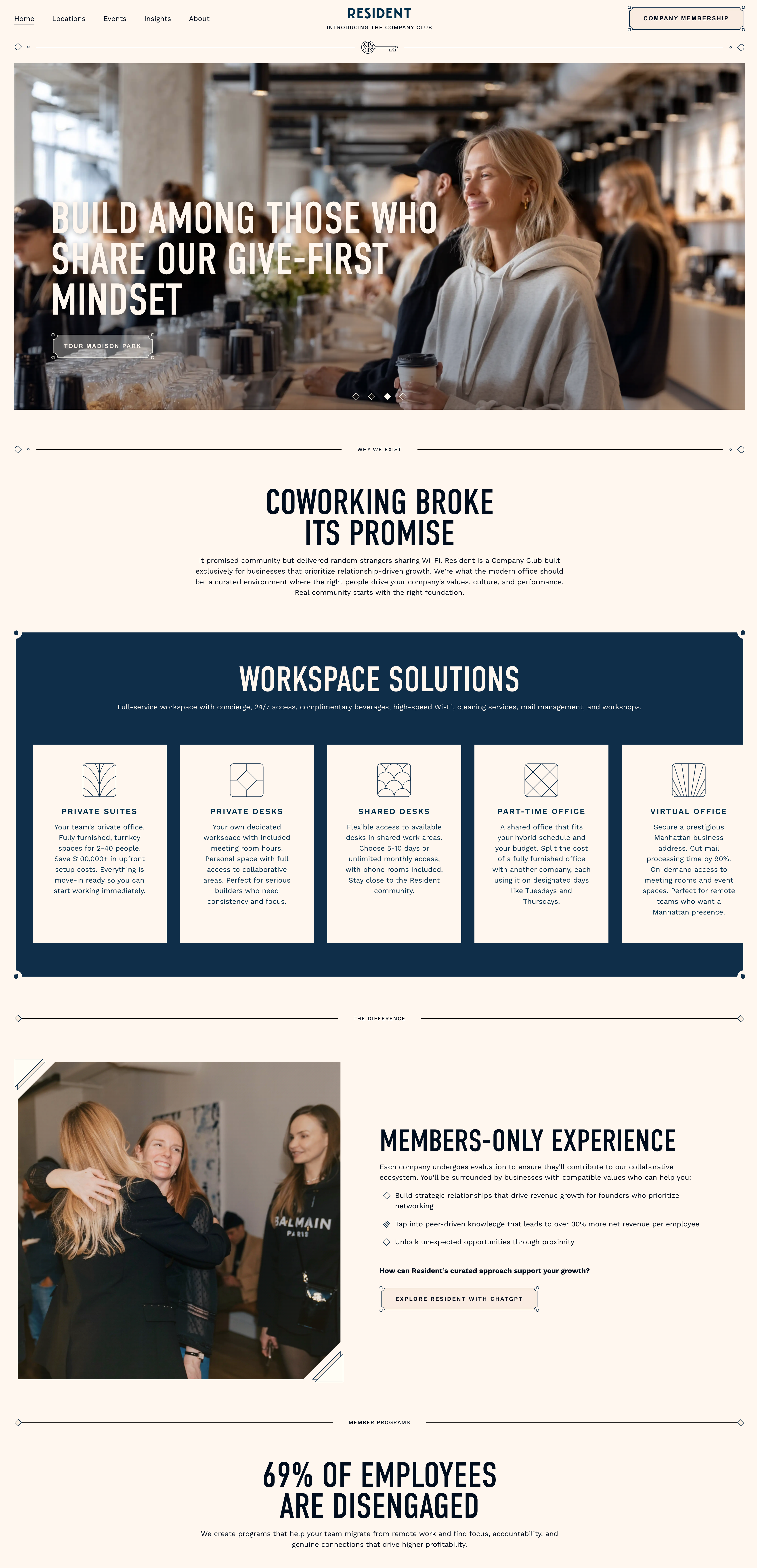
I’m the Founder and CEO of Resident, a members-only workspace in NYC. We built Resident for people who are deep in the work. Our members are primarily AI and product founders, along with post-exit founders who are building their next company. It’s a place to think clearly, work seriously, and be surrounded by peers who are operating at a high level.
What makes Resident different is how intentional we are about who our member companies are. We don’t try to be everything to everyone. That focus allows us to build a real community, not just a shared office. Members know each other, help each other, and actually want to spend time in the space. Today, we just hit $50K in monthly recurring revenue.

My image
How do you come up with the idea for Resident Company Club?
I came up with the idea for Resident after noticing that coworking spaces had lost their soul. Most of them turned into desk rental businesses with no real community behind them. At the same time, I was getting tired of working remotely. It felt isolating and, for me, less productive. I wanted a place where serious builders could work alongside other people who were equally focused and committed.
I knew this was the right idea to work on because I looked at it as a full business, not just from a customer lens. Despite the common belief that the office is dead, the timing actually felt right. The market is competitive, but most operators aren’t doing much to keep customers genuinely happy. When run correctly, it’s also a strong cash-flow business, and there were plenty of lessons to learn from existing coworking operators. The real “aha” moment was realizing that WeWork didn’t fail because the business model was broken, but because of poor execution.
This idea was different from others I’d considered because I intentionally wanted to do something very different from my past work. I didn’t come in with deep industry knowledge, but I am a serial entrepreneur and understand what it takes to build a company from the ground up. That meant I had to work harder to learn the coworking industry inside and out. To validate the idea early on, I spent time looking closely at occupancy levels of coworking spaces in Manhattan and other cities. The numbers were strong, and that gave me confidence there was real, sustained demand for what we were building.
How did you build the initial version of Resident Company Club?
The Founder of Resident Company Club built the initial product by first focusing on construction and creating a physical workspace that fostered a sense of community. The founder used a deliberate approach in selecting the right people as members, rather than trying to appeal to a broad audience. The first version of the space was carefully designed to cater to the needs of AI and product founders, as well as post-exit founders looking to build their next company. The founder took a hands-on approach in pre-selling memberships before the space was finished, but later found that this approach created more friction than momentum. The experience of building Resident Company Club taught the founder valuable lessons about the importance of mindset shifts when running a profitable, cash-flow business, as well as the significance of factors like construction costs and landlord selection in the success of the business. It took the founder about a year to launch Resident Company Club, from idea conception to finished product.
How did you launch Resident Company Club and get initial traction?
We launched Resident in a very hands-on way. Before the space was finished, we started pre-selling memberships while construction was still in progress. In hindsight, that wasn’t the right move. It created more friction than momentum. We eventually pulled back, finished the space properly, and officially launched on November 20, 2025. That reset gave us clarity and allowed the product to speak for itself.
To tell the world we were in business, we hosted a launch party and focused on making it genuinely fun. We had a DJ, a wine tasting, an art exhibit, and curated a great mix of founders, funders, and friends. The goal wasn’t to “announce” the business, but to let people experience the energy of the space and the type of community we were building. Beyond that, we used a mix of partnerships, referrals, content, past events, and a combination of cold and warm outreach to keep momentum going.
The response to the launch has been overwhelmingly positive. People consistently mention how intentional the community feels and how much attention we pay to service. We treat Resident as a hospitality business, not just a workspace, and aim to provide concierge-level service. That framing has resonated deeply with our audience and helped us stand out.
Making our first dollar came from those early membership commitments, and our first few clients were mostly people from my existing network and referrals from founders who immediately “got” what we were building. It didn’t take long to generate revenue, but the bigger lesson was about timing and patience. What I learned from the launch is that experience matters more than hype. If I were to do it again, I’d still lead with community and experience, but I’d be more disciplined about when to start selling. The business reinforced something I already believed: if you focus on quality, service, and the right people, growth becomes a byproduct rather than the goal.
What was the growth strategy for Resident Company Club and how did you scale?
We’ve grown Resident by being very deliberate about how and who we grow with. Instead of chasing scale early, we focused on filling the space with the right people and letting that quality compound. Most of our growth has come from referrals, partnerships, and consistent presence in the founder ecosystem. When members genuinely like the space and the people in it, they naturally invite others who fit. That’s been far more effective than any paid acquisition channel.
In terms of tactics, we’ve used a mix of LinkedIn content, warm and cold outreach, partnerships with operators and investors, and hosting small, curated events. LinkedIn has been especially effective because it’s where our audience already spends time and where I can speak directly in my own voice. One concrete example: we regularly invite a small group of founders or funders to experience the space through a complimentary day pass, dinner, roundtable, or event. Those moments create trust quickly, and many of our members came from simply spending a few hours in the space before committing.
This approach works because we treat growth as an extension of the product, not a separate function. The space, the service, and the community do the selling for us. My advice to aspiring entrepreneurs is to resist the urge to grow fast before you grow right. Pick one or two channels where your customers already are, show up consistently, and focus on delivering an experience so good that people want to talk about it. Growth becomes much easier when it’s earned instead of forced.
What were the biggest lessons learned from building Resident Company Club?
This time around, building Resident taught me lessons that were fundamentally different from my past companies. The biggest surprise was how much your mindset has to change when you’re running a profitable, cash-flow business versus a venture-backed tech startup. The incentives are different, the tradeoffs are different, and the way you think about growth, risk, and decision-making has to be completely reworked. That shift forced me to slow down, be more disciplined, and treat every decision as something that directly impacts sustainability.
One hard lesson came from underestimating construction costs in NYC. I didn’t want to fully admit how expensive build-outs can get, and I should have taken steps earlier to find ways to reduce that risk. Another non-obvious factor that ended up mattering far more than expected was landlord selection. I was lucky to partner with the right landlords, but I didn’t appreciate early enough how much that relationship can make or break the business. Having the right partner, Kirill Azovtsev, there saved us more pain than people realize.
I also see many founders making a mistake I almost made myself: raising the wrong type of capital. Not every business needs venture funding, and the wrong money can push you toward decisions that don’t match the reality of the business you’re building. Timing helped us too. While many people thought starting an office space in a remote-first world was a bad idea, that skepticism actually sharpened my thinking. I listened closely to feedback, but instead of accepting opinions at face value, I tried to understand where they came from and whether they held up when you looked at real data. The biggest takeaway for me is that conviction matters, but it has to be earned. If you’re willing to question assumptions, think independently, and stay grounded in fundamentals, building something contrarian can be both challenging and incredibly rewarding.
Discover Similar Business Ideas Like Resident Company Club




More about Resident Company Club:
Who is the owner of Resident Company Club?
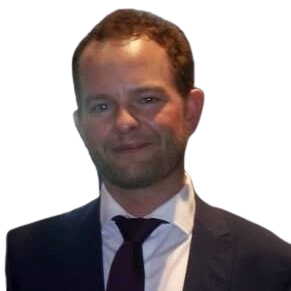
Maxim Razmakhin is the founder of Resident Company Club.
When did Maxim Razmakhin start Resident Company Club?
2024
How much money has Maxim Razmakhin made from Resident Company Club?
Maxim Razmakhin started the business in 2024, and currently makes an average of $600K/year.
More Case Studies Like This




Starter Story × HubSpot
Free tools for every part of your business.
Find customers, win deals, and automate the busywork with HubSpot's free tools.