My gaming website makes $15K per month
Who are you and what business did you start?
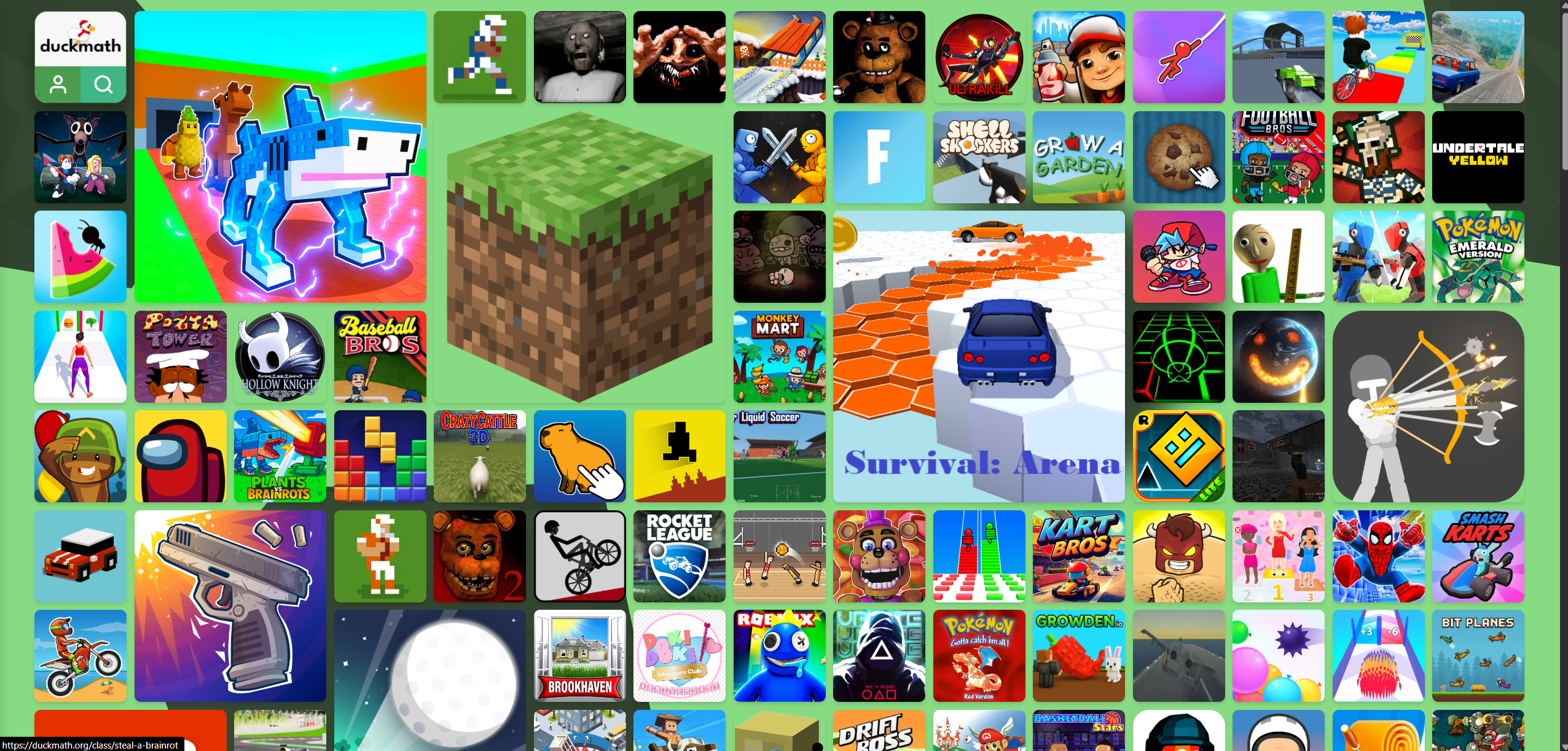
My name is Maddox Schmidlkofer, and I’m the founder of DuckMath, a viral unblocked games platform I started when I was 16 so I could play games in class. Today, DuckMath serves students across the U.S. who are looking for fast, actually unblocked games in class (we own 20+ domains), and it’s become one of the most recognizable brands in the unblocked games space.
What makes DuckMath special is that it combines simple tech with massive distribution. I built everything myself and scaled the platform almost entirely through short-form video marketing, using TikTok to reach millions of students. That mix of clever engineering to keep the site unblocked and short form marketing helped the site explode in growth. At its peak, DuckMath generates $15K–$20K per month in revenue.

Duckmath Icon
How do you come up with the idea for DuckMath?
I came up with DuckMath in a odd way. I saw someone on TikTok who was younger than me building an unblocked-games site, and I thought, “I can do that.” I didn’t overthink it or try to validate it. I just started building because it seemed fun, and because I’d been playing unblocked games forever. At the time, I didn’t even consider it a “business idea”; it was just a project I wanted to make.
I didn’t know it was the “right” idea to work on until much later. The real aha moment hit during my internship, on a random day when DuckMath made $240 while I wasn’t even touching it. That was more than I earned in eight hours at my job. That single moment flipped a switch in my head, it made me realize this little side project actually had real potential.
DuckMath was also the only B2C idea I’d ever tried. Everything else I’d thought about before was more B2B-leaning, which as a student, i'm not sure why I was looking into B2B. Through working on it, I became really skilled at web development, marketing, analytics, and the whole end-to-end process of shipping a product. I validated the idea the simplest way possible: I posted TikToks about it every day and watched the numbers. As the videos slowly pulled in more users, eventually hitting 10s of thousands of views , realized the idea had legs. The more the site grew, the more obvious it became that DuckMath was worth betting on.
How did you build the initial version of DuckMath?
Maddox Schmidlkofer built DuckMath by combining simple tech with massive distribution. He built everything himself and scaled the platform almost entirely through short-form video marketing on TikTok. The mix of clever engineering to keep the site unblocked and short-form marketing helped the site explode in growth. At its peak, DuckMath generates $15K–$20K per month in revenue. The growth strategy was focused on social media, with TikTok being the main engine for growth. Maddox posted high-volume videos showing the site as the solution to the pain point of students wanting to play games in school. The combination of a strong hook, consistent improvements, and a product students genuinely wanted made TikTok the perfect growth channel for DuckMath.
How did you launch DuckMath and get initial traction?
I launched DuckMath by simply posting about it on TikTok. There was no formal rollout or complicated plan. I told a few friends first and even paid one of them to help me post consistently. Those early videos weren’t viral, but they steadily brought in students who tried the site, shared it, and returned to play.
People reacted well from day one. The only real complaint was that some school networks blocked the domain, which pushed me to create more mirrors. The biggest lesson I learned is that you do not need a big launch. What matters is showing up every day and staying consistent with marketing.
My first dollar came from putting ads on the site. When I refreshed the dashboard and saw earnings for the first time, it felt unreal. My first users were friends, and then people slowly came in from social media. It took about a week to make my first dollar. That early phase taught me that consistency and drive matter more than initial results. Even ideas that seem small at the beginning can become something meaningful with enough work.
What was the growth strategy for DuckMath and how did you scale?
I grew DuckMath almost entirely through social media. TikTok was the main engine. I posted high-volume videos like “how to play X game in school” and showed my site as the solution. Later on I experimented with influencer marketing and SEO, and I used Reddit for small bursts of traffic, but nothing came close to the reach and speed of TikTok. The combination of a strong hook, a clear pain point, and a product students genuinely wanted made it the perfect growth channel.
One strategy that worked extremely well was studying what the top creators in my niche were doing. I watched their highest-performing videos, broke down the pacing, the hooks, the edits, and then made versions that were better. That level of iteration made my videos consistently outperform competitors. The strategy worked because the idea itself was inherently viral. Playing games in school is something almost every student wants, and most sites were blocked, so mine spread fast. Pair that with high volume and consistent improvements, and it created a compounding effect. We have around 500+ videos posted.
For anyone trying to grow a B2C product, I think validating with short-form content is the best route. You get instant feedback, real users, and a clear signal on whether the idea has legs. Once you find a growth engine that works, hire help as soon as you can so you can focus on higher-leverage tasks. Consistency, fast iteration, and doubling down on what actually works are what took DuckMath from a small project to a viral platform
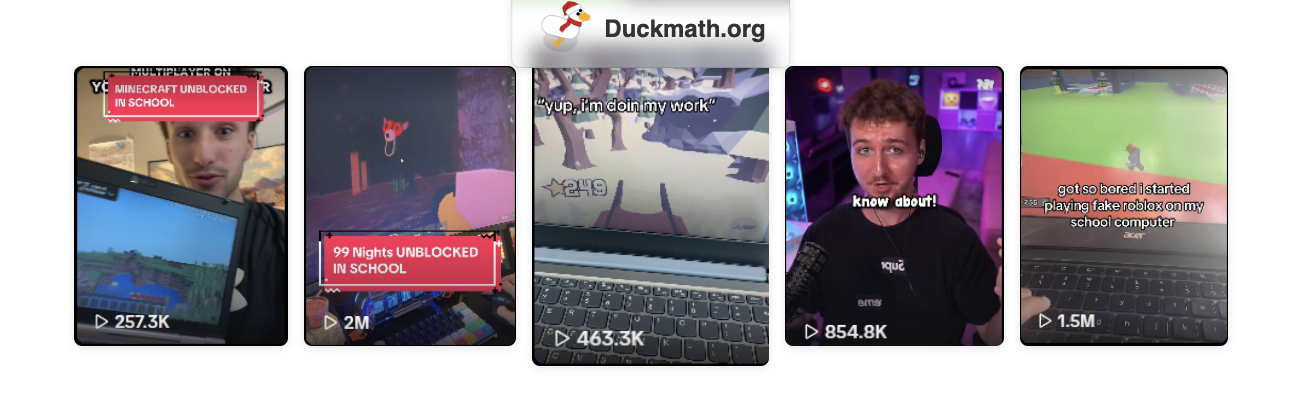
Some of our top videos
What were the biggest lessons learned from building DuckMath?
Starting DuckMath taught me more than any class or job ever could. During it, I had tried about seven different ideas over the years that went nowhere. The funny part is that the best idea was sitting right in front of me the whole time. One of the hardest parts of building DuckMath was trying to scale it with a low LTV. Traditional growth methods simply didn’t work for an unblocked games site, so I had to rely almost entirely on creativity and consistency. It was also tough in the early days to find someone who could help me post TikToks the way I did. I ended up burning myself out posting every day until I brought other people in. It was also very hard to contact game devs and influencers for scaling, a part that was brainless, laborious, and something I avoided, which I should not have.
Some of the biggest challenges came later, especially when the business started drifting into legal grey areas. That uncertainty ultimately made my decision to sell much easier. But I also made some really good decisions. Bringing on my girlfriend to post videos was one of them. Our communication was strong, she learned fast, and it took a huge weight off my shoulders. I also reached out to game developers and creators who had been in the space for a while. They shared insights only people deep inside the niche would know, and that advice helped me avoid a lot of mistakes.
The biggest lessons I learned are simple. Work with good people. Double down on what is working. Stay consistent even when it feels pointless. If you want it, do it full time, you have to be obsessed with it. Think about it constantly, stay in the game even when you are tired. Copy your competitors until you can outperform them. And don’t underestimate luck. Timing, trends, and TikTok’s algorithm played a massive role in my growth.
One mistake I see most people make is that they never actually start, or they treat their idea casually. If you want something to work, you have to take it seriously long before anyone else will. Start today. Go all in.
DuckMath Acquisition: How much did DuckMath sell for and what was the acquisition price?
Acquired for 120K, not the best exit money wise, but i'm super happy to start something else.
Discover Similar Business Ideas Like DuckMath



More about DuckMath:
Who is the owner of DuckMath?
Maddox Schmidlkofer is the founder of DuckMath.
When did Maddox Schmidlkofer start DuckMath?
2021
How much money has Maddox Schmidlkofer made from DuckMath?
Maddox Schmidlkofer started the business in 2021, and currently makes an average of $180K/year.
More Case Studies Like This




Starter Story × HubSpot
Free tools for every part of your business.
Find customers, win deals, and automate the busywork with HubSpot's free tools.