How I Grew My Side Hustle to $4,000/month
Who are you and what business did you start?
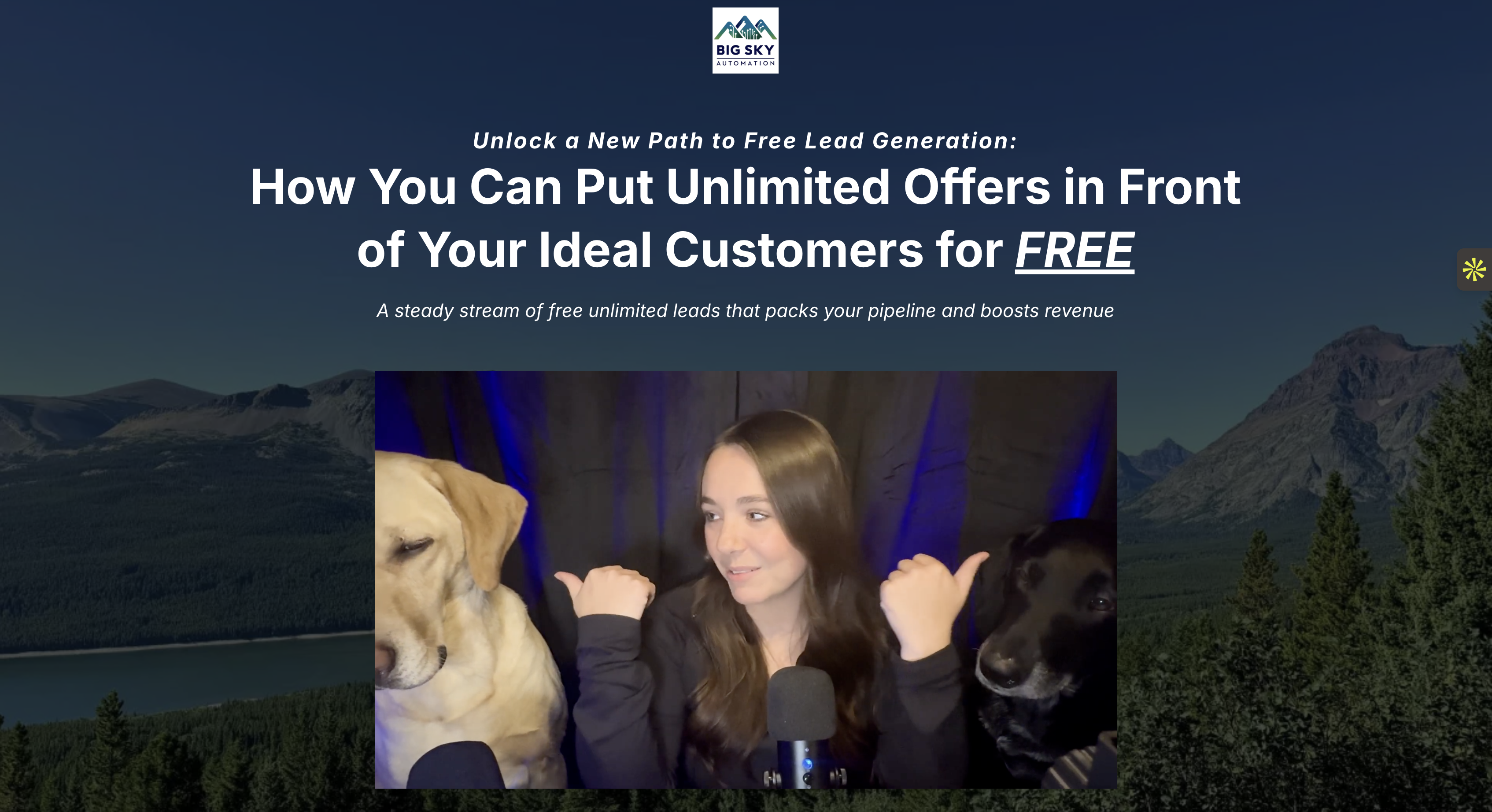
My name is Rachel, and together with my husband Dalton, we run Big Sky Automation Services, LLC—home of the Community Card Playbook. We help everyday entrepreneurs, real estate agents, and local business owners turn postcards into powerful marketing tools that generate leads for free. Our system shows people how to launch a side hustle with $0 out-of-pocket costs and grow it into a sustainable business.
What makes our business special is how simple and repeatable it is. We’ve taken something as old-fashioned as direct mail and reimagined it as a modern, scalable system. The Community Card Playbook is built on real-world experience—what we actually use in our own marketing agency—so members get step-by-step scripts, proven designs, and a supportive community that helps them succeed faster.
Today, our Community Card Playbook consistently generates $4,000 in profit each month, while our direct-mail system helps businesses all over the U.S. grow without breaking their ad budgets

My image
How do you come up with the idea for Community Card Playbook?
The idea for the Community Card Playbook was really a mix of influences. We’d been following Russell Brunson’s strategies, bouncing ideas with our business coach, and even watching a YouTuber who shared creative ways to launch low-cost businesses. The pieces all came together when we realized that local businesses were struggling to afford direct mail campaigns on their own. If we could offer them a much more affordable, shared solution, everyone would win.
There absolutely was an “aha” moment—when we realized these low-cost postcards could act as our perfect foot-in-the-door offer with business owners. As marketers, there’s always resistance when you’re new and trying to earn trust. But if we came to them with something like super affordable direct mail, suddenly the conversation changed. Business owners were far more likely to say yes, and once they did, they naturally wanted to know what else we could do—opening the door to bigger, long-term opportunities.
This was different from other business ideas we had because, up until then, we were mostly focused on digital services—AI, SEO, AEO, and websites. My background is in sales, marketing, and mentoring, while Dalton’s expertise is in technology and automation. Together, we had the perfect skill set to bring this idea to life.
We validated it almost instantly. We sent a few messages to business owners we somewhat knew, plus some brand-new businesses we had never spoken to. Within three days, we had the first card completely filled and ready to send. That was all the proof we needed that the Community Card Playbook wasn’t just a good idea—it was the right one.
How did you build the initial version of Community Card Playbook?
Step-by-step process for how we built the first version of our postcard product
The first version of our postcard business was built super lean and super scrappy — no developers, no software, just Canva and a simple idea.
Step 1: Research + choose the postcard format I started by researching USPS Every Door Direct Mail to understand sizes, eligibility, and costs. I chose an oversized 6.5x12 postcard because it stands out in the mailbox and gets crazy-high visibility.
Step 2: Build the first layout in Canva I opened Canva and created the first layout completely from scratch. I divided it into sections for each business, added placeholders, picked fonts and colors, and mocked up both sides of the card. My only cost at this stage was a $12.99 Canva subscription.
Step 3: Create a list of local businesses Using Google Maps, I built a list of businesses that rely on local exposure — restaurants, salons, gyms, cleaners, coffee shops, auto shops, etc. I gathered their contact info and wrote a simple pitch.
Step 4: Walk into businesses and sell spots I printed a rough mockup from Canva and visited businesses in person. My pitch was simple: multiple businesses split the cost of one oversized postcard, making it an affordable way to get in front of every household in their area.
Step 5: Collect payments and logos When a business said yes, I collected payment via PayPal/Stripe, requested their logo, and dropped it into the Canva design. The card filled up spot-by-spot.
Step 6: Send the final design to print Once the card was full, I exported the design and sent it to a print shop that handles EDDM mailing. They took care of printing, bundling, and delivering it to the post office.
Step 7: Repeat and refine After the first card went out, we immediately started prepping the next one. We refined the pitch, improved the layout, and kept iterating.
Starting costs Just $12.99 for Canva. That was literally it. No website, no developers, no equipment, no patents. The model is intentionally low-cost.
Business model At first, the model was simple: sell multiple ad spots on one postcard and use shared space to lower the price for each business. Over time, it evolved into a repeatable system and coaching program where we teach others how to run this same model in their own cities.
Financing We didn’t need outside financing. The startup costs were so low that we self-funded everything. Once we sold the first few spots on the card, the project became cash-flow positive immediately.
Tools used Canva, PayPal/Stripe, Google Sheets, Google Maps, and a print shop that handles EDDM mailing.
How long it took to build the first version About two weeks — from idea, to design, to selling spots, to sending the first card to print.
Experience building it Very scrappy but surprisingly straightforward. The hardest part was confidence — walking into businesses and pitching. But once a few people said yes, momentum built fast. It turned out to be much easier and more scalable than we expected.
How did you launch Community Card Playbook and get initial traction?
We launched these postcards in the simplest way possible—by putting ourselves out there. We started by sending a handful of messages to people we knew (and some we didn’t), making a few social media posts, and showing up at every chamber of commerce event we could. Building those relationships with local business owners and the chamber was incredibly helpful. When we shared our idea, people were genuinely excited because we were offering something they hadn’t seen before: a super affordable way to get their business into thousands of homes through direct mail.
Our very first sale was to a local dentist. We had met him briefly, stopped by his office, and told him a little about what we were working on. At first, he said he “might be interested,” but a couple of weeks later, when we officially decided to launch the postcards, I sent him a message. He immediately bought 4 of the 16 available spots and even prepaid for three future mailings. That one in-person meeting and one follow-up message turned into $1,605 in revenue from a single client.
From there, we kept momentum going by shooting out a few Facebook messages and continuing to talk with local business owners. It took less than 24 hours to make our first sale. The timing was almost surreal—we were on our way to Oregon for a month-long vacation, listening to one of our favorite YouTubers talk about something similar. By the time we arrived after a 14-hour drive, I sent that message to the dentist the next morning, and just like that, the business was real.
One of the biggest lessons we learned is something Zig Ziglar said best: “You can get everything you want in life if you just help enough other people get what they want.” This business worked because we weren’t just selling ads—we were giving business owners a way to finally afford direct mail. When they saw how it could help them grow, they were eager to work with us. That mindset—focusing on helping others win first—has shaped everything we’ve done since.
What was the growth strategy for Community Card Playbook and how did you scale?
Over time, our business has evolved from running postcards ourselves to building a membership where we teach others how to do the same. It’s been an honor to watch entrepreneurs across the country take what we’ve built and create their own success stories. Sharing knowledge has become one of our biggest passions.
To grow our membership, we’ve leaned heavily into a strategy we call OPA—Other People’s Audiences. Instead of trying to build everything from scratch, we’ve put ourselves in front of audiences that were already aligned with what we do. For example, we’ve been featured on two podcasts so far, both of which created massive exposure for our community. One of the highlights was appearing on our favorite YouTuber’s podcast—the very person who influenced part of our original idea. That episode alone reached nearly 30,000 people who were already interested in marketing, side hustles, and entrepreneurship. Many of them joined our membership because they saw firsthand how powerful the system could be.
Beyond podcasts, we’ve used YouTube videos, social media, and six Meetup groups we own, totaling over 10,000 members. Sending regular email blasts to these groups has allowed us to connect with motivated entrepreneurs who are already looking for community and proven ways to grow.
What readers can take away from this is simple: you don’t always need a massive audience of your own to grow your business. If you can find ways to get in front of the right people through OPA—whether that’s podcasts, newsletters, local groups, or collaborations—you can shortcut years of effort.
Our recommendation to aspiring entrepreneurs: Focus less on building the biggest audience possible and more on finding the right audiences to share your story with. Partner with people who already have the trust of the community you want to serve. Not only will you gain exposure, but you’ll also build credibility much faster.
What were the biggest lessons learned from building Community Card Playbook?
Starting and growing these postcards and our membership has taught us more than we ever imagined—not just about business, but about ourselves.
The Good Decisions: One of the best decisions we made was focusing on affordability and accessibility. By offering a solution that small businesses could actually afford, we removed barriers and earned trust quickly. Partnering with chambers of commerce and leveraging Other People’s Audiences (OPA) also gave us massive growth without needing a huge advertising budget.
The Hard Lessons: Of course, there were challenges. At first, we underestimated how much education was needed—many business owners had never heard of a co-op postcard before, so we had to learn to explain it clearly and simply. We also learned that timing matters; sometimes we’d pitch too early or too late, and we’d miss an opportunity. Another big lesson was to not try to do everything ourselves—delegating and using automation kept us from burning out.
Forces Beyond Our Control: We were lucky in a way—timing was on our side. As digital ad costs kept climbing, businesses were desperate for affordable alternatives. The postcard system felt fresh again, and because we tied it into digital tools, it stood out even more.
Habits & Skills: My sales and mentoring background combined with Dalton’s tech and automation skills created a powerful balance. We leaned on habits like consistent networking, daily outreach (even just a few messages), and documenting everything so we could teach it later.
Our Top Tips:
Focus on solving a real pain point, not just selling a product.
Leverage OPA—get in front of audiences who already trust someone else.
Keep your offer ridiculously simple; complexity kills momentum.
Remember that the first “yes” is the hardest—after that, momentum builds fast.
And most importantly, adopt Zig Ziglar’s philosophy: “You can get everything in life you want, if you will just help enough other people get what they want.”
Inspiration: We started with no network, no local connections, and no big budget. But by helping other businesses win first, we built something sustainable that has grown into a nationwide membership. If we can do this from scratch, anyone willing to learn, serve, and stay consistent can too.
What platform/tools does Community Card Playbook use?
Discover Similar Business Ideas Like Community Card Playbook




More about Community Card Playbook:
Who is the owner of Community Card Playbook?
Rachel Smith is the founder of Community Card Playbook.
When did Rachel Smith start Community Card Playbook?
2024
How much money has Rachel Smith made from Community Card Playbook?
Rachel Smith started the business in 2024, and currently makes an average of $48K/year.
More Case Studies Like This



Starter Story × HubSpot
Free tools for every part of your business.
Find customers, win deals, and automate the busywork with HubSpot's free tools.