My Air Quality Product Makes $4M/Year
Who are you and what business did you start?
I'm Vera Kozyr, co-founder and CEO of ATMO. Founded in 2016, the company specializes in air quality and environmental monitoring products. We help people be aware of the air quality in their immediate surroundings, how it affects their wellbeing and health, and what to do about it.
Having started with the idea of creating the world’s first consumer-level air pollution monitor, we managed to become one of the leading engineering teams in the field of portable and stationary environmental sensing for consumers and businesses.
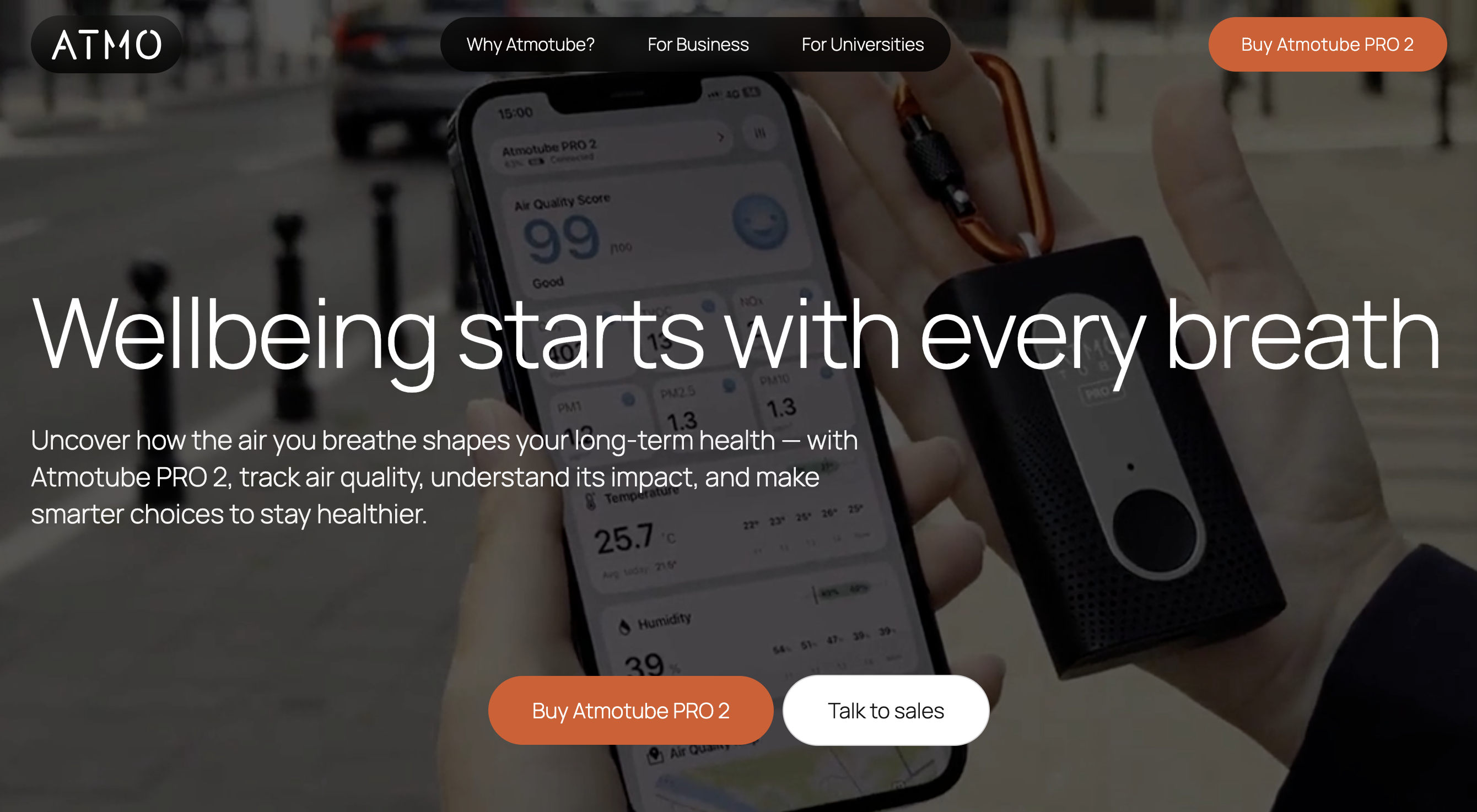
What makes us unique is simple: we’ve produced the first lab-tested personal air quality tracker that delivers Air Balance, a daily wellness score combining environmental and lifestyle data. While others rely on cheap sensors or bulky devices, Atmotube PRO 2 merges precision engineering with AI-powered insights to turn your air data into personalized health and recovery guidance. You recover faster by understanding the air you breathe.
ATMO customers are health-conscious individuals and tech-savvy organizations who harness data to understand how their environment affects their performance, recovery, and wellbeing. We've sold over 50,000 devices in 40+ countries to date.
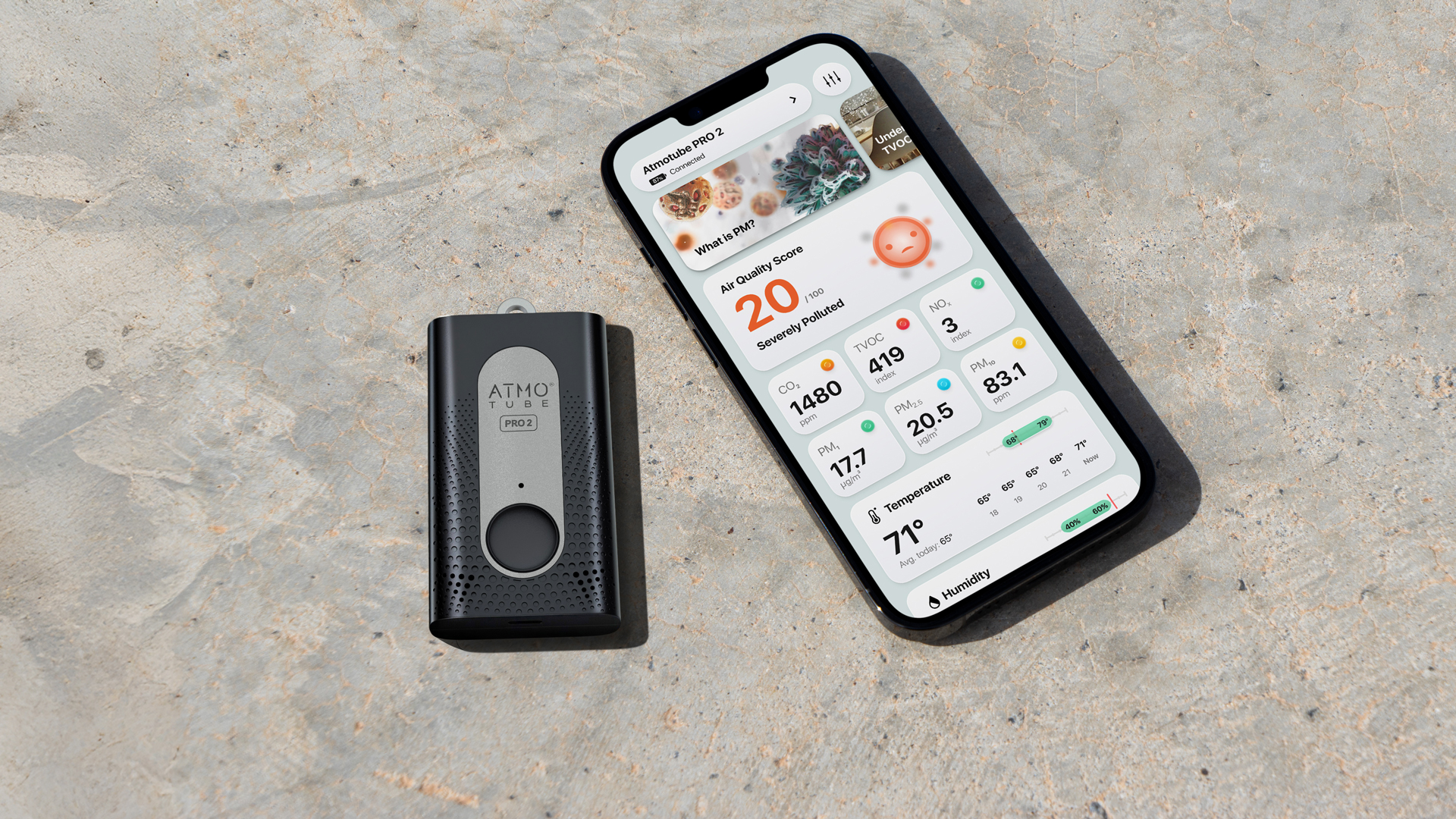
Atmotube PRO 2 — portable air quality tracker
How do you come up with the idea for ATMO ?
The idea was born from a simple truth: we track everything from sleep to fitness, yet ignore the air we breathe; the one thing our body needs every second. I realized how often official reports downplay pollution, leaving people unaware of what they’re actually inhaling near factories, busy roads, or train stations. That’s when it clicked: we don’t need city averages, we need personal, real-time air awareness.
How did you build the initial version of ATMO ?
ATMO built their first product, the Atmotube PRO 2, by focusing on precision engineering and AI-powered insights. The first prototype had sensor issues, leading to a complete rebuild from scratch to prioritize accuracy, portability, and reliability. After several redesign cycles, they were able to deliver a product that worked, which led to real revenue. The key lesson learned was the importance of under-promising and over-delivering in the hardware space, as seen through their initial product failure.
How did you launch ATMO and get initial traction?
We launched through crowdfunding on Indiegogo, raising meaningful funds while building our first community.
To be honest, our first device was a complete failure — the sensors simply didn’t work. But that painful start became our greatest teacher. It showed us exactly what users truly needed: accuracy, portability, and reliability. We spent months rebuilding from scratch — testing, iterating, and earning back trust. After several redesign cycles, we finally delivered a product that worked. That’s when real revenue started coming in.
Many of our early backers, who stuck with us through every setback, turned into our strongest advocates. Their word-of-mouth support in health and wellness communities became the foundation of our growth.
The biggest lesson? In hardware, you can’t fake it. Under-promise, over-deliver, and test more than you think is necessary.
What was the growth strategy for ATMO and how did you scale?
Our growth came from the most unexpected places.
First — community advocacy. People with asthma and allergies became our loudest champions. When a device helps someone avoid an asthma attack or allergen exposure, they share it with their entire network. We connected directly with these health communities, creating educational content about air quality triggers — and the product’s impact spoke for itself.
Second — research collaborations. Universities and environmental institutes needed portable, accurate sensors for field studies — and we had unknowingly built the perfect tool. We started supplying devices to researchers, often at cost. Today, our technology is used by University College Cork, the Barcelona Institute for Global Health, Columbia University, and many others. When peer-reviewed studies cite your product, that’s credibility money can’t buy. These partnerships soon evolved into bulk orders and collaborations with organizations like Greenpeace and even NATO missions.
Being trusted by such demanding experts brought a wave of organic traction from a broader audience.
What were the biggest lessons learned from building ATMO ?
Hardware is unforgiving — our first product failure taught us to always under-promise and over-deliver.
Our best decisions?
1) Focusing on customer value,
2) Choosing accuracy over features,
3) Developing software hand-in-hand with hardware to deliver a seamless experience.

Discover Similar Business Ideas Like ATMO
|
|
Idea
|
Revenue
|
|---|
More about ATMO :
Who is the owner of ATMO ?
Vera Kozyr is the founder of ATMO .
When did Vera Kozyr start ATMO ?
2016
How much money has Vera Kozyr made from ATMO ?
Vera Kozyr started the business in 2016, and currently makes an average of $48M/year.
More Case Studies Like This




Starter Story × HubSpot
Free tools for every part of your business.
Find customers, win deals, and automate the busywork with HubSpot's free tools.