How Hassan Grew RoomGPT to 100K Monthly Visitors In 48 hours

Who is Hassan El Mghari?
Hassan El Mghari, the founder of RoomGPT, is an AI enthusiast and senior developer advocate based in New Jersey. He has a background in front-end engineering and discovered AI's potential around the time ChatGPT launched, quickly leveraging his coding skills to create popular AI-driven applications as side projects.
What problem does RoomGPT solve?
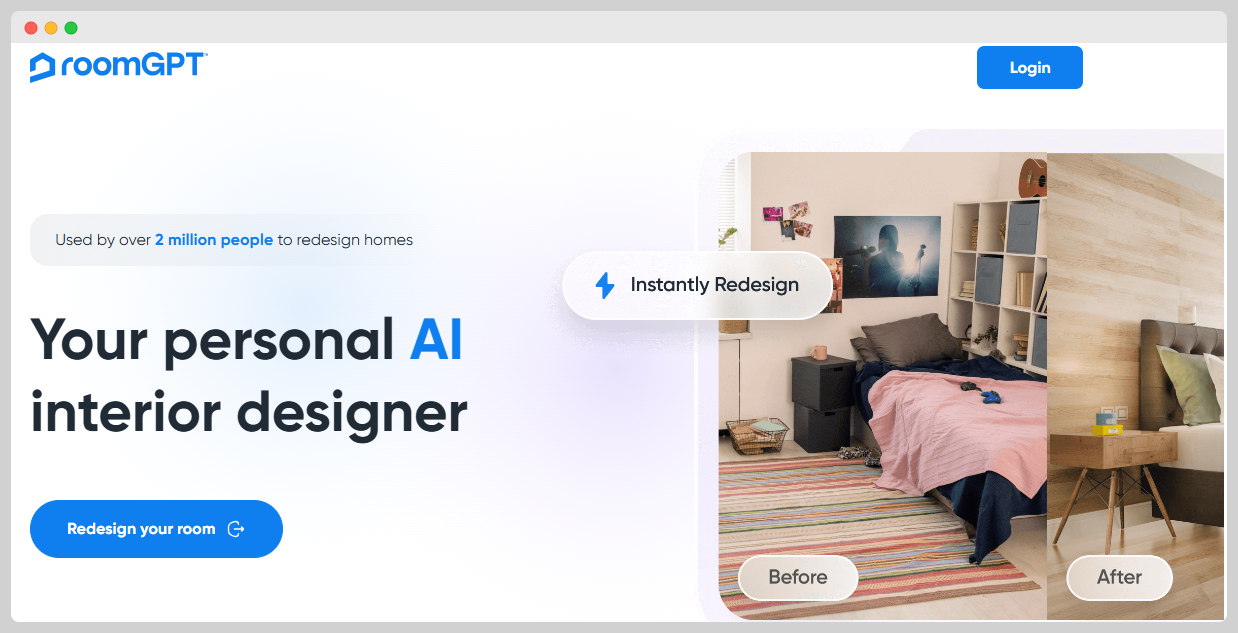
RoomGPT makes redecorating accessible by quickly and affordably generating design ideas from room photos, helping users visualize home transformations without professional interior designers.

How did Hassan come up with the idea for RoomGPT?
Hassan El Mghari came up with the idea for RoomGPT from his interest in the potential of AI to transform everyday applications. Observing the popularity and limitations of existing AI tools like interiorai.com, he recognized an opportunity to improve AI-generated interior design by using a new AI model called ControlNet. This model was more adept at preserving the structure of input images, addressing a key issue with previous models.
He was inspired by the possibility of providing users with instant and personalized interior design ideas. Before fully committing to the project, Hassan conducted some quick prototyping to see if ControlNet could deliver the desired results. Encouraged by its performance, he refined the concept to ensure it was user-friendly and accessible, addressing feedback on DIY features that professionals like real estate agents requested. This process taught him the importance of technology adoption timing and user experience in product success.
How did Hassan El Mghari build the initial version of RoomGPT?
RoomGPT was built using a tech stack that includes React, Next.js, Postgres, Python, Flask, and the Replicate AI API. The founder, Hassan El Mghari, leveraged the newly released AI model ControlNet, which excelled at maintaining the structure of the input images, unlike previous models, to provide a realistic redesign of rooms. With an initial prototype developed quickly due to his familiarity with these tools, Hassan faced the challenge of integrating and testing different AI models to ensure the output remained true to the input room structure. The development process was efficient, thanks in part to existing open-source AI models and APIs, but it involved overcoming hurdles related to achieving fast, realistic image transformations.
How did Hassan launch RoomGPT and get initial traction?
Listing on AI Directories
RoomGPT got an early boost by listing their project on AI-specific directories, such as TheresanAIforthat.com. This niche platform is designed to showcase AI projects and apps, helping RoomGPT capture the attention of tech-savvy users who specifically sought out new AI tools.
Why it worked: By targeting a directory that focuses solely on AI-related projects, RoomGPT was able to get in front of an audience already interested in AI innovations. This group was likely more inclined to share and discuss the app, contributing significantly to its early traction.
Immediate Social Media Engagement
Founder Hassan El Mghari successfully leveraged immediate social media engagement to announce RoomGPT. By tweeting about the launch and its capabilities, he was able to quickly spread the word among his followers and their networks.
Why it worked: Hassan already had a significant online presence and network, particularly among developers and tech enthusiasts, which he tapped into to gain initial traction and feedback. Early adopters who found value shared the app further, helping it quickly amass a large number of users.
Metrics:
- Gained 100,000 monthly visitors within 48 hours of launch.
- Saw a peak of 4 million monthly site visitors.
- Over 1.6 million users amassed after launch.
What was the growth strategy for RoomGPT and how did they scale?
Short Form User-Generated Content (UGC) on TikTok and YouTube
RoomGPT saw significant traction through viral short-form user-generated content. For instance, a TikTok video by itspaulinamac demonstrating RoomGPT's usability reached over 3.5 million views. Similarly, a YouTube reel by Beebom achieved over 500,000 views. These platforms allowed users to showcase RoomGPT's features in action, making it easier for potential users to understand the product's value quickly.
Why it worked: TikTok and YouTube are powerful platforms for organic reach due to their algorithms, which promote engaging content widely. The visual and transformative nature of RoomGPT's service—allowing users to see room transformations instantly—makes it particularly appealing for video content, encouraging high engagement rates and shares.
PR and Media Coverage
RoomGPT benefited from media exposure once its viral videos gained traction, leading to articles from major outlets like Yahoo. This coverage expanded its reach beyond social media, introducing the brand to a larger, more diverse audience.
Why it worked: The virality of user-generated content piqued the interest of news outlets, which further validated RoomGPT's market relevance and drove additional organic traffic. Such media coverage often serves as an endorsement, building credibility and attracting curious potential customers.
Domain Listings and Naming Strategy
RoomGPT listed itself on TheresanAIforthat.com, an AI discovery platform, within days of launching. Additionally, including "GPT" in the name leveraged the growing recognition of generative AI models to capture immediate interest.
Why it worked: Listing on a specialized platform allowed RoomGPT to connect directly with an audience already interested in AI solutions, enhancing discoverability among tech-savvy users. The strategic use of "GPT" in the name capitalized on existing AI brand recognition, making it immediately relevant to discussions within the AI and tech communities.
What's the pricing strategy for RoomGPT?
RoomGPT offers users 3 free credits for room redesigns and charges $9 for 30 credits, $19 for 100 credits, and $29 for 200 credits.
What were the biggest lessons learned from building RoomGPT?
- Leverage Timing and Trends: RoomGPT's incredible growth was significantly attributed to capitalizing on the AI trend. By launching when AI was a hot topic and utilizing an advanced, newly released model, they tapped into both market readiness and cutting-edge technology, exemplifying the importance of timing in business success.
- Importance of User Experience: Despite the technical sophistication, what made RoomGPT stand out was its user-friendly interface and open-source accessibility. Making applications accessible and aesthetically pleasing greatly impacts adoption and viral potential, showing that a great UX can be as critical as functionality.
- Harness Organic Growth: The platform saw viral growth through user-generated content, such as viral TikTok and YouTube videos. This highlights the power of organic marketing and the immense value of creating a product that is easily sharable and engaging.
- Iterate Based on Feedback: Feedback from various professional niches, like real estate and interior design, pushed RoomGPT to work on improving its model and features. This demonstrates the necessity of listening to user needs and continuously evolving a product to serve broader and more specific market segments.
- Adaptability Leads to Resilience: The journey taught resilience through adaptability—whether adjusting the model to address feedback or exploring new features. Embracing change and being flexible in approach can help sustain and grow a business, even amid rapid success.
What platform/tools does RoomGPT use?
Discover Similar Business Ideas Like RoomGPT







More about RoomGPT:
Who is the owner of RoomGPT?
Hassan El Mghari is the founder of RoomGPT.
When did Hassan El Mghari start RoomGPT?
2023
What is Hassan El Mghari's net worth?
Hassan El Mghari's business makes an average of $23K/month.
How much money has Hassan El Mghari made from RoomGPT?
Hassan El Mghari started the business in 2023, and currently makes an average of $276K/year.